
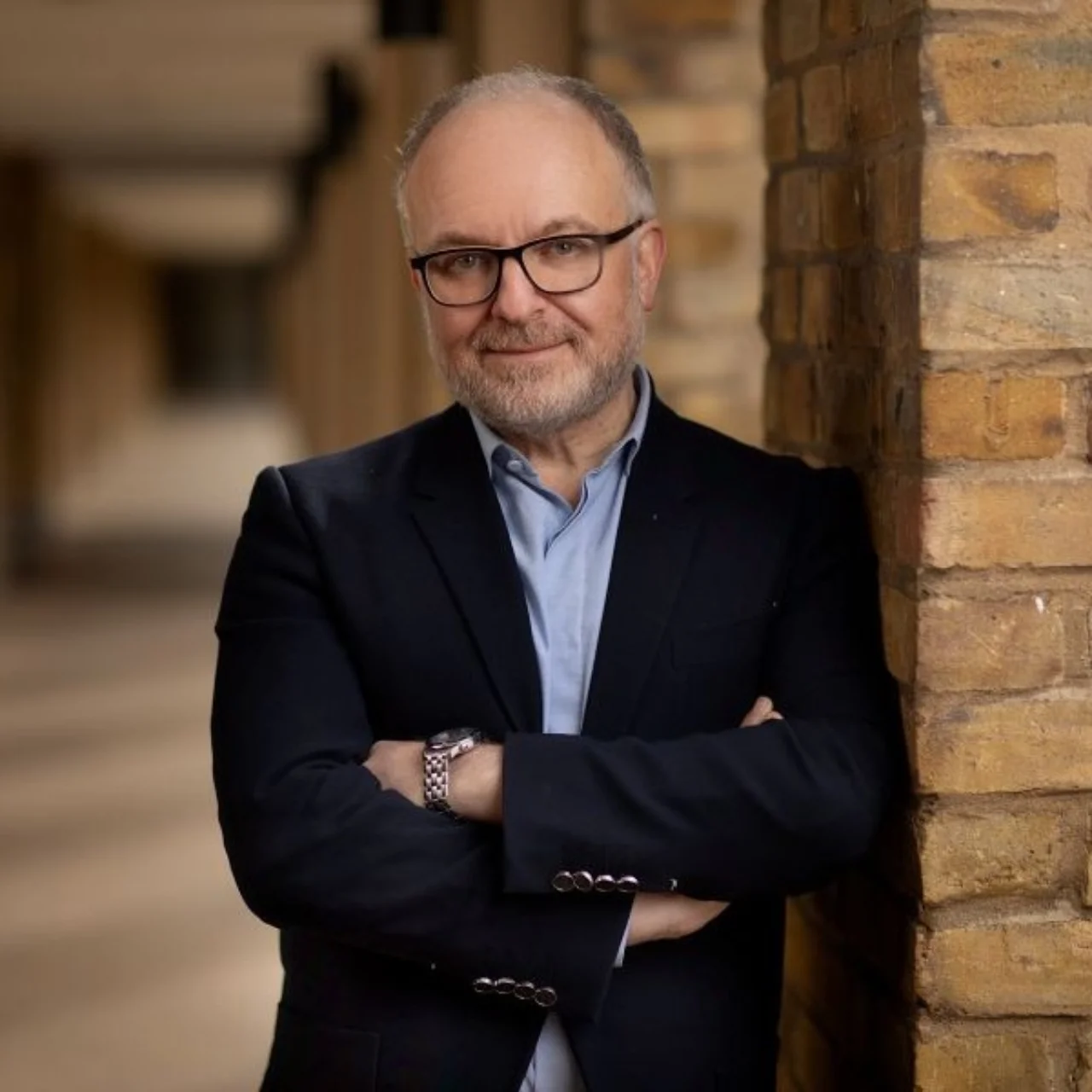
“Adapting to longer lives is as crucial as adapting to AI or climate change”
Longer lives are transforming economies, labour markets and financial systems around the world. In this interview, Professor of Economics at London Business School, Andrew J. Scott, explains how countries, companies and employees can adapt to that challenge.
Andrew, how is rising global life expectancy reshaping economic development models across different regions of the world?
Our behaviours, policies, cultures and institutions have not adapted to the length of life we now expect. When only a minority lived into their eighties and nineties, systems were designed differently. Today the majority do, but we have not created a system for that reality. The opportunity is to ensure longer lives are healthier, more productive and more engaged, so they support growth rather than create a pensions or health crisis.
Which countries do you see as frontrunners of a longevity society – and what explains their success?
No country has a full solution, but some are experimenting. Japan stands out: it has one of the highest life expectancies and lowest birth rates, yet growth per person remains resilient. It supports older workers through flexible employment beyond retirement age and by using robotics in more physical jobs, showing how longevity can be turned into an economic asset.
Under what conditions can societies realise a genuine longevity dividend?
The key channel is investing in the human capital of older people. That means lifelong learning and health systems focused on keeping people healthy so they can work longer. It also means creating age-friendly jobs with more flexibility. Employment starts to fall from around age 50 due to health, skills and ageism. Preventing that decline is essential for sustaining economic growth.
What role does prevention play for macroeconomic stability, and why is health span so critical?
People welcome longer lives only if they remain healthy. The benefits fall quickly when extra years are spent in poor health. Prevention therefore matters for individuals and the economy. For instance, if you have a heart attack at 50, you are far more likely to leave work, and it is difficult to return. As populations age, health increasingly becomes a macroeconomic issue.
The opportunity is to ensure longer lives are healthier, more productive and more engaged, so they support growth rather than create a pensions or health crisis.
How must economic and financial systems adapt to support a longevity economy?
Adapting to longer lives is as crucial as adapting to AI or climate change. Many responses focus on saving more, but the bigger challenge is to earn more over a longer lifetime. That requires working longer and moving away from a simple three-stage life. Instead, we will see multi-stage lives with career breaks, retraining and varying patterns of work and income.
Which structural reforms do financial systems need?
Pensions were built around education, work and retirement. Current reforms often adjust parameters within that model but longer lives require more flexibility. That demands more flexible accumulation and decumulation, new forms of “living insurance” and closer integration of wealth and health management.
Many responses focus on saving more, but the bigger challenge is to earn more over a longer lifetime.
How should labour markets and career models evolve?
Longer lives mean more time, but not all of it will be spent working in a single career. People will work for longer but also take breaks to retrain, switch careers or care for others. Leisure will not be concentrated only in retirement. Firms will need to rethink hiring, reduce age bias and create age-friendly roles with flexibility, autonomy and less physical strain.
Firms will need to rethink hiring, reduce age bias and create age-friendly roles with flexibility, autonomy and less physical strain.
What ethical and distributional challenges arise from longer lives?
How we age is only partly genetic; most is driven by behaviour and environment. That creates opportunity but also risk. If access to healthy lifestyles, skills and prevention is uneven, longer lives could increase inequality. Policies must focus on healthy life expectancy, support transitions later in life and prioritise prevention so gains from longevity are widely shared.
Why longer lives require more than a higher retirement age
Longer lives cannot be addressed simply by raising the retirement age. That is only one parameter within a model built for a three-stage life of education, work and retirement. What longer lives require is something more fundamental: healthier ageing, lifelong learning and jobs that people can do well for longer. Institutions need to adapt to the length of life we now expect.
Why older workers matter more in ageing societies
In ageing societies, older workers become more important for economic growth. Andrew Scott argues that employment often starts to fall from around age 50 because of poor health, outdated skills and ageist assumptions in the labour market. That makes prevention, lifelong learning, retraining and age-friendly jobs not just social policies, but growth policies. If people remain healthier and economically active for longer, longevity can support growth rather than increase pressure on public finances.
Why the longevity economy needs a new link between wealth and health
Longer lives require more flexibility than current pension systems allow. Andrew Scott argues that pensions were built around a three-stage life of education, work and retirement, while longer lives demand more flexible accumulation and decumulation, new forms of “living insurance” and a closer integration of wealth and health management.
Why longer lives will change careers, retirement and personal finance
Longer lives mean more time, but not all of it will be spent working in a single career followed by retirement. People will work for longer, but also take breaks to retrain, switch careers or care for others. That makes life more multi-stage and creates more varied patterns of work and income across a lifetime. It also means more complicated financial patterns, with multiple periods of accumulation and decumulation and less of a one-size-fits-all approach to finance. In other words, personal finance becomes much more personal.
About Andrew J Scott, CBE
Andrew J. Scott CBE is Professor of Economics at London Business School and Principal Scientist of Economics at the Ellison Institute of Technology. He is a Research Fellow at the Centre for Economic Policy Research and a co-founder of The Longevity Forum. He holds a PhD from Oxford University and previously held positions at Oxford University, Harvard University, and the London School of Economics.
His research focuses on the economics of longevity and ageing and is published in a wide range of leading academic journals. He is the author of the award-winning books The Longevity Imperative (2024) and The Hundred Year Life (2016). Both were runners-up in the FT Business Book of the Year Award, and The Hundred Year Life is a global bestseller, having sold over a million copies.
This page was published in June 2026.
Georg Berger
… works on global communications projects at Deutsche Bank. He is interested in how longevity is reshaping societies – in particular which smart responses help address the challenges and seize the opportunities that longevity creates.
Recommended content
Bold Entrepreneurship | Opinion
What if ageing is actually a growth story? What if ageing is actually a growth story?
Pedro Ros reveals why longer lives are creating one of the world’s most underestimated growth markets.
What if ageing is actually a growth story? Explore the Silver Economy
Entrepreneurial Success | Photo Story
“First, we had to explain to people that this is food” “First, we had to explain to people that this is food”
When Noel Bollmann and Benjamin Kremer founded yfood in 2017 they had to explain their signature product a lot. Noel Bollmann about future plans and the expansion to the US.
Entrepreneurial Success | Video & Photo Story
Acesur: When Innovation is your DNA Acesur: When innovation is your DNA
Artificial intelligence, data-based decisions, biodegradable packaging: How a traditional Spanish family business is revolutionising the olive oil business.