
“We ship and install the largest wind turbines that exist today”
The North Sea has the potential to become a green power plant for Europe – despite huge challenges. Carl Heiremans, manager at Jan De Nul, a global leader in offshore energy, explains the benefits he sees in Europe and what would help the industry.
Innovation in Europe: Wind of change with Jan de Nul
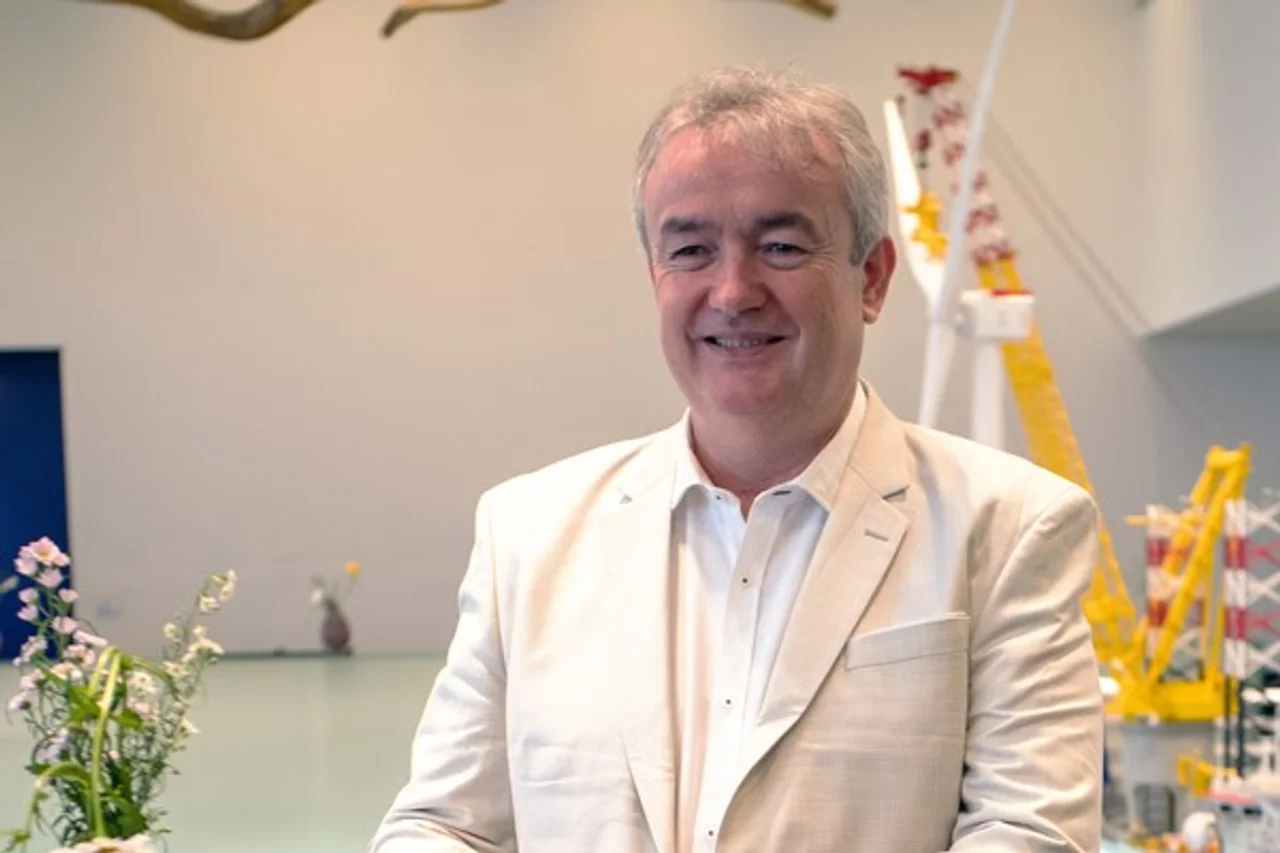
#EconomyStories video
Offshore wind energy will play a crucial role in the energy mix of the future. To capture the wind at sea more effectively, turbines are getting larger and larger, with some reaching 260 meters in height and more. That’s more than one and a half times the height of Cologne Cathedral – one of the tallest churches in the world. Bigger turbines need bigger vessels to install them offshore. One company that foresaw this development very early on is the Luxembourg-based world leader Jan De Nul.
In their Belgian offices, Business Development Manager Carl Heiremans explains how they took the decision to invest into huge installation vessels, why being based in Europe is a strength for the company and what he would love to change in the European Union to make the wind energy sector more competitive.
Carl, the conflicts in the Middle East have made many Europeans aware again of their dependence on fossil fuels. Do you see opportunities arising from that for the wind energy sector?
Indeed, the Middle East conflicts have shown how much the world still depends on imported fossil fuels. This should be a clear sign for any policy maker that production of home-made renewable energy is super important. And it doesn’t matter to me whether that is wind, sun or even nuclear. Building offshore wind as an alternative is spending in our own economy. Every renewable energy capacity added will make us less dependent on imported fossil fuels and thus help during the next fuel crisis - and this crisis will come.
Every renewable energy capacity added will make us less dependent on imported fossil fuels and thus help during the next fuel crisis - and this crisis will come.
Jan De Nul talks a lot about the shift to renewable energies. How can a maritime expert play a part?
As a maritime contractor we have substantial leverage. One way is by constructing offshore wind farms to support the energy transition. We ship and install the largest wind turbines that exist today. Another way is by installing powerful cables at the bottom of the sea to connect those wind farms, but also countries and regions. That is becoming increasingly important for most countries to be able to counterbalance the natural fluctuations in power generation when shifting to renewable energies.
Over the years wind turbines have grown significantly in size and the innovation cycles are short. How do you keep up with the pace?
Well, that's exactly the challenge. We invest a lot in ever bigger equipment, which is really at the limit of today’s technology, and we will keep investing in ever bigger installation vessels and in people obviously – the developers behind the vessels. In many cases we develop our vessels before they are needed. We try to look at the market and predict what will be needed in a couple of years and then just go for it as soon as we believe in the business case.
In many cases we develop our vessels before they are needed.
Can you give an example of when you believed in a business case before it actually emerged?
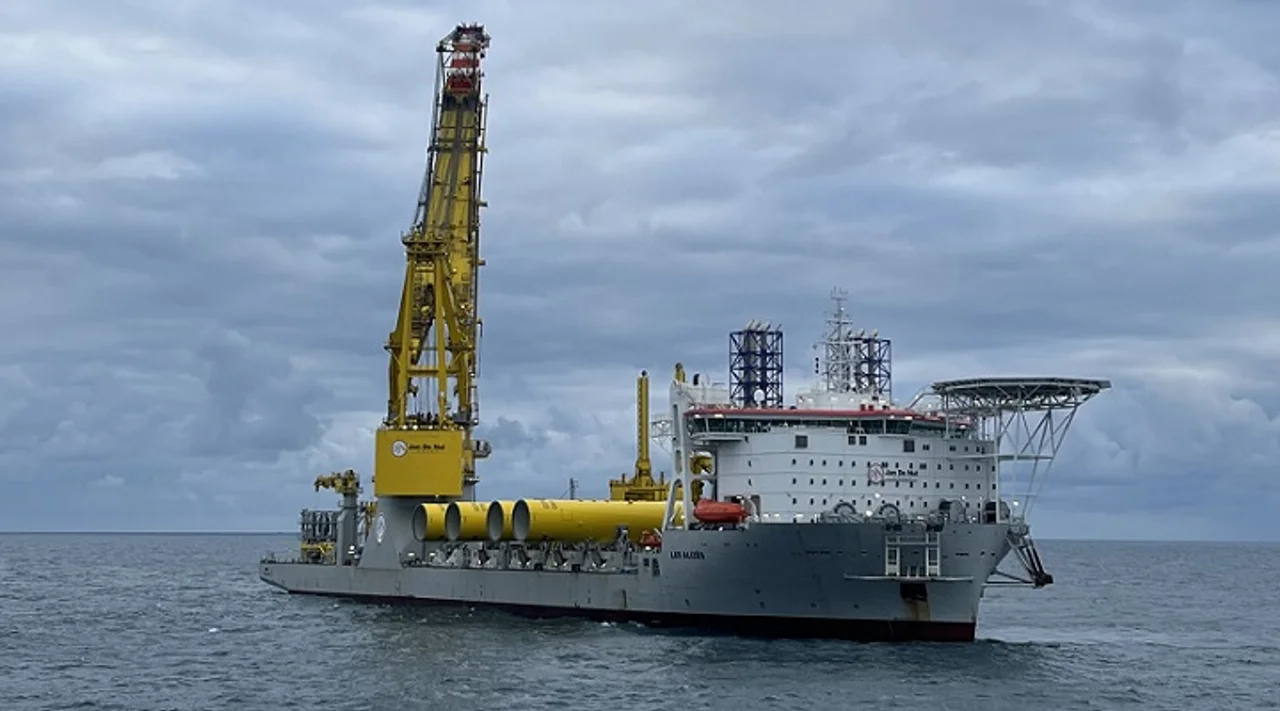
Our story in offshore wind energy could be seen as such an example. In 2002 we were one of the first companies willing to build a wind farm at sea in Belgium. Problems with permits meant that this did not go ahead. We took up the challenge ten years later, though, and then it went really fast. Very soon we saw that there was a need for ever bigger installation vessels to keep up with the trends in the market. And in 2019, we ordered the two biggest installation vessels in the world, Voltaire and Les Alizés.
How far were you ahead of the curve at that point?
When we ordered these vessels, most of our competitors were really surprised about the size and capacities that we had chosen. Even right up until today, nobody is ordering anything that is significantly bigger. Another example where we are ahead of the curve is in cable installation. A couple of years ago, we ordered the biggest cable installation vessel, twice as big in capacity as our closest competitor. Predicting what will be needed in the future and acting accordingly in the present is one thing that defines us as a company.
To what extent is being based in Europe an advantage for your company?
Europe was the leader and a pioneer in offshore wind energy – and it still is a pioneer. We have a unified market so we can work all over the EU freely. We can use components from different countries without limitations and barriers. That is a great advantage. In other parts of the world, countries have strict cabotage laws which means that you cannot work with vessels in their territories. In Europe, we have the North Sea, the place where offshore wind energy took off. There is plenty of space at sea, the wind is strong and the clients who need green electricity are nearby. And on top of that the supply chains in Europe are very good and resilient.
We have a unified market so we can work all over the EU freely. We can use components from different countries without limitations and barriers. That is a great advantage.
If you could change one pain point in the EU to make the wind energy sector more competitive, what would it be?
I’d definitely say that permits need to be granted much faster. Many projects do not go ahead because it takes too much time between the tender and the final decisions. And then obviously the business plan sometimes does not work anymore. Building infrastructure in any sector in the European Union requires too many permits. That's where Europe is currently not performing well.
Business plans that do not work anymore, plus the high cost of land are two huge challenges for the industry. What is your request to get more projects realised?
European politicians have expressed high targets for offshore wind. The North Sea countries of the Hamburg declaration want to build 15 GW of offshore wind per year from 2030 on. During the last 10 years Europe built on average 3 GW per year. This means a huge ramp-up is needed. But in the last years we have seen several countries where auctions for offshore wind went wrong. This resulted in even less projects, instead of a steady growth. To ramp-up towards the 15 GW per year many players need to invest heavily. And they need a reliable position from politicians that this goal can actually be achieved.
To ramp-up towards the 15 GW per year many players need to invest heavily. And they need a reliable position from politicians that this goal can actually be achieved.
Deutsche Bank and Jan De Nul
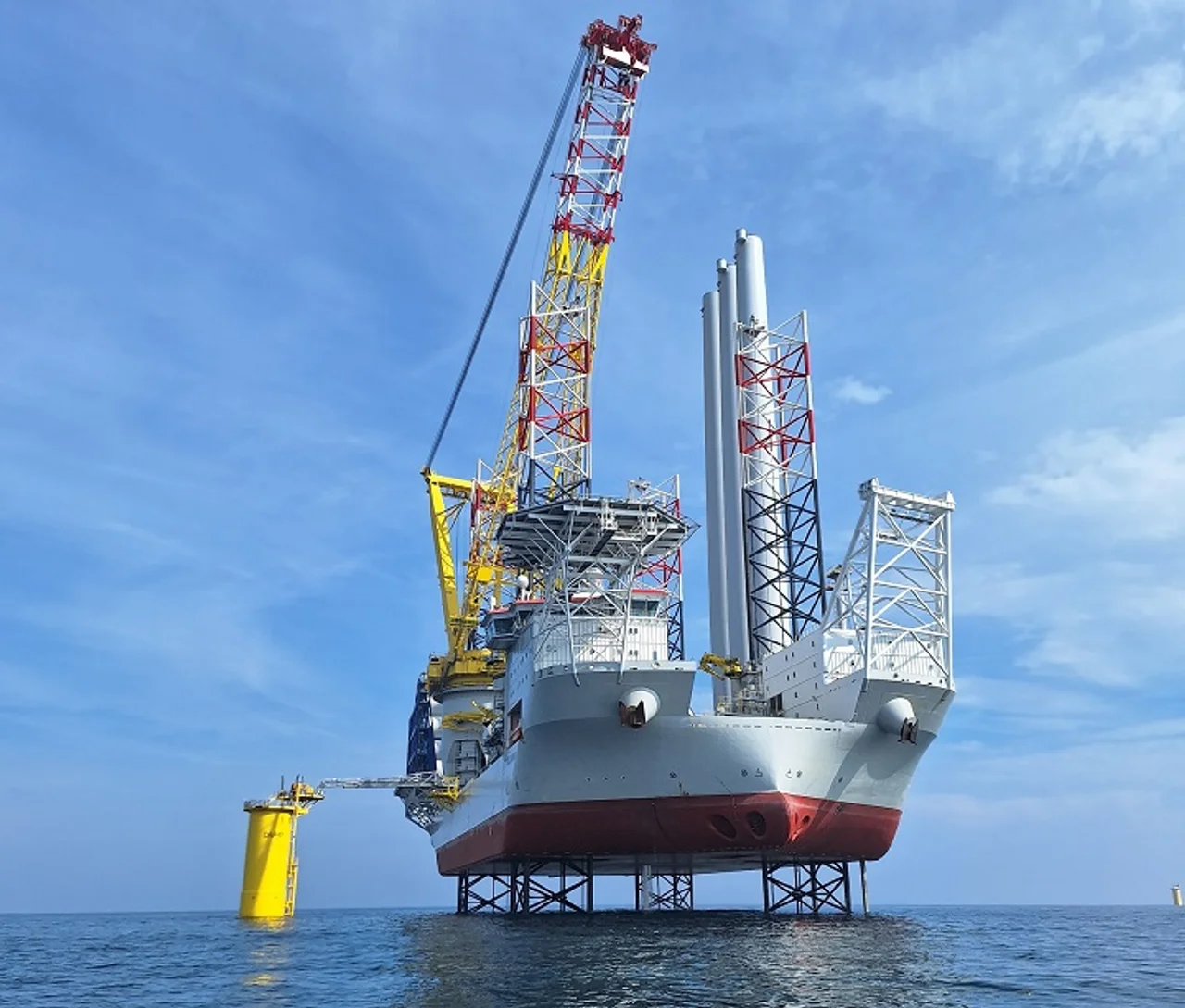
Jan De Nul, a global leader in dredging solutions and offshore energy, headquartered in Luxembourg, has fostered a robust partnership with Deutsche Bank Luxembourg for over a decade. Spearheaded by Ross Cloney, Head of the Structure Transactions Group in the Investment Bank, this lasting relationship has resulted in numerous successful collaborations.
Deutsche Bank Luxembourg's expertise in structured finance has facilitated the execution of several financing deals, supporting Jan De Nul’s acquisition and leasing activities for a diverse fleet of dredging, cable laying, and offshore wind installation vessels. Beyond financing, Deutsche Bank extends its support to Jan De Nul through global transaction management and other tailored services.
This synergy underscores Deutsche Bank Luxembourg's commitment to empowering its clients' high-quality capital investment initiatives, further strengthening its position as a trusted financial partner in Luxembourg's maritime sector.
“Jan De Nul stands out for its visionary approach and unwavering commitment to excellence and innovation in the maritime industry. Collaborating with such a forward-thinking client allows us to tailor Deutsche Bank’s financial solutions to meet their evolving needs,” says Ross Cloney.
About Deutsche Bank and Europe
Europe is more than a market. It's a space for ideas, growth, and collaboration.
Deutsche Bank shows where European companies are already setting standards today – and how capital, expertise and networks help to seize opportunities across borders.
As a European bank with a global network, we connect companies and investors: from Europe to the world and from the world to Europe.
This interview was first published in 2024, we re-published it slightly updated in July 2026.
Georg Berger
… works on international communications projects at Deutsche Bank. He is interested in what Europe’s energy mix of the future will look like – and which new technologies will play a crucial role.
Recommended content
Digital Disruption | Interview
Building Europe’s way into space – The Exploration Company’s sustainable approach Europe’s way into space – The Exploration Company’s sustainable approach
Founder Hélène Huby reveals how The Exploration Company’s reusable, launcher‑agnostic capsule and open approach could give Europe cleaner and cheaper access to space.
Building Europe’s way into space – The Exploration Company’s sustainable approach The end of space debris?
Responsible Growth | Outlook
Saving energy with networks Saving energy with networks
Smart buildings, connected infrastructure and intelligent data: Rainer Haueis from Siemens Smart Infrastructure explains how digital technology is turning buildings into autonomous actors.
Saving energy with networks Becoming more efficient – together
Entrepreneurial Success | Photo Story
“First, we had to explain to people that this is food” “First, we had to explain to people that this is food”
When Noel Bollmann and Benjamin Kremer founded yfood in 2017 they had to explain their signature product a lot. Noel Bollmann about future plans and the expansion to the US.