
-

Our carbon footprint
Carbon footprint
Our approach toward net zero
Deutsche Bank pursues a holistic approach to the net-zero transition. This covers the emissions from the bank’s own operations (Scope 1 and 2); its supply chain (Scope 3, Category 1–14); and emissions arising from financing its clients’ net-zero transition (Scope 3, Category 15). The biggest challenge to achieving our 2050 net-zero target is decarbonising our lending portfolios, in particular the European residential real estate portfolio and our global corporate loan portfolio. Partnering with our clients to support them on their path towards net-zero is the most important lever for Deutsche Bank’s contribution to the transition of the real economy. At the same time, we are convinced that we can only be a credible partner for our clients and articulate our expectations for their decarbonization if we lead by example, by transforming our own operations and supply chain.
Overall approach to decarbonization
Status quo assessment
- Determine emissions according to globally accepted standards and industry-specific guidelines
- Identify areas of greatest impact to allocate resources most efficiently and effectively
Target setting
- Determine appropriate baseline and quantitative target for emission categories, based on data availability and external benchmarks where appropriate
Strategy development
- Define tangible actions and implementation plans to achieve emission reduction targets
- Quantify changes required to business and operating model
Progress reporting and verification
- Report progress on emissions and implementation of strategic actions on a regular basis
- Continually enhance quality of data used for target setting and reporting (e.g., via client or vendor engagement on actual emission data)
Carbon footprint status quo
Scope 1 and 2
Own operations
34¹
Scope 3 (Category 1–14)
Supply chain
1,012¹
Scope 3 (Category 15)
European residential real estate exposure
1,951²
Scope 3 (Category 15)
Corporate loan exposure – committed; thereof: 26,392 drawn
54,298²
1Scope 1, Scope 2 (market-based) and Scope 3, Categories 1-14 include actual numbers for the period from 1 January to 30 September 2025 and best estimate numbers for the period from 1 October to 31 December 2025, which are based on prior year’s fourth quarter.
2Excluding Scope 3 emissions of Deutsche Bank’s corporate loan exposure
Numbers reported in ktCO₂e
Our own operations and supply chain emission reduction targets

As of year-end 2025, the Scope 1, 2, and 3 (Category 1–14) emissions associated with the bank’s own operations and supply chain totaled 1,045 ktCO2e. The overwhelming majority of these emissions, or 97%, arises from the bank’s supply chain. Purchased goods and services and capital goods represented 68% of total emissions reported across Scope 3 categories 1-14.
Significant progress has been made in decarbonizing the bank’s own operations and supply chain. Since establishing its net zero pathway, the Group has set separate 46% reduction targets for Scope 1, Scope 2 (market-based), and Scope 3, Categories 1-14 by 2030 against a 2019 base year.
From 2019 to the end of 2025, the bank achieved a 66% or 33.1 ktCO2e reduction in Scope 1 greenhouse gas emissions, an 82% or 77.2 ktCO2e reduction in Scope 2 greenhouse gas emissions (market-based), and a 47% or 898.7 ktCO2e reduction in Scope 3 greenhouse emissions (Categories 1-14).
The key levers for achieving the net-zero targets based on the Science Based Target initiative (SBTi) differ across emissions scopes, but follow a strategic approach that focuses on the areas of greatest impact.
Our financed emission reduction targets
As of year-end 2025, Deutsche Bank’s financed emissions total 28.4 MtCO2e/y. 93%, or 26.4 MtCO2e/y (equivalent to 54.3 MtCO2e/y on the basis of total loan commitments), derive from its €119.7-billion corporate loan portfolio. The remaining 7%, or 2.0 MtCO2e/y, derive from the bank’s €160.6-billion portfolio of loans secured by European residential real estate.
Corporate loan portfolio
Deutsche Bank has set 2030 and 2050 decarbonization targets for eight carbon-intensive sectors: Oil & Gas (Upstream), Power Generation, Automotives (Light Duty Vehicle), Steel, Coal Mining, Cement, Shipping, and Commercial Aviation.
To achieve these targets, Deutsche Bank is partnering with its corporate clients and pursuing three financing strategies:
- providing financing and assisting companies that enable emission reduction through their range of green products and services (green/sustainable)
- supporting companies that have embarked on the journey of decarbonizing their business models (transition)
- and phasing out business with not-to-abate industries and with clients not willing to align to our transition pathway (phase-out).
2030 decarbonization targets compared to the base year 2021/2022/2023⁴
In MtCO₂/y
Oil & Gas – Upstream
-23%
In kgCO₂e/MWh
Power Generation
-69%
In gCO₂/vehicle km
Automotive – Light Duty Vehicle
-59%
In kgCO₂e/t steel
Steel
-34%
In MtCO₂
Coal mining
-49%
In kgCO₂e/kg cement
Cement
-29%
In % (Poseidon Principles Alignment Score)
Shipping
0%
In % (Pegasus Guidelines Alignment Score)
Commercial Aviation
0%
⁴ Oil & gas (Upstream), power generation, automotive (light-duty vehicle) and steel have the baseline year 2021. Steel, coal mining, cement and shipping have the baseline year 2022. Commercial aviation has the baseline year 2023.
Approach to engage with high-emitting clients
Footprint analysis
Identification of high-emitting clients
- Automotive (light-duty vehicle)
- Cement
- Coal mining
- Oil & gas (upstream)
- Power generation
- Shipping
- Steel
Assesment of transition strategies
Categorization of clients‘ transition strategies
- no disclosure or minimal disclosure ⟶ first phase of engagement
- advanced disclosure or best practice disclosure ⟶ later phase of engagement
Transition dialogue
- Adress data gaps
- Identify support opportunities
- Agree follow-ups
Further action
Unwilling or unable to engage or commit
Case-by-case desicions (e.g., phase out/reduce exposure, limit maturities, agree corrective action plan)
Willing or unable to engage or commit
Monitor and regularly review progress
European residential mortgage portfolio
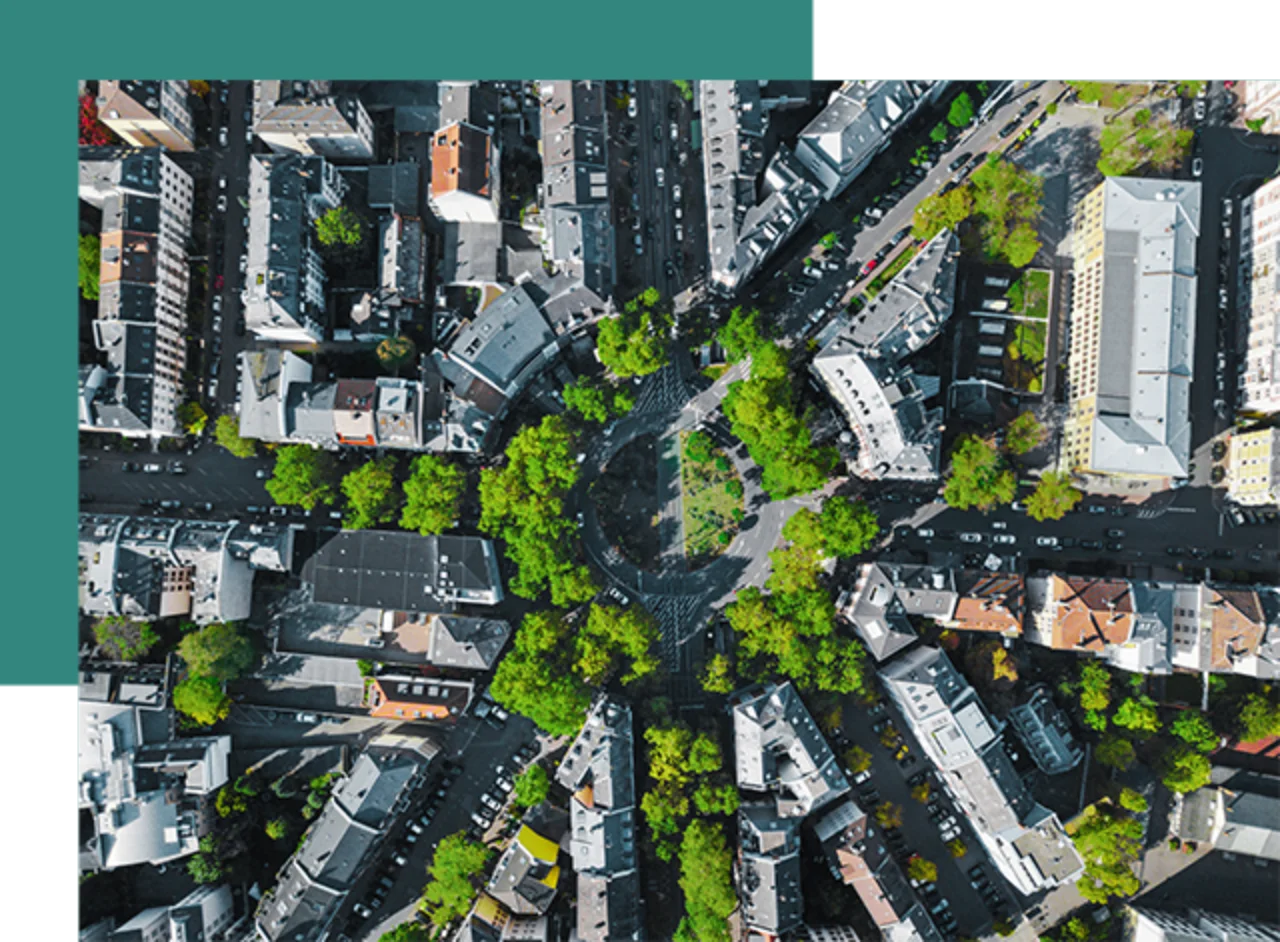
Decarbonization of residential real estate plays a key role in achieving Europe’s – and, in particular, Germany’s – commitment to net zero.
At year-end 2025, the bank’s European residential real estate portfolio reached € 160.6 billion. Residential mortgages for private clients in Germany constitute approximately 92% of this portfolio, encompassing around 1.1 million private residences in Germany.
Deutsche Bank focuses on supporting clients to navigate all aspects of the modernization and energy-efficient refurbishment of their property. This includes real estate evaluation, energy consulting, residential refurbishment specialists offer, subsidy service as well as financing.
Read more in our update
Read more in our initial report
Show content of Disclaimer
The transition to a sustainable economy is a long-term undertaking. In its current stage, we are confronted with the limited availability of climate related data. Use of estimates and models is inevitable until improved data becomes available. Our expectations for increasing data quality are based on reporting obligations as currently developed. New regulations on reporting will likely become effective in the coming years. Harmonized standards and calculation methods are expected to be developed and will also improve data quality.
This Website includes metrics that are subject to measurement uncertainties resulting from limitations inherent in the underlying data and methods used for determining such metrics. The selection of different, but acceptable measurement techniques can result in materially different measurements. The precision of different measurement techniques may also vary. The information set forth herein is expressed as of March 2026, and we reserve the right to update its measurement techniques and methodologies in the future.
We have measured the carbon footprint of our corporate loan portfolio as well as our European Real Estate loan portfolio in accordance with the standards we discuss in our Climate Change chapter of our Sustainability Statement (Annual Report 2025).
In doing so, we partly used information from third-party sources that we believe to be reliable, but which has not been independently verified by us, and we do not represent that the information is accurate or complete. The inclusion of information contained in this document should not be construed as a characterization regarding the materiality or financial impact of that information.
If emissions have not been publicly disclosed, these emissions may be estimated according to the Partnership for Carbon Accounting Financials (PCAF) standards. For borrowers whose emissions have not been publicly disclosed, we estimate their emissions according to the PCAF emission factor database. Since there is no unified source of carbon emission factors (including sustainability-related database companies, consulting companies, international organizations, and local government agencies), the results of estimations may be inconsistent and uncertain.
Past performance and simulations of past performance are not a reliable indicator and therefore do not predict future results.
This Website contains forward-looking statements. Forward-looking statements are statements that are not historical facts; they include statements about our beliefs and expectations and the assumptions underlying them. These statements are based on plans, estimates, and projections as they are currently available to the management of Deutsche Bank Aktiengesellschaft.
Forward-looking statements therefore speak only as of the date they are made, and we undertake no obligation to publicly update any of them in consideration of new information or future events. By their very nature, forward-looking statements involve risks and uncertainties. Several important factors could therefore cause actual results to differ materially from those contained in any forward-looking statement.
Such factors include the conditions on the financial markets in Germany, in Europe, in the United States, and elsewhere, from which we derive a substantial portion of our revenues and in which we hold a substantial portion of our assets; the development of asset prices and market volatility; potential defaults of borrowers or trading counterparties; the implementation of our strategic initiatives; the reliability of our risk management policies, procedures and methods; and other risks referenced in our filings with the U.S. Securities and Exchange Commission. Such factors are described in detail in our most recent SEC Form 20-F under the heading “Risk Factors.” Copies of this document are readily available upon request or can be downloaded from the Investor Relations website.