

Growth greetings from Mars: the 6 hottest trends in the space economy
Are we facing a new global competition for supremacy in space? Do we want to advance the colonisation of space? What role does AI play? And what investment opportunities does all of this create?
Questions like these show that space is fast becoming an indispensable economic consideration. Here six developments you should be prepared for – from 3D printing to laser communication.
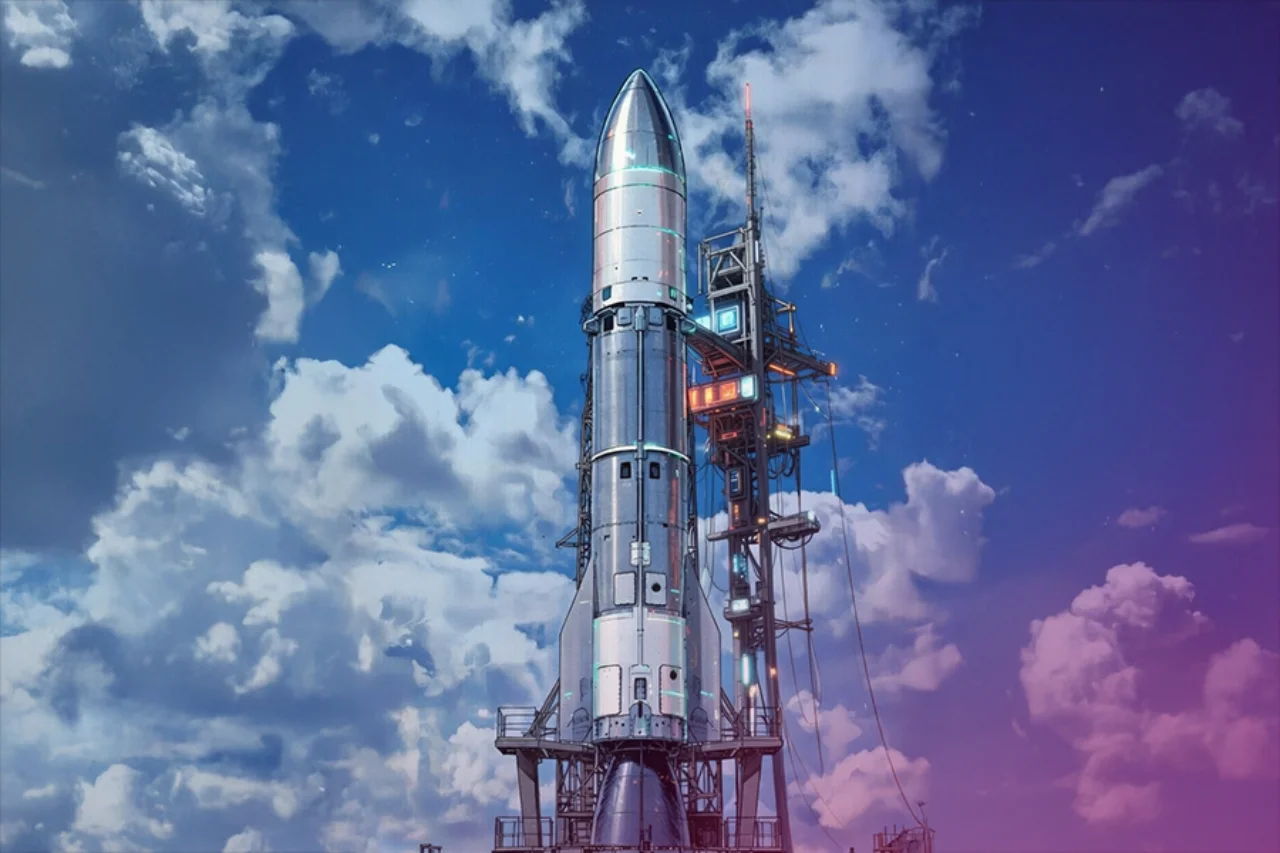
This is how AI envisions a reusable micro launcher.
Reusable micro-launchers
These compact, cost-effective rockets are specially designed to transport small satellites and CubeSats (satellites in form of a cube with only 10 cm side length). They combine the advantages of larger rockets' reusability with the flexibility and cost efficiency of smaller systems.
Advanced materials and AI-supported flight control systems make it possible to use these launchers multiple times, significantly reducing the cost of a launch. This development makes space an attractive long-term playing field for companies and research institutions.
Nyx by The Exploration Company
Meet Nyx – a modular and reusable space vehicle. Nyx takes off from any heavy launcher in the world to safely deliver cargo to and from space stations in LEO and beyond.
Deutsche Bank has been working with the company since its foundation.

This is how AI envisions 3D printing in space.
3D printing in space
3D printing is revolutionising the construction of space habitats. The latest technology uses space debris or loose fragments on the Moon’s surface and turns it into large three-dimensional structures – directly in orbit. This eliminates the need to transport prefabricated modules from Earth to space at great expense.
The technology could be crucial for the construction of lunar bases and future Mars settlements.
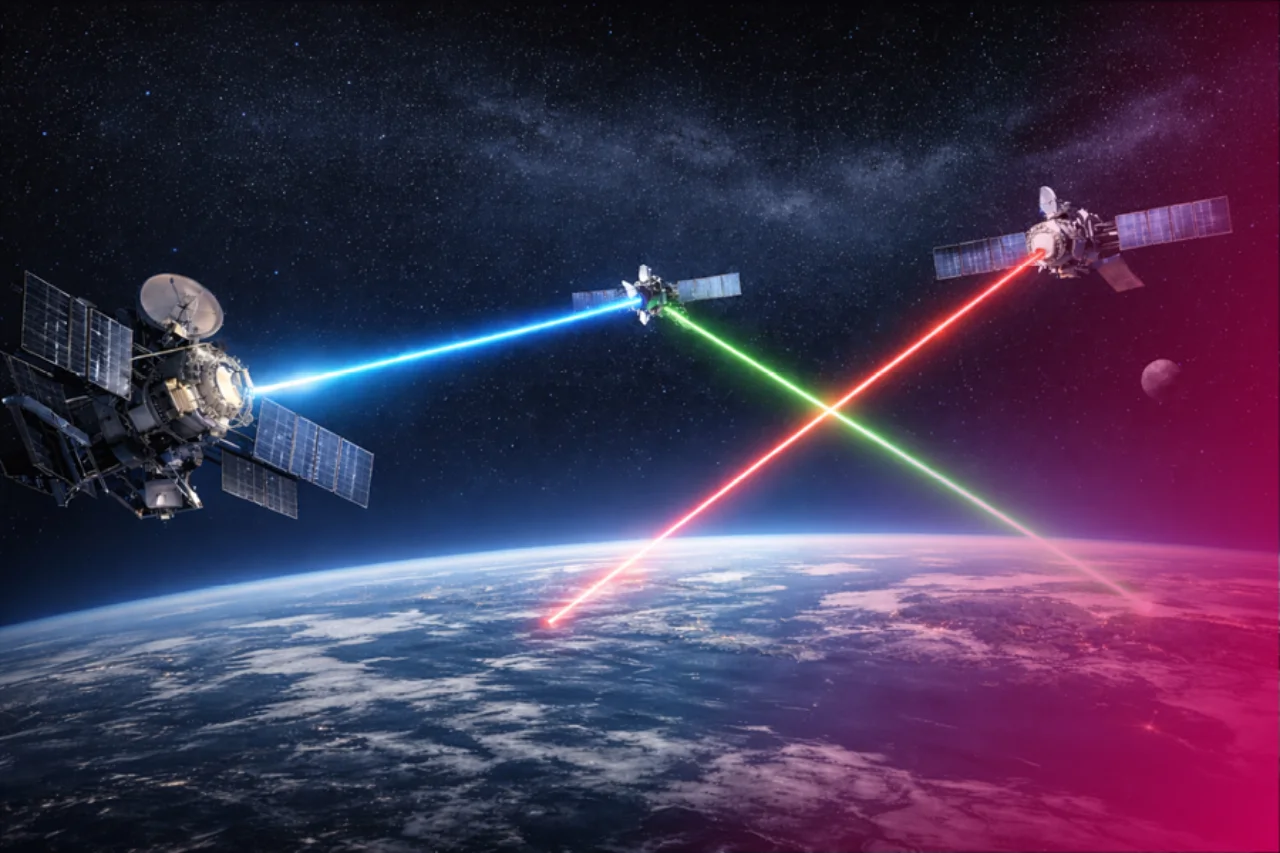
This is how AI envisions tap-proof quantum communication satellites.
Tap-proof quantum communication satellites
These utilise the principles of quantum entanglement to enable tap-proof communication over long distances.
The integration of this technology into satellite systems promises a new era of cyber security for sensitive government, military and financial communications and could form the basis for future quantum computer infrastructures.
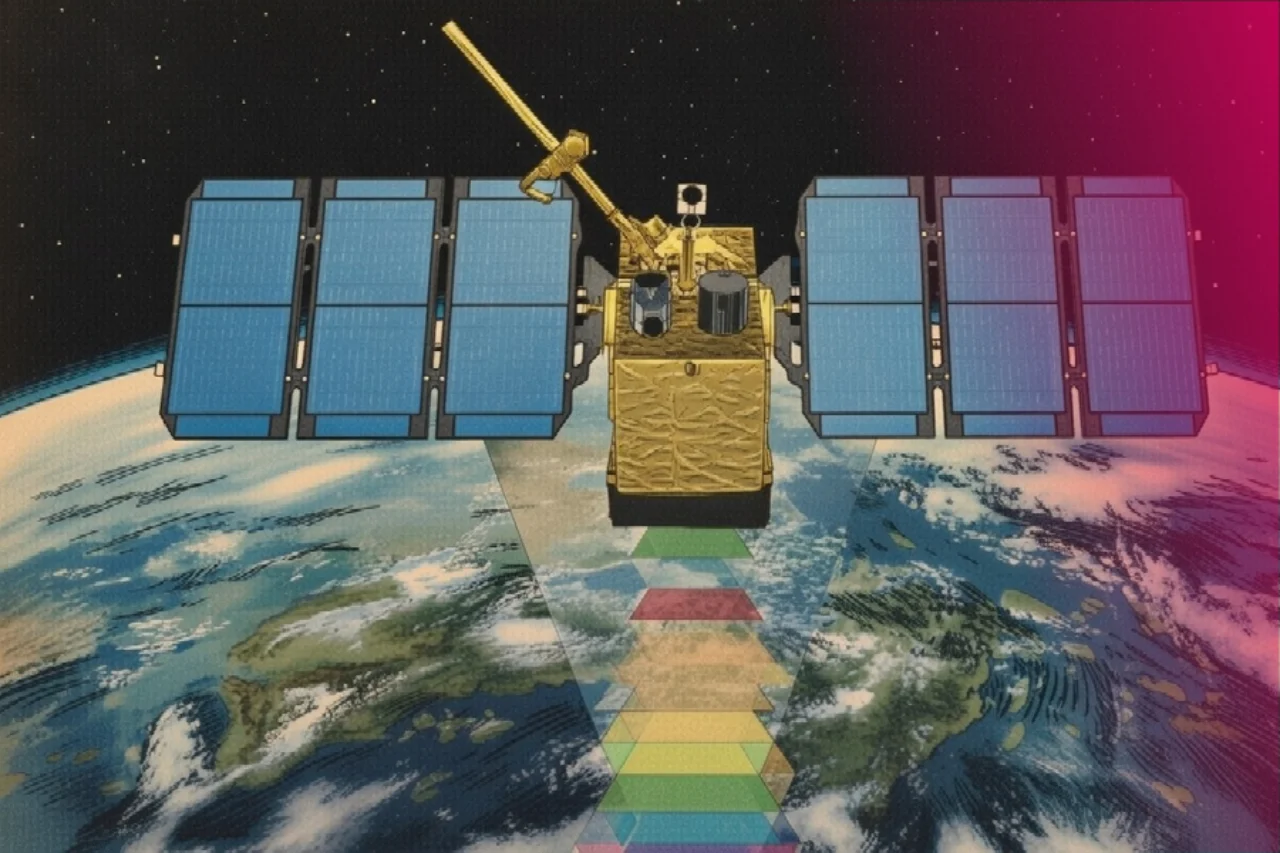
This is how AI envisions real-time hyperspectral AI analysis.
Real-time hyperspectral AI analysis
A quantum leap in Earth observation through a combination of hyperspectral imaging (processing information from across the electromagnetic spectrum) and AI-powered real-time analysis.
First, high-resolution sensors directed at Earth capture hundreds of wavelengths of the electromagnetic spectrum, which are immediately processed by advanced AI algorithms.
The technology can detect and analyse the smallest changes in vegetation, soil composition or water quality almost instantly. This has several uses including optimising precision farming, environmental monitoring and resource exploration.
What is hyperspectral imaging?
Hyperspectral imaging is an advanced technology that combines conventional imaging with spectroscopy. It captures and analyses a broad spectrum of electromagnetic wavelengths for each pixel of an image, creating a detailed ‘spectral fingerprint’ of the objects or scenes depicted. This technique makes it possible to capture and visualise information that is invisible to the human eye, opening up revolutionary application possibilities in various industries and research areas.
The global hyperspectral imaging market size was valued at USD 229.8 million in 2024 and is projected to grow from USD 259.3 million in 2025 to USD 602.2 million by 2032.
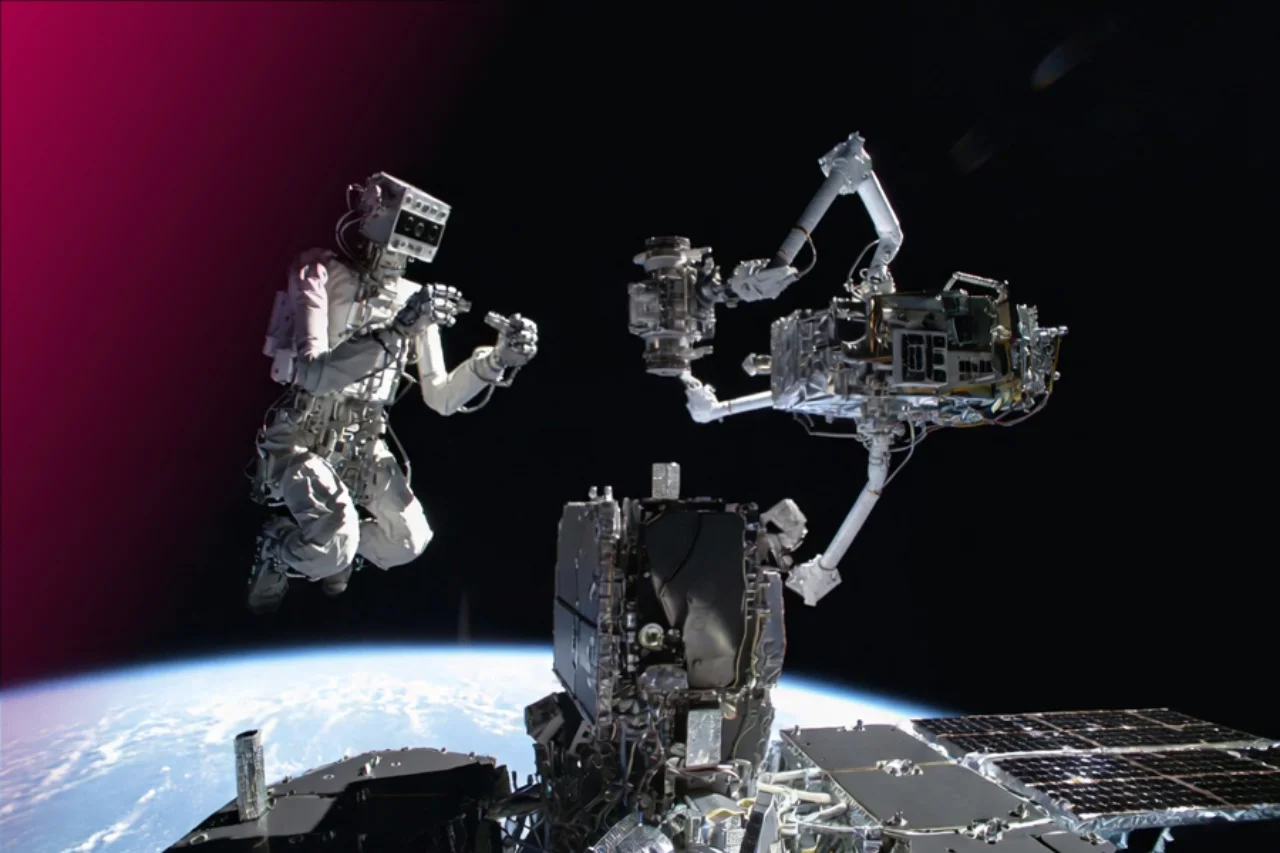
This is how AI envisions autonomous space service robots.
Autonomous space service robots
Thanks to AI and sensor technology, these can perform complex maintenance and repair tasks on satellites and space stations without human intervention – from diagnostics to replacing defective components or refuelling. Reduces the risks and costs of space missions and helps eliminate space debris.
In-orbit servicing enhances satellite sustainability and efficiency in space.
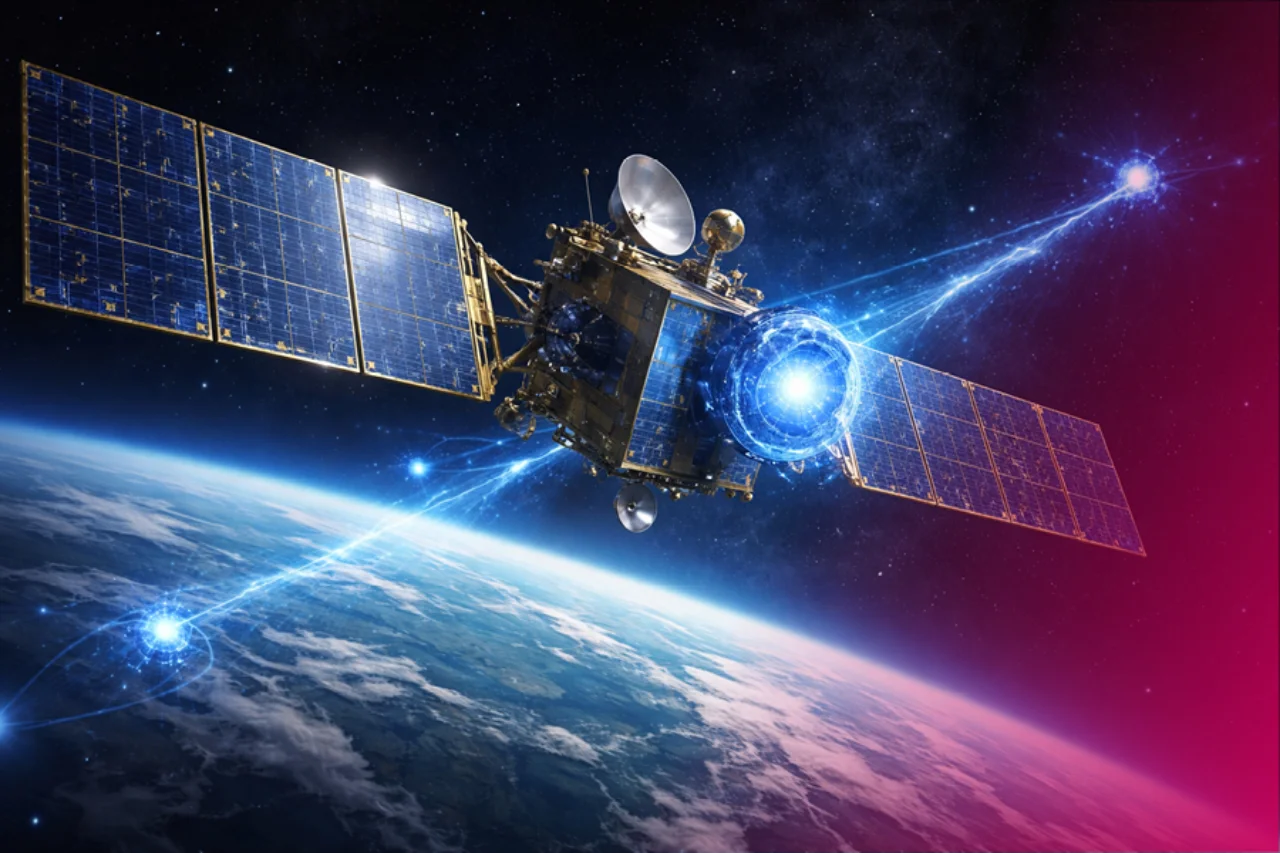
This is how AI envisions a neural laser communication satellite.
Neural laser communication network
This is a satellite network where the satellites communicate with each other and ground stations via lasers. AI that uses neural networks optimises routing and data transmission in real time.
The advantages: ultra-fast and secure connections directly to end devices; an adaptive network structure that automatically adjusts to disruptions or failures; global high-speed internet connections with minimal latency, even in the most remote areas.
What is laser satellite communication?
Laser satellite communication (also called Lasercom) is a subset of free-space optical communication, presenting significant advantages over Radio Frequency (RF) signals. Laser satellite users can expect increased data rates (bandwidth), enabling them to send and receive far more information than traditional radio waves. With major satellite players like Starlink and Amazon project Leo investing in the technology, there is broader attention being paid to Optical Inter-Satellite Links (OISLs).
How quickly is space developing into a competitive, data-driven market with global competitors?
Deutsche Bank has been closely monitoring the rapid economic developments in space for many years – including at its fourth Global Space Summit, which the bank last hosted in New York in November 2025. Discussion focussed on the future uses of space with experts from established companies, start-ups and scientific researchers. In discussion rounds on topics as "Launch", "Beyond Earth", "Buses and Payloads", "Geospatial Intelligence & AI", "Space & Defence Tech", and "Direct-to-Device Connectivity", the mentioned developments were covered.
This page was published in February 2026.

Michael Herman
… creates content for Deutsche Bank and writes speeches for its senior executives. He is interested in how technology is making space gradually more accessible, especially innovations that remind him of Star Trek.
Recommended content

Digital Disruption | Opinion
Investing in Orbit: the rise of Europe’s space economy Investing in Orbit: the rise of Europe’s space economy
Europe’s space economy is accelerating – fuelled by rising investment, new markets, and ESA’s push for commercial innovation. Christine Klein explains how.
Investing in Orbit: the rise of Europe’s space economy Discover Europe’s space economy taking off
Digital Disruption | Insights
Private space race accelerates: Innovation opens the final frontier Private space race accelerates: Innovation opens the final frontier
Space was once the dream of nations, now it’s the ambition of innovators. Watch 99 seconds with space economist Edison Yu.
Private space race accelerates: Innovation opens the final frontier Uncover race to space
Digital Disruption | Quiz
Space Quiz: Test your knowledge about the future of space travel Space Quiz: Test your knowledge about the future of space travel
Think you’ve got the future of the space economy figured out? Don't be fooled by every overly futuristic‑sounding answer that comes along.