

“Europe’s payments infrastructure is world-class”
Strategic autonomy is not confined to energy, technology or raw materials. Payments matter too. Deutsche Bank’s Christof Hofmann explains why Europe’s payments infrastructure is stronger than many assume – and where the continent needs more control over digital payments.
Whether people are receiving a salary, paying an electricity bill, shopping online or trading across borders, payments underpin everyday economic life. Yet the infrastructure behind them is largely invisible.
Christof Hofmann heads Cash Management at Deutsche Bank, the business that helps companies and people move money reliably and efficiently across borders. In this interview, he explains why Europe is a global leader in payments infrastructure, where dependencies remain and what Europe needs to do now to build on its strengths.
Christof, how much control does Europe really have over payments?
That depends on which part of the payments chain you look at. In the underlying infrastructure, Europe is exceptionally strong. SEPA, SEPA Instant, Target2 and Euro1 allow money to move across borders quickly, reliably and at very low cost - in the case of SEPA Instant, even in real time. No other region in the world achieves this in this way. Europe has built a shared cross-border infrastructure that works extremely well. In this respect, Europe's payment infrastructure is world-class.
How did Europe achieve that?
Since SEPA was introduced in 2008, banks and clearing systems have applied common principles and standards across 41 countries, supported by regulation. Today, companies and consumers can move money quickly, reliably and cost-effectively across borders. Few parts of Europe’s economy work as consistently across countries as payments. That reliability is often taken for granted but it gives Europe a real competitive advantage.
Few parts of Europe’s economy work as consistently across countries as payments. That reliability (…) gives Europe a real competitive advantage.
Where does Europe still need to improve?
The challenge is less the movement of money in the background and more the way people and merchants pay in practice. At the point of sale and in e-commerce, many payment options are either national in scope or offered by global providers. At the same time, SEPA gives Europe a powerful common infrastructure on which to build additional competitive European alternatives for day-to-day payments.
The challenge is less the movement of money in the background and more the way people and merchants pay in practice
With Wero and the digital euro, Europe is working on exactly that.
And rightly so. Wero is one such European solution, initially for online retail and later for in-store payments. It is also designed to work alongside other private-sector European initiatives so that different services can be used more widely across Europe. In future, the digital euro could complement these solutions as a form of digital cash.
Together, these initiatives would give merchants and consumers more choice, while ensuring that Europe has its own widely usable options in a strategically important area: digital payments. That would strengthen resilience and give Europe more control over a key part of the economy.
What is Wero?
Wero is a relatively new European digital payment solution. Consumers can use Wero to send money to each other via mobile phone or pay online. Soon, shops will also accept Wero.
This new payment solution was developed by the private-sector joint venture EPI Company SE. Merchants and private customers of European financial institutions in Germany, France, the Netherlands and Belgium have been able to use Wero via bank apps or the Wero app since the end of 2024 and it will be available in other EU countries in the future.
Wero is also cooperating with similar solutions in other EU member states to link their existing payment methods with Wero for pan-EU coverage. Wero uses the common European payment infrastructure SEPA. The aim is to offer a system that enables every EU citizen to pay anywhere in Europe with a European, digital solution.
What is the digital euro?
The digital euro is an electronic equivalent to cash aimed at giving people an additional choice about how to pay throughout the entire euro area, complementing notes and coins.
Unlike digital money in a bank account that is issued by a commercial bank, the digital euro is issued directly and backed by the European Central Bank (ECB). Consumers will be able to use the digital euro for payments in stores, online or from person to person in the same way they currently use cash, cards or mobile-based payment methods. Banks and other authorised payment service providers will make it available via their digital channels.
A pilot phase is set to start in late summer 2027, in which the ECB will test the technical implementation together with selected payment service providers. Assuming EU lawmakers adopt the regulation in the course of 2026, EU citizens across the euro area could potentially start paying with the digital euro sometime during 2029.
And for companies?
For companies, the opportunity lies in more automated payments. Blockchain-based payments and stablecoins could become part of the next phase of digitalisation. They could also help ensure that the euro continues to play an important role in future global financial systems. Blockchain-based digital infrastructure can allow companies to automate processes more extensively than they do today. To do that, they need compatible payment solutions – systems that can trigger a payment automatically once agreed conditions are met, without a person having to initiate it each time.
Deutsche Bank and payments
Deutsche Bank is one of the most important European players in international payments. It is the largest euro clearer in the world, which means that it processes more cross-border payment flows in euros for other banks and financial institutions than any other market participant. At the same time, it helps its clients as their Global Hausbank to do business in around 60 jurisdictions worldwide by offering on-the-ground expertise and financial services. Deutsche Bank enables payments worldwide and supports around 130 currencies.
Could this also strengthen the euro’s role in the international financial system?
Yes. For Europe to build on its already strong role, it needs to keep the currency relevant and attractive in a changing financial system. That includes encouraging the use of the euro in international trade, including in the context of EU trade agreements with other economic areas. It also means ensuring that the euro can be used in modern payment systems and new technologies, including blockchain-based payments and digital forms of money. If the euro is easy and attractive to use in both existing and emerging areas, it can further strengthen its international role.
How does the blockchain work?
The blockchain is a decentralised infrastructure on which different market participants can work on a common database. It makes it possible to create a digital representation of assets such as stocks or bonds and of money – these digital representations are called tokens. Users can transfer such tokens within a shared network. Ever since the existence of programmable platforms such as Ethereum in 2015, blockchain has attracted a lot of interest in the financial industry. Financial institutions are testing the technology in payments as well as in the issuance and settlement of securities, among other things, and are already using the blockchain in some cases. Applications related to stablecoins, tokenised deposits and central bank digital currencies (CBDC) are under active discussion.
What concrete steps are needed by 2030?
Europe needs to support initiatives such as Wero and the digital euro in a coordinated way, while also leaving room for innovation. In more technologically demanding areas, such as blockchain-based payments, Europe needs to move beyond pilots faster. Financial institutions have to help drive that progress. But they also need clear signals from policymakers. Regulation is essential for legal certainty. But it should also strengthen Europe's competitiveness and set clear priorities.
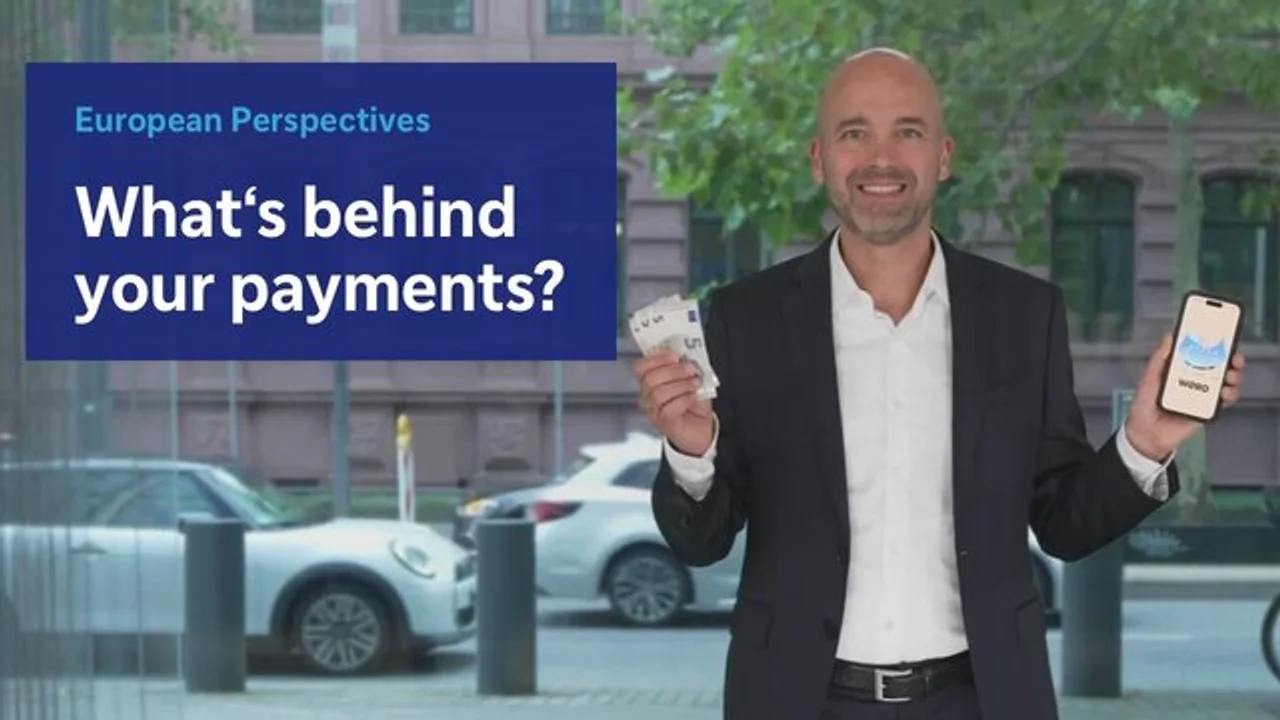
Video: What's behind your payments?
About Deutsche Bank and Europe
Europe is more than a market. It's a space for ideas, growth, and collaboration.
Deutsche Bank shows where European companies are already setting standards today – and how capital, expertise and networks help to seize opportunities across borders.
As a European bank with a global network, we connect companies and investors: from Europe to the world and from the world to Europe.
About Christof Hofmann
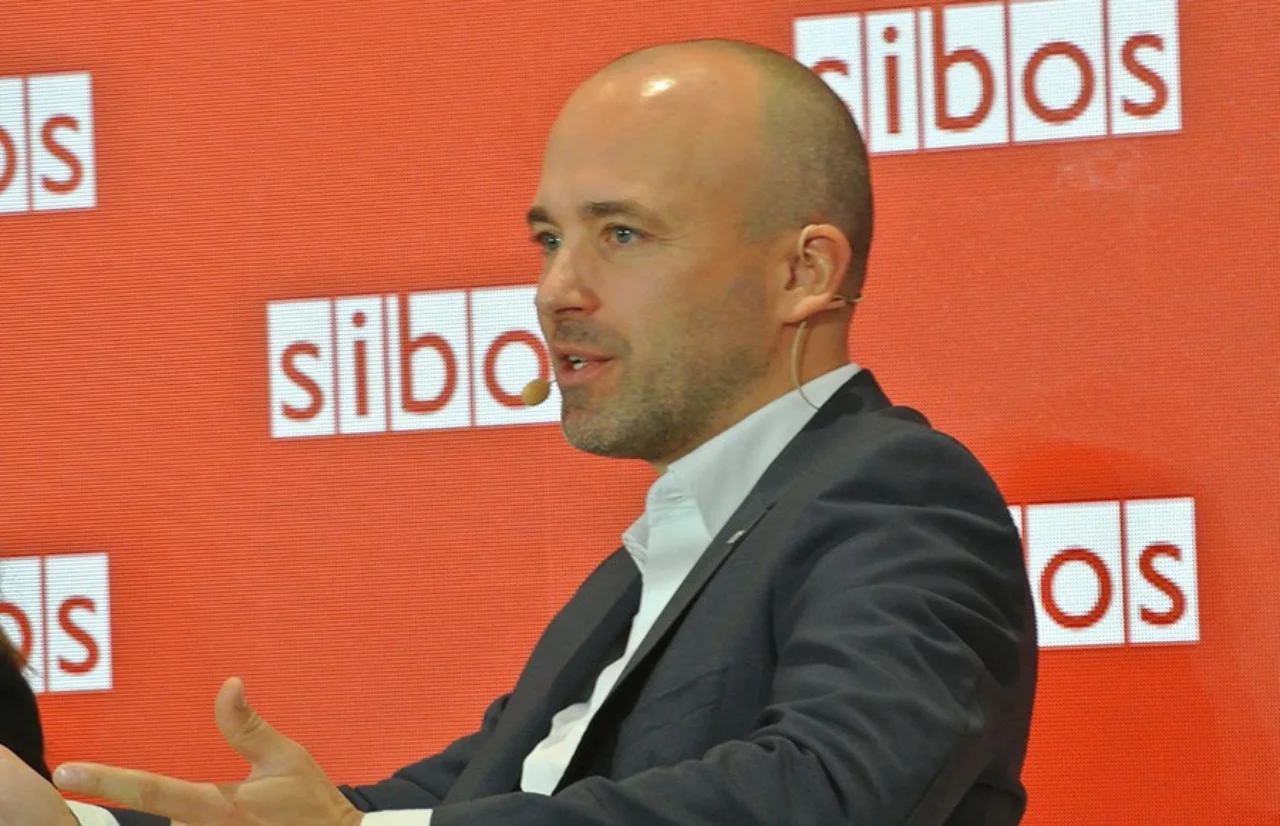
As Global Head of Cash Management, Christof Hofmann is responsible for the strategic development of the business. His goal is to help companies around the world manage their payments and liquidity more efficiently, while enabling them to benefit from the innovations of an increasingly digital financial landscape.
Christof studied industrial engineering with a focus on mechanical engineering in Darmstadt and the United States. He joined Deutsche Bank from Boston Consulting Group in 2011, initially working in the Strategy team. Since moving to Deutsche Bank’s “Corporate Bank“ ten years ago, he has held a number of senior leadership roles in Payments and Cash Management.
This page was published in August 2026.

Georg Berger
… works on international communications projects at Deutsche Bank. He is interested in how Europe can achieve increased autonomy in key economic areas without shutting itself off from international trade. Like most people, he never thought about payments infrastructure when paying online or in a cafe; but this conversation convinced him to download the Wero app.
Recommended content
Digital Disruption | Opinion
“In the tokenised economy we can make money smart” “In the tokenised economy we can make money smart”
Investing in luxury hotels or a Picasso painting? Deutsche Bank expert Sabih Behzad explains how a tokenised economy will revolutionise investments and payment flows. And where the risks are lurking.
European Success Stories | Opinion
“We install the largest wind turbines that exist today” “We install the largest wind turbines that exist today”
The North Sea has the potential to become a green power plant for Europe – despite huge challenges. About the benefits of Europe and wind energy.
“We install the largest wind turbines that exist today” Wind of change with Jan de Nul
Digital Disruption | Outlook
Invest faster and broader thanks to blockchain Invest faster and broader thanks to blockchain
Stock market and blockchain expert Lidia Kurt on the transformative power of blockchain technology in securities trading and the “Internet of Value”.