
“The wave of modernisation has got off to a good start”
Infrastructure, security, technology: Europe must invest heavily to remain competitive. Deutsche Bank expert Hauke Burkhardt explains how this can succeed – provided the public sector and private investors pull together.
From defence and energy to artificial intelligence, Europe must invest enormous sums if it is to remain strategically autonomous and competitive internationally. As the largest economy, Germany plays a particularly important role. At Deutsche Bank, Hauke Burkhardt is Head of Bund and Public Sector Coverage & Advisory. In this interview, he discusses the progress being made with the approved special fund (Sondervermögen) of half a trillion euros – and why private capital is indispensable for making Europe fit for the future.
Hauke, since taking office in the spring of 2025, the federal government has approved massive investments to turn Germany into the engine of European competitiveness. How is that progressing?
Things are moving – though not everywhere at the same pace or to the same extent. Significant activity is already underway in the defence sector, where the government has permitted exemptions from the debt brake. The situation regarding the special fund for infrastructure is more nuanced.
In what way?
Of the total 500 billion euros, the federal government is spending 300 billion; 100 billion is going to the federal states and municipalities, and another 100 billion to the Climate and Transformation Fund. A considerable amount has already been disbursed at the federal level. At the regional level, it took a bit longer to establish the necessary legal frameworks. However, I am quite confident that investments will soon accelerate there as well – provided that planning and approval processes become even more efficient and faster.
Many experts, including Deutsche Bank CEO Christian Sewing, emphasise that the volume of investment could be multiplied – or "leveraged," to use the technical term – by private capital. What does that mean in concrete terms?
500 billion euros sounds like a huge amount at first, but it will still fall far short of what is needed to modernise Germany. That requires additional capital. There are various ways for the public sector and private investors to jointly finance projects – and each has its strengths, depending on the specific context.
There are various ways for the public sector and private investors to jointly finance projects – and each has its strengths, depending on the specific context.
For example?
In first-loss arrangements, for instance, the state assumes the initial portion of any losses incurred. This is particularly suitable for new technologies and markets where adoption rates or chances of success are difficult to predict. By cushioning some of the risk, the state makes it possible for investors and banks to participate in such projects in the first place.
What else?
For major infrastructure projects like road construction, traditional public-private partnerships are often more appropriate: private providers typically handle the construction and operation of the project, while the state pays regular fees over the long term – essentially like rent. This way, the public sector does not have to provide all the capital upfront, thereby retaining greater financial flexibility. There are also various other ways the state can provide security for private investors. One example is through Contracts for Difference, under which the state guarantees a certain level of demand or a minimum price.
How can Europe finance its future? Three priorities stand out:
- Private capital is essential.
The public and private sectors must work closely together to fund the massive investments needed in energy, defence and technology. - Choose the right financing model.
From public-private partnerships to first-loss structures, there are different ways to finance projects jointly. However, not every approach is suitable for every project. - Be transparent from the outset.
To avoid misunderstandings and speculation, the costs and milestones of any partnership should be clearly communicated.
Experts estimate the leverage effect of private capital at four to five times the initial amount – which, for a 500-billion-euro programme, would mean a total of 2 to 2.5 trillion euros. Is that realistic?
The actual leverage achieved depends heavily on the specific instruments used. Some purchase guarantees make an investment possible in the first place, whereas other structures yield a lower leverage effect. All in all, however, that order of magnitude is realistic.
There is one other important point here: beyond the leverage effect, the state uses these instruments to send a strong signal that it believes in the projects in question.
Critics argue that projects become more expensive when private investors are involved – or, to put it bluntly, that the state gets taken for a ride. How do you respond to that?
You have to look at the project’s entire life cycle. Even if a project appears more expensive at the outset, it often works out cheaper for the public sector in the long run. The reason is that private providers possess extensive expertise in planning, implementing, operating, and maintaining projects. And, to state it clearly once more: many projects would never get off the ground without private capital, simply because the state lacks the necessary funds and capacity. However, to avoid misunderstandings and speculation, project costs and milestones should be transparent from the very beginning.
Many projects would never get off the ground without private capital, simply because the state lacks the necessary funds and capacity.
To wrap up, let’s take a broader view: how is Europe progressing overall with modernisation?
The wave of modernisation in Europe has got off to a good start – and everyone realises that Europe cannot remain competitive without significant investment. The list of encouraging projects is long: from renewable energy in Spain and offshore wind power and heating infrastructure in Denmark to the fact that a pension fund in the Netherlands is co-financing investments in roads and bridges. Where we can do even better is by acting together – for instance, regarding a European energy strategy that pays greater attention to the strengths of individual regions.
How Deutsche Bank connects private investors with the public sector
Deutsche Bank uses its global network to help establish contacts with companies and international investors looking to invest in Germany. It advises public sector clients, provides financing expertise, and facilitates access to capital markets. In doing so, the bank pools its strengths across all divisions – from the Corporate Bank and Investment Bank to the business serving high-net-worth individuals seeking investment.
About Deutsche Bank and Europe
Europe is more than a market. It's a space for ideas, growth, and collaboration.
Deutsche Bank shows where European companies are already setting standards today – and how capital, expertise and networks help to seize opportunities across borders.
As a European bank with a global network, we connect companies and investors: from Europe to the world and from the world to Europe.
About Hauke Burkhardt
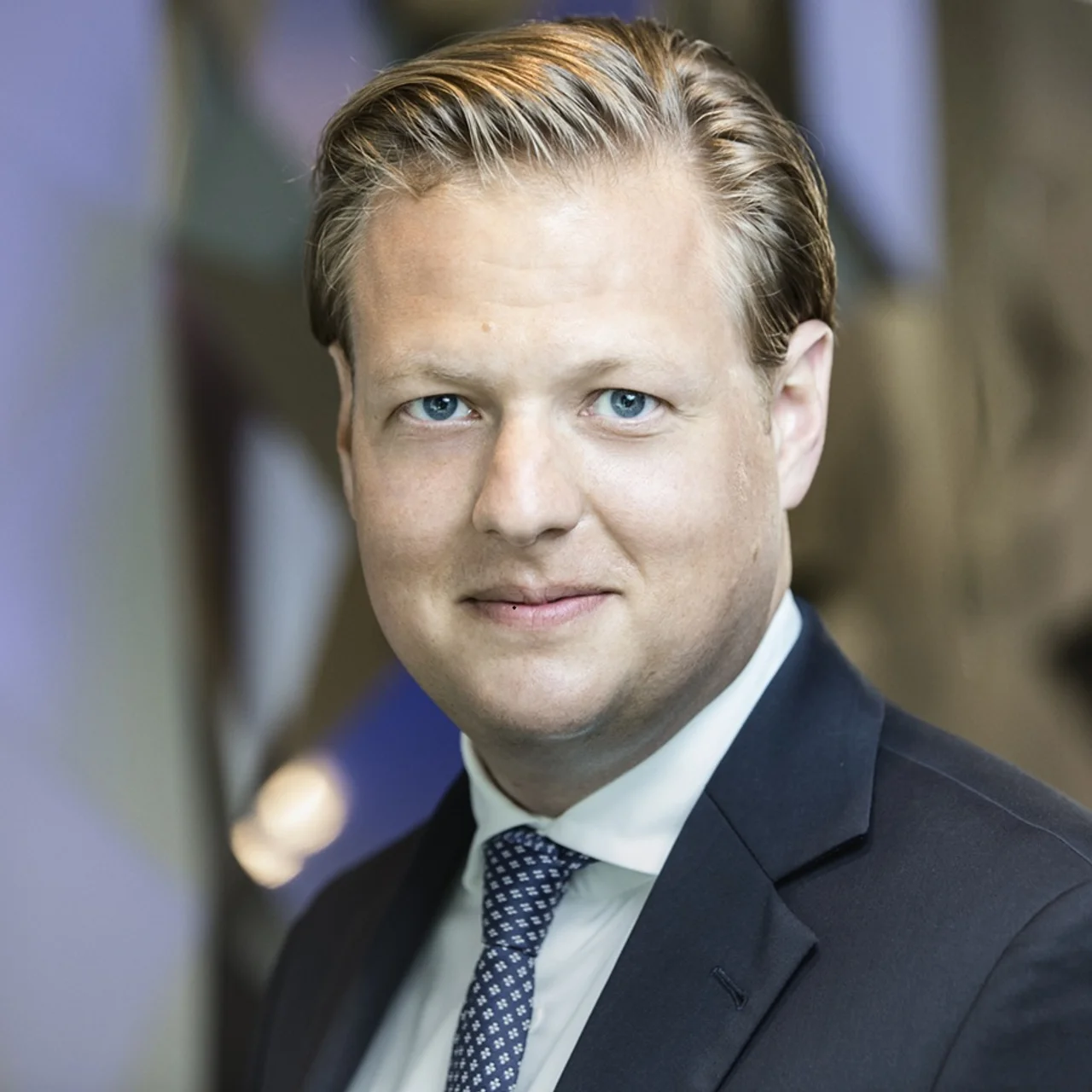
Hauke heads Deutsche Bank’s Bund and Public Sector Coverage & Advisory team, which provides financing advice and support for the public sector and development banks in Germany.
Hauke studied Business Administration at the Baden-Württemberg Cooperative State University and has been with Deutsche Bank since 2007. Since then, he has held various leadership positions in the Corporate Bank – including Head of Trade Finance & Lending for Germany, Austria, and Switzerland; and Head of Corporate and Real Estate Finance.
This page was published in September 2026.
Claudio De Luca
… has two young children, which is one reason why he is keen to explore how to secure and shape Europe’s future. As an economics graduate, he supports the idea of leveraging private capital for the continent’s transformation.
Recommended content
European Success Stories | Opinion
“Europe’s payments infrastructure is world-class” “Europe’s payments infrastructure is world-class”
Deutsche Bank’s Christof Hofmann explains why Europe’s payments infrastructure is stronger than many assume – and where the continent needs more control over digital payments.
“Europe’s payments infrastructure is world-class” Hidden strength
European Success Stories | Opinion
“We install the largest wind turbines that exist today” “We install the largest wind turbines that exist today”
The North Sea has the potential to become a green power plant for Europe – despite huge challenges. About the benefits of Europe and wind energy.
“We install the largest wind turbines that exist today” Wind of change with Jan de Nul
Entrepreneurial Success | Photo Story
“First, we had to explain to people that this is food” “First, we had to explain to people that this is food”
When Noel Bollmann and Benjamin Kremer founded yfood in 2017 they had to explain their signature product a lot. Noel Bollmann about future plans and the expansion to the US.