

Building Europe’s way into space – The Exploration Company’s sustainable approach
Europe is charting its own path to orbit. In this interview, Hélène Huby reveals how The Exploration Company’s reusable, launcher agnostic capsule and open approach could give Europe sovereign access to space – cleaner and cheaper.
Hélène, in 2021 you founded The Exploration Company (TEC) together with a team of space engineers. What problem did you set out to solve – and why now for Europe?
It was very clear to me Europe had no homegrown way to carry cargo and people to space stations in Earth and lunar orbit, and no credible plan on the horizon. That gap demanded action. I founded The Exploration Company to give Europe that capability – and a seat at the table. I officially left Airbus in April, the company was created in July.
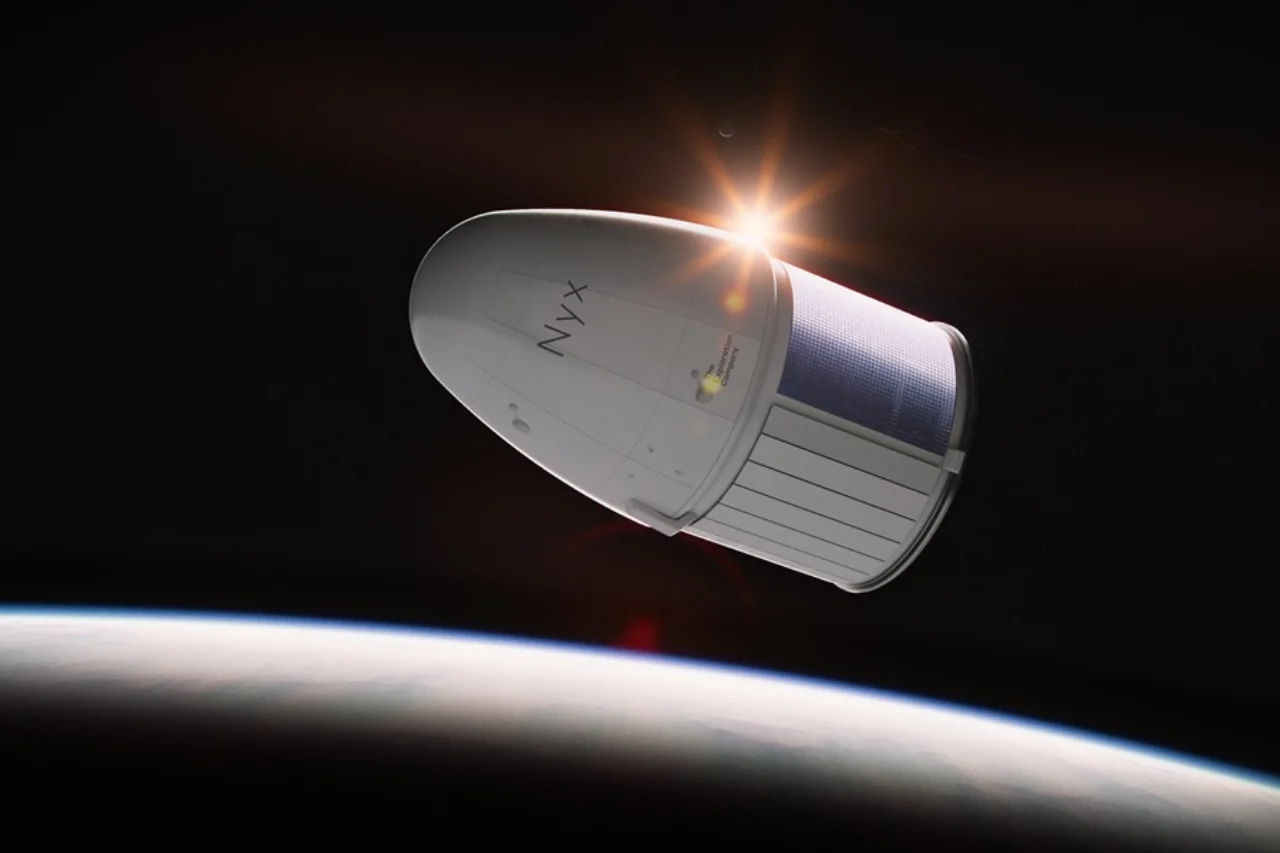
We design for interoperability instead of lock‑in.
In the long term, your space capsule “Nyx“ is designed to supply space stations like the International Space Station (ISS) with essential cargo. How does your approach differ from major US players such as SpaceX and Blue Origin?
First of all: Nyx is the first space capsule going to a space station to be significantly privately funded. We raised private capital and only later used nations as anchor clients. Next, Nyx is launcher-agnostic. We can fly on any heavy launcher in the world.
That allows customers to use their national assets when it makes sense. We can fly with American launchers if carrying NASA cargo, if we bring Japanese cargo we can use a Japanese launcher and if we bring Indian cargo we can use an Indian launcher. We take an open approach. We design for interoperability instead of lock-in.
What does “launcher‑agnostic” mean?
“Launcher‑agnostic” means Nyx can be launched on any compatible heavy rocket worldwide, giving TEC full flexibility and avoiding dependence on a single provider.
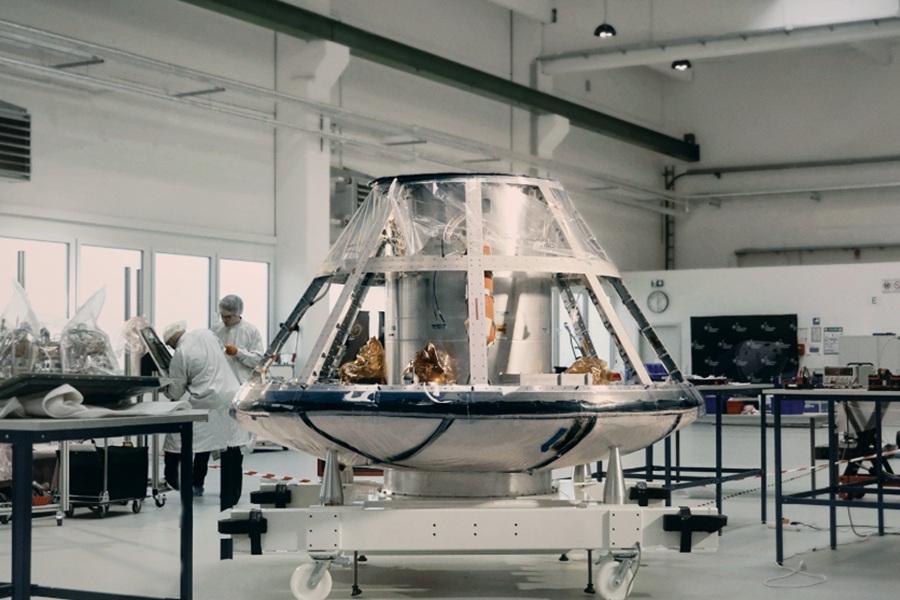
You built two capsules at remarkable speed. What trade offs and design choices enabled that?
We moved fast because we made conscious trade-offs and built with commercial, proven hardware. Both “Bikini” and “Mission Possible” integrated off-the-shelf, up-tested components rather than bespoke systems. That model shortens qualification paths and accelerates iteration.
We also accepted higher program risk to cut time, and we were transparent about it: no drop test for the parachute on this demo, no redundancy on certain critical subsystems, propulsion tested at thruster level only, and an in-house flight computer built from COTS parts. This is how a small core team achieved speed while learning from real flight data.
Finally, we treated the mission as a building block, not an end state: even a partial success generates the data that de-risks the next flights.
What are COTS?
COTS are standard, readily available components that are already produced for commercial markets – not custom‑built for one specific space mission.
Why this matters:
- Faster development (no long lead times for custom hardware)
- Lower cost
- Uses technology that is already proven in other industries
- Easier to replace or upgrade
Up-tested, though
Up‑testing goes beyond standard testing. It means taking commercial, off‑the‑shelf components and subjecting them to additional, more extreme or mission‑specific tests to check whether they can survive a harsher environment – in this case, spaceflight.
What types of public and private clients are you targeting, and which new use cases and business models could this enable?
We focus on government space agencies, such as the European Space Agency, and commercial entities, such as commercial space stations, through partners like Axiom Space and Vast. Our main business is servicing space stations. Most of our missions are focusing on that, because there is clearly a cargo need. Also, just in the past 5 years, we had an 80 percent increase in crew missions. There is a huge demand for more and more astronauts being flown to space, more activities happening in space.
Axiom Space is a leading provider of human spaceflight services and is developing the Axiom Station, the world's first commercial space station. Founded in 2016, Axiom Space conducted its first crewed mission to the International Space Station (ISS) in 2022.
Vast Space is a private aerospace company founded in 2021, aiming to develop the first private space station with artificial gravity. The company focuses on creating a commercial alternative to the International Space Station (ISS) and plans to launch the Haven‑1 space station in May 2026.
What makes the economics work long term in Europe – anchor customers, milestones, service contracts?
So, what we’re proposing to Europe is the commercial space model that has worked in the United States over the past 15 to 20 years: agencies act as anchor customers, run open competitions, pay fixed prices against milestones, and buy services instead of owning hardware. This structure crowds in private capital, rewards execution, and scales with flight rate – which is how you drive unit costs down over time.
ESA has already taken an important first step on this path with its commercial cargo‑return initiative; the next step is multi-year, multi-vendor service contracts that are launcher-agnostic and interoperable with European standards. Combine that with cross-border industrial participation and stable export regulations, this framework would allow a European space company to operate sustainably and profitably while strengthening Europe’s sovereign capability.
While the business model focuses on efficiency, the question of environmental compatibility also comes up. You use green fuel, aim to use the same vehicles 40 – 50 times without having to
retrieve them – this not only saves resources, but also avoids waste. Is your approach the solution to the space debris problem?
We plan missions in full alignment with European Space Agency’s debris-mitigation policy, which sets strict criteria for safe re-entry – such as a maximum casualty risk of 1 in 10,000. We are currently validating our approach through NASA’s and ESA’s ISS safety processes for logistics flights to the International Space Station.
While there is no single solution to the orbital‑debris challenge, our combination of re-usability, in‑orbit refuelling, and controlled end‑of‑life operations helps reduce the likelihood that our missions contribute to the debris field while aligning with tighter mitigation rules.
What are end‑of‑life operations?
End‑of‑life operations are the steps taken when a spacecraft finishes its mission – such as safely de‑orbiting, disposing of hardware, or recovering and preparing reusable vehicles – to reduce space debris and ensure responsible, sustainable spaceflight.
You’re the first European company to sign a Space Act Agreement with NASA. How essential is cross border cooperation for TEC – and what does global collaboration mean in today’s geopolitical climate?
We literally build across nations: teams in Germany, France, Italy, Luxembourg, USA and the UAE. That footprint lets us combine the best talent, best suppliers, meet multiple regulatory regimes, and fly with partners where they are. It is also a signal of how we want space to work: shared standards, open interfaces, and services that are interoperable rather than locked to one country or one launcher. In a tense geopolitical environment, this approach reduces single-country dependencies while keeping space open to collaboration. That is how The Exploration Company operates.
What is a Space Act Agreement?
A Space Act Agreement is a flexible partnership tool NASA uses to collaborate with companies, universities, or governments. It enables shared research, testing, and technology development without a traditional procurement contract.
We bring the launch capability to as many nations as possible – and with it, the ability to fly.
Your mission has quite a democratic approach: with TEC, you say you want to enable everyone to participate peacefully in shaping the future of humanity. Paint us the ten year picture: what does that mean when it scales?
Our mission is to build space vehicles across nations to foster peace and cooperation in space. What makes us really unique? For me, it’s something very tangible: we build across nations, keep it open and we lower barriers so more people can send experiments and payloads into space.
My dream is that in ten years we take off from Kourou with our rockets – topped by a crew capsule. We land in Australia and take off again, then we land in India and take off from there again. We really scale the infrastructure of launch. We bring this launch capability to as many nations as possible – and with it, the ability to fly.
The Exploration Company and Deutsche Bank
Deutsche Bank has supported The Exploration Company for many years as a reliable principal banking partner for their banking and cash‑management activities in Germany. Through an ongoing strategic dialogue, we help TEC optimize its liquidity structure and develop suitable investment strategies to drive its global growth.

About Hélène Huby
Hélène is Founder & CEO of The Exploration Company (TEC), the fastest growing European space tech startup.
Prior to founding TEC, Hélène has served as an executive at Airbus Defence & Space and ArianeGroup both in operational and strategic roles: from starting as Head of Innovation to leading major European space programs. She is the Founder and Chair of Urania Ventures, a deep tech investment company. She is the Founder and Chairman of The Karman Project, a non-profit foundation which fosters trust, independent dialogue and cooperation between the ones who shape the future of space. She graduated from ENS-Ulm, Sciences-Po Paris and ENA.
Hélène is married, has 4 kids, and loves cello, tennis and ski touring.
About The Exploration Company
In 4 years, TEC grew from 4 to 400 employees, raised 225 million EUR from tier-1 European venture funds, signed 850 million EUR contracts, and opened offices in France, Germany, Italy, USA and UAE. TEC is the only European startup where both French and German governments seat as Board Observers, and TEC is the first and only European space company having signed a space act agreement with NASA.
TEC produces space capsules which carry goods and humans to space stations. These technologies also serve defence needs to protect space assets in situ. TEC has won the European capsule competition, pioneering a new private-public partnership business model to finance European space infrastructures.
TEC mission is to build space vehicles across nations to foster cooperation and peace.
TEC vision is to master end-to-end the space transportation chain, starting with capsules (2 flown in space, final product in development), lunar vehicles (1st prototype developed with the UAE), and rockets (TEC has started the development of the biggest European rocket engine).
This page was published in March 2026.

Markus Dahlem
… oversees the bank’s global technology division in Group Communications. He is interested in the paths Europe is taking in space exploration – and in what this shared momentum reveals about the continent’s technological strength and future potential.
Recommended content
Digital Disruption | Insights
Exploring new frontiers Exploring new frontiers – in space
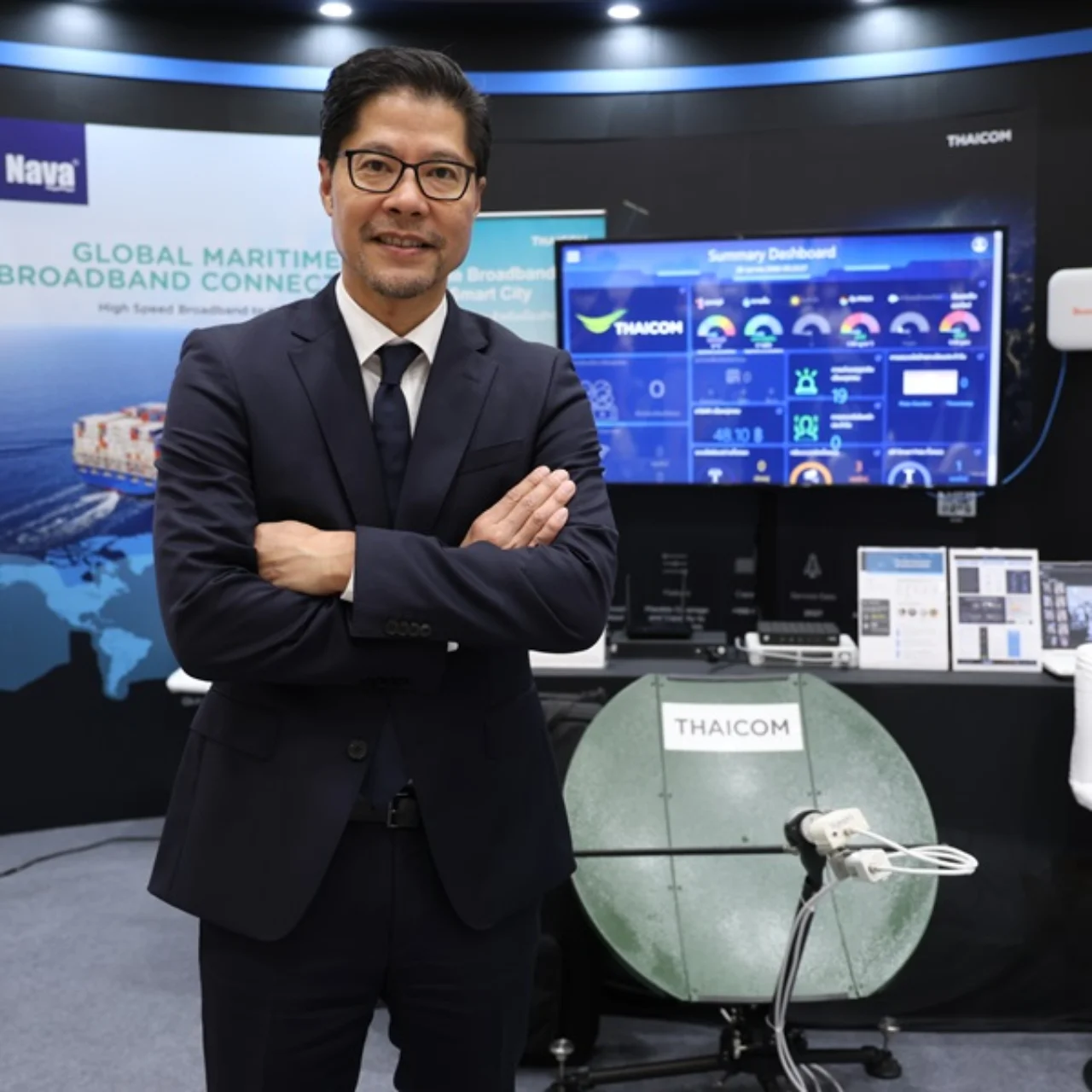
Thaicom’s CEO Patompob “Nile” Suwansiri sees space tech as key to tackling climate change, disaster response – and securing his company’s future.

Digital Disruption | Interview
“The truth comes from space” “The truth comes from space”
Space technology as a mass market, a Europe‑wide ecosystem for innovation – and minute‑by‑minute thermal images of the Earth: Thomas Grübler from OroraTech shares insights on the satellite and space data industry’s growth.
“The truth comes from space” Why orbit data is becoming a game changer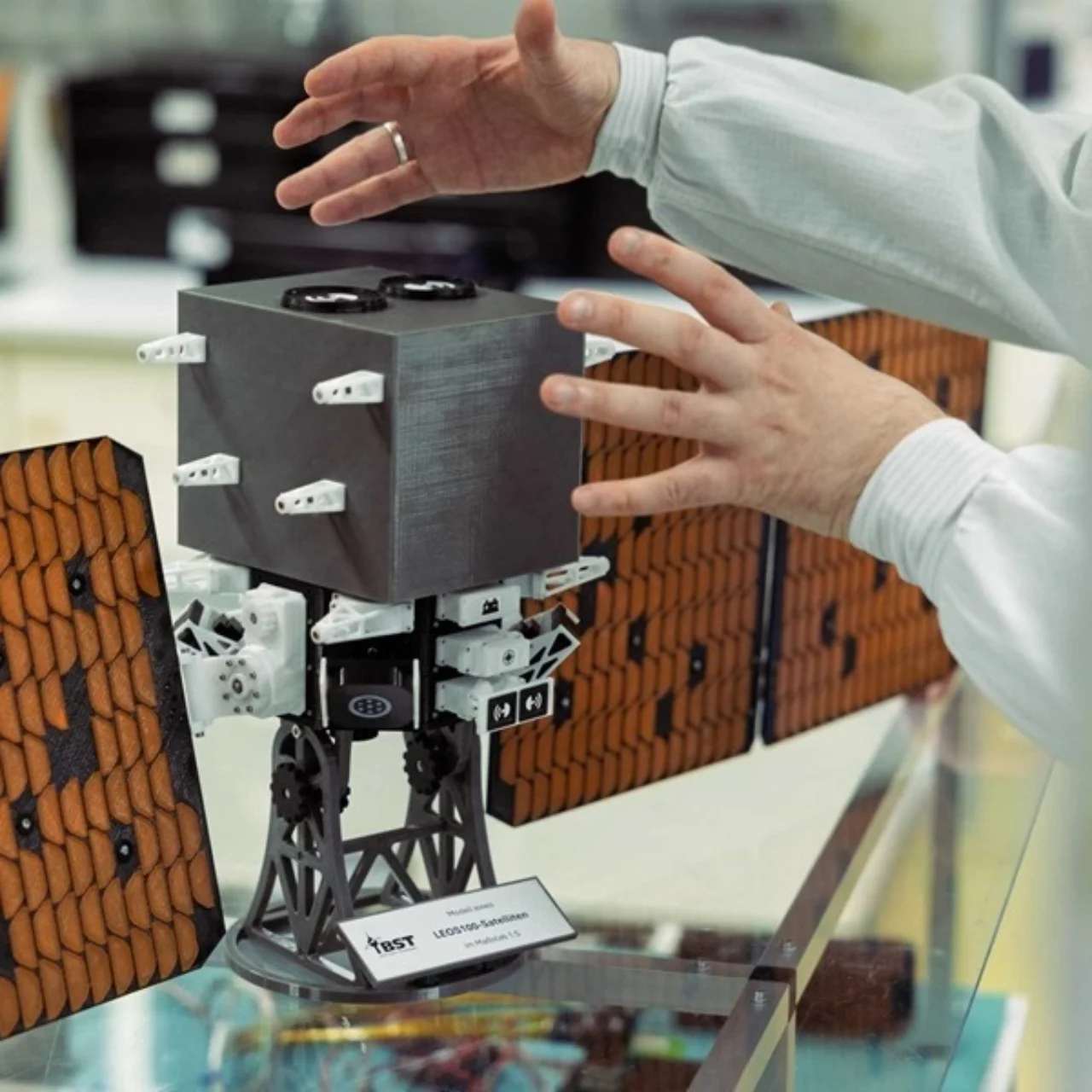
Digital Disruption | Video Story
End-to-end: space travel from a single source End-to-end: space travel from a single source
With the rise of the “New Space Economy,” SMEs and start-ups such as MBS and BST are entering the stage – bringing a breath of fresh air into a multi-billion-dollar market.
End-to-end: space travel from a single source Satellites off the assembly line?