

“The truth comes from space”
Space technology is rapidly becoming a mass market, supported by a Europe-wide innovation ecosystem – and minute-by-minute thermal images of the Earth. Thomas Grübler from the start-up OroraTech, shares insights on the satellite and space data industry's growth.
When the What Next editorial team first profiled OroraTech two years ago, the company was a young Munich-based team with an ambitious goal: to use miniature satellites to capture thermal images of Earth every 30 minutes, aiming to detect wildfires more quickly.
Even then, the situation was concerning: dried-out soil, high temperatures, and so-called “zombie fires” in the northern regions of our planet signalled the increasing risk of fires and their contribution to climate change.
Meanwhile, existing observation systems were inadequate, often providing only two data sets per day – much too infrequent for a global early warning system. OroraTech's approach promised something new: advanced sensors in a compact format and rapid data transmission, enabling high-frequency, global thermal imaging.
Since then, both the company’s vision and the wider 'Space Economy' have progressed. OroraTech, which has been a Deutsche Bank client since its foundation in 2018, has grown stronger, and its technology has advanced. The objective of making space-derived data an everyday tool for climate protection and safety is now within reach.
So, it's time to check in again with Thomas Grübler, co-founder and Head of Strategy and US Operations.
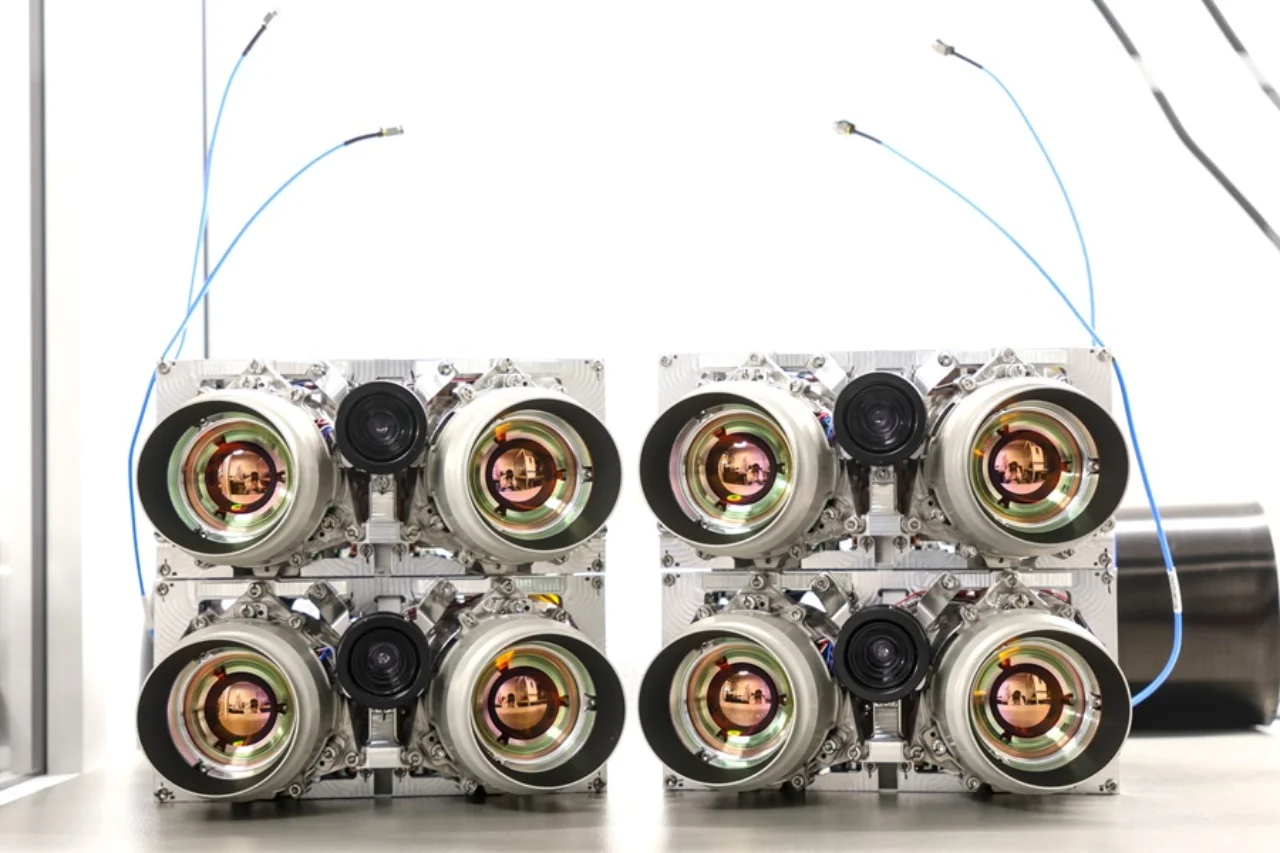
Infrared cameras © OroraTech
Thomas Grübler, two years ago OroraTech aimed to deliver up-to-date thermal images of the Earth's surface every 30 minutes by 2026. Can you still achieve that?
The target date is shifting a little. At the same time, demand is growing and coming from more industries than we anticipated: the need for high-frequency thermal imaging is rising faster than we expected. It's now not only about 30-minute intervals, but even shorter cycles for faster updates.
We have the world’s largest fleet of thermal imaging satellites. By the end of 2027, we aim to have built a constellation of 100 satellites.
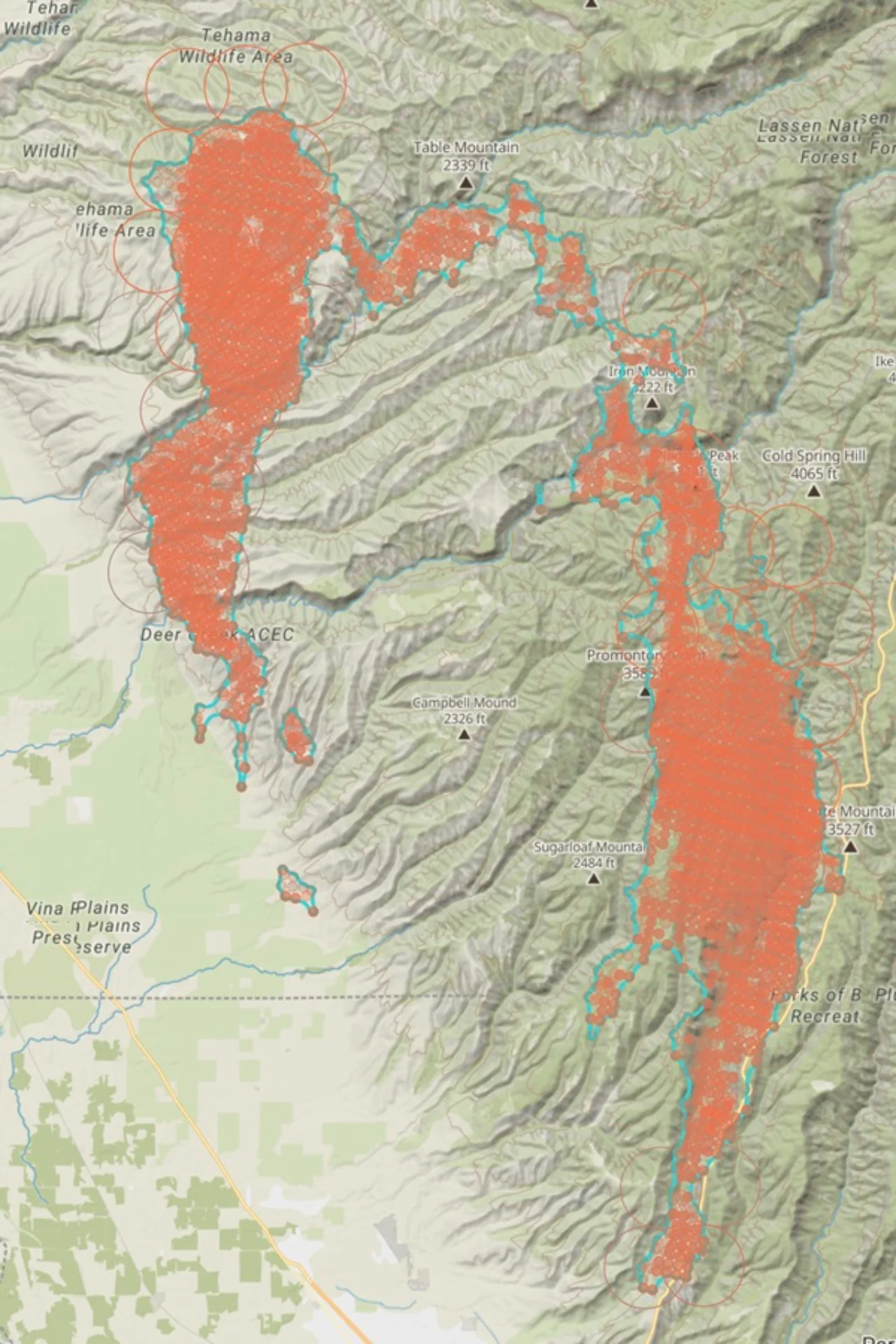
Fire detection in a National Park in California. © OroraTech
OroraTech now serves users in 25 countries, monitors 350 million hectares of land, and combines data from around 35 satellite and ground sources in its 'Wildfire Solution' platform. What are your next steps?
We are growing steadily – and have already achieved a lot. Since March 2025, in partnership with US aerospace companies Spire Global and Rocket Lab, we have had a constellation* of eight of our own satellites in space to closely detect and monitor wildfires worldwide. Including our partners, that number rises to 15. This is now the world’s largest fleet of thermal imaging satellites.
By the end of 2027, we aim to have built a constellation* of 100 satellites.
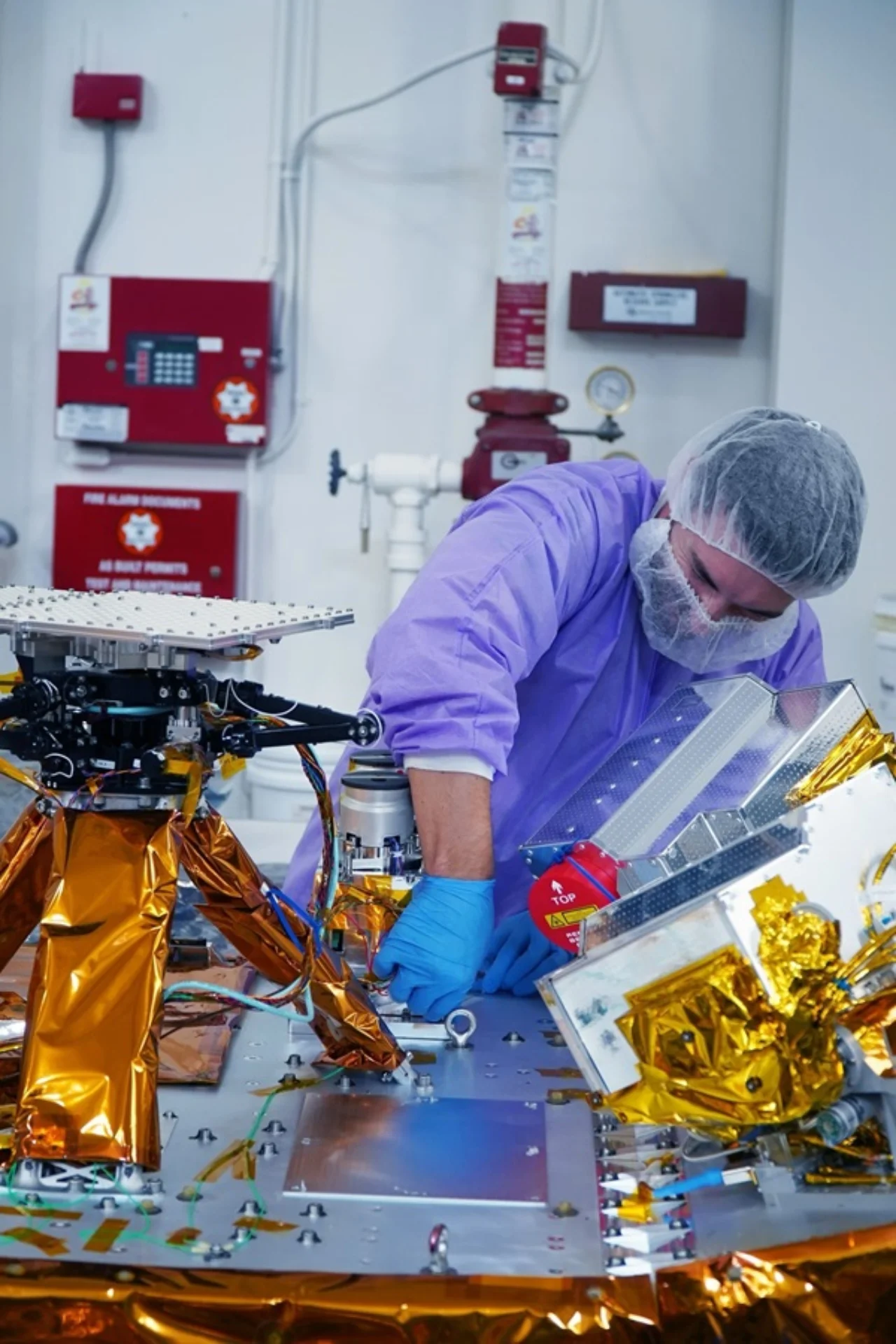
Preparing the launch of the Kepler satellite. © OroraTech
* What is a constellation?
A constellation is a network of several satellites operating together to provide a specific service, for example:
- High-frequency Earth observation (like OroraTech)
- Global communication (e.g. Starlink)
- Navigation (e.g. GPS, Galileo)
The satellites fly in coordinated orbits, often across different planes. Together, they offer much better temporal and spatial coverage than a single satellite could.
Why are constellations so important?
- Higher data recency: more satellites mean more frequent coverage.
- Redundancy: if one satellite fails, the others take over.
- Scalability: new satellites can be added flexibly to increase capacity or performance.
- New business models: only constellations enable data-intensive, real-time applications.
Those are ambitious plans.
Indeed, space projects are complex. Large-scale ventures like this are only possible with strong partners, each an expert in their own field. We have also worked closely for years with the German Aerospace Centre (DLR) and, in June, received a licence from them for an AI-based method to detect and monitor wildfires from space.
How important is artificial intelligence for satellite technology?
It’s essential. Ultimately, it’s not about launching as much hardware as possible into space, but about obtaining the most useful data for people on Earth. Our clients and the industry as a whole are moving rapidly towards AI-supported decision-making. For example, I believe it’s realistic that control centres will soon have dedicated “AI operators” who independently analyse data and provide recommendations for action, enabling managers to make immediate decisions.
Besides strong partners and physical infrastructure, what other factors are essential for success in Earth observation?
Ultimately, customer trust depends on the quality of the data a company collects, analyses, and processes. At OroraTech, we have our own satellite constellations and also license top-quality external data, as with the DLR. This combination allows us to gather and analyse first-class data, which will only become more important in future.
Reliable data will become the critical limiting factor.
In what way?
Reliable data will become the critical limiting factor. For generative AI models to deliver trustworthy results, we must retain strategic control over the raw data. In other words, independent, tamper-proof sensors that provide this data are becoming ever more valuable. One thing is certain: in the future, the truth about Earth will come from space – and the demand for this 'ground truth from space' will rise significantly.
Regarding data sovereignty: how do you avoid technological dependencies in space?
Thanks to our ESA-funded satellite development, OroraTech has deep expertise and full control over crucial components. At the same time, alternative supply chains make us resilient and agile. We do not just operate our infrastructure; we design it ourselves.
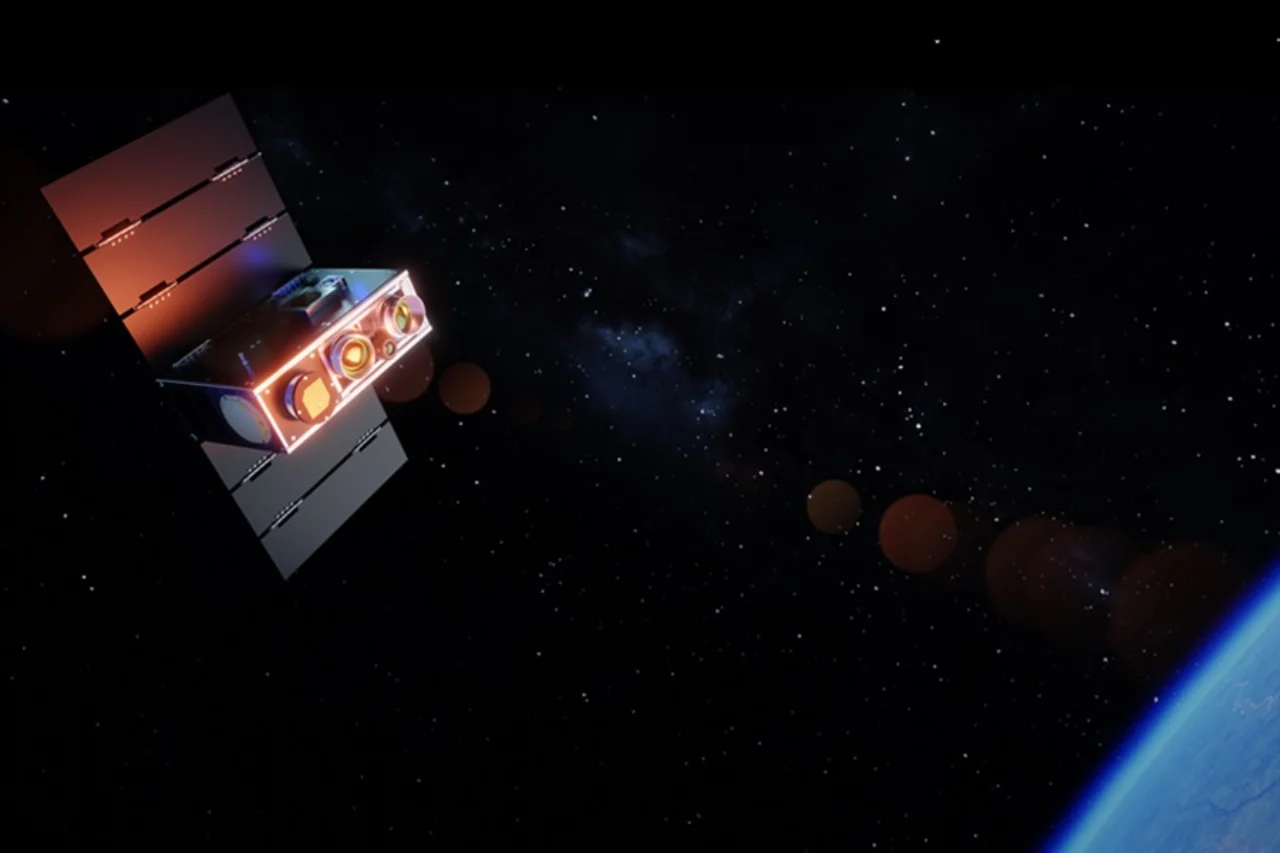
Forest 2 satellite in orbit - visualisation © OroraTech
You've expanded your funding to more than 50 million euros in 2025. What do your investors expect?
Investment in the Space Economy is increasingly following classic market mechanisms. Investors expect returns comparable to those in other sectors. Companies are in direct competition and must demonstrate economic viability. Innovation, scalability, and diversification are key. Only those able to prove sustainable business models will succeed in the long term. As investors trust us and we want to continue growing, we are already targeting another funding round in 2026.
Where do you see the best opportunities for growth?
We now have a structured innovation process to systematically explore the market. So far, we’ve focused on wildfire-related sectors such as energy infrastructure and CO₂ projects, which directly benefit from fire data. For example, our technology helps energy providers detect fire risks early and minimise downtime.
The CO₂ market also holds huge potential. Issues with CO₂ certificates, such as lack of transparency or varying standards for offsetting emissions, show how valuable independent, satellite-based data is in large and remote regions.
What makes you confident that the Space Economy is moving from a niche into the mainstream?
The German government plans to invest 35 billion euros in space infrastructure – a political turning point. At the same time, satellites are becoming commonplace in the private market: communication services like Starlink show that space infrastructure is not only scalable and competitive, but often superior to ground-based systems. We are now seeing a similar trend in Earth observation, where satellites are increasingly complementing or even replacing local measuring stations, aircraft, and drones.
Already today, space technologies are essential in almost all industries.
When do you think space technology will truly reach the mass market?
Already today, space technologies are essential in almost all industries. For direct end-user applications, they will become mainstream when data can be used fully automatically. AI-supported analysis, warning systems, and intuitive interfaces are already providing broad access – even if many people don’t realise their information comes from space.
For instance, millions use space-based data through navigation services or weather apps. That’s just the beginning: as the technology becomes part of everyday life, the possibilities will grow exponentially.
You have offices in Germany, the US, Canada – and since 2025, also in Athens. Why so many locations?
Space infrastructure is increasingly seen as security-relevant. Many countries, like Canada, require local registration and operations.
As for Greece, we recently secured a 20 million euro contract to support the country’s first national wildfire monitoring system from space. Our Athens office meets regulatory requirements, supports technology transfer in the region, and offers a good environment for our team.
For us as a company, such national programmes have another advantage: they prove at the highest level that our products are effective. If a government uses a particular technology for its infrastructure, it automatically gains international relevance. This sends a strong market signal to other countries.
The Space Economy is global – and will remain so.
Will there soon be a Silicon Valley for the Space Economy?
The Space Economy is global – and will remain so. Companies need local teams to comply with regulations, but they also need global structures, as satellites operate worldwide. The future model is therefore 'glocal': a global platform with local adaptation.
Will Europe remain competitive in the long run?
The outlook is good. Europe has strong research, engineering, and effective government programmes. There’s real demand for space applications. Companies like OroraTech are meeting this demand, proving that space technology is no longer just a vision but already a scalable reality. This lays the foundation for a continental innovation ecosystem.
About Thomas Grübler
Thomas Grübler is co-founder of OroraTech, a NewSpace company founded in 2018, which he has since played a key role in building up. Today, OroraTech employs around 180 people worldwide; the company's systems are used by authorities, fire departments, and companies on several continents.
Grübler's interest in wildfire fighting is also shaped by his involvement in the volunteer fire department. As Chief Strategy Officer, he is responsible for OroraTech's strategic development and internationalisation. Since 2025, he has also been CEO & President of OroraTech USA and leads the expansion of the US business.

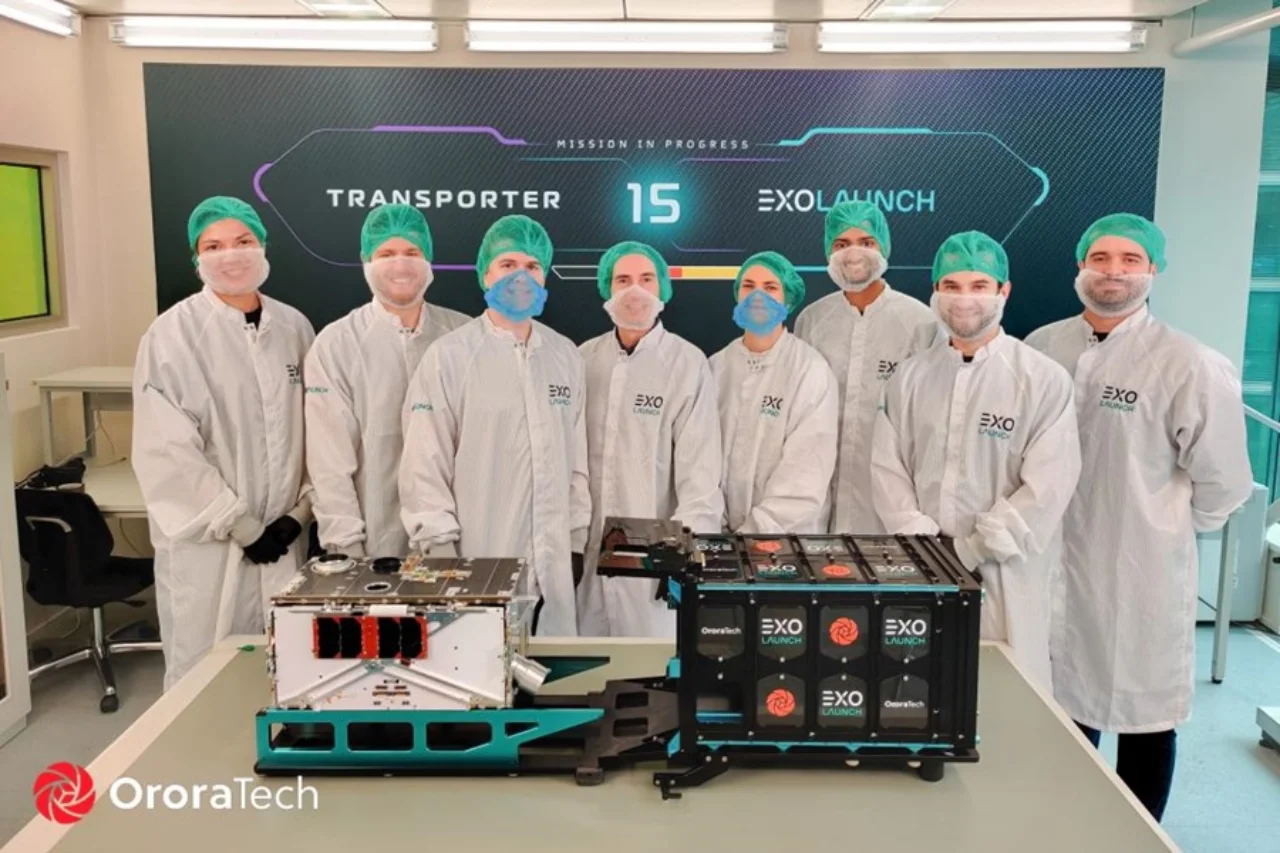
About OroraTech
OroraTech, founded in Munich in 2018, created the world’s first and largest satellite constellation for real-time wildfire detection. The company uses thermal imaging sensors and AI-powered analysis for this purpose. Since 2022, OroraTech has launched its own satellites.
By early 2025, three prototypes (FOREST 1 to 3) had been launched. In March 2025, a major milestone followed: eight more operational satellites formed the core of its 'Wildfire Constellation'. The aim is a fleet of around 100 satellites by the end of 2027, designed to provide global thermal imagery every 30 minutes. Additionally, OroraTech combines its own measurements with data from other Earth observation satellites, drawing on around 35 sources to quickly and precisely detect and monitor fires worldwide.
The company has been a Deutsche Bank client since its foundation in 2018.
This page was published in February 2026.

Iclal Hamarat
… is convinced that the vast opportunities of space exploration not only inspire scientific curiosity but also reshape how we think about responsibility and the future of Earth.
Recommended content
Digital Disruption | Video Story
End-to-end: space travel from a single source End-to-end: space travel from a single source
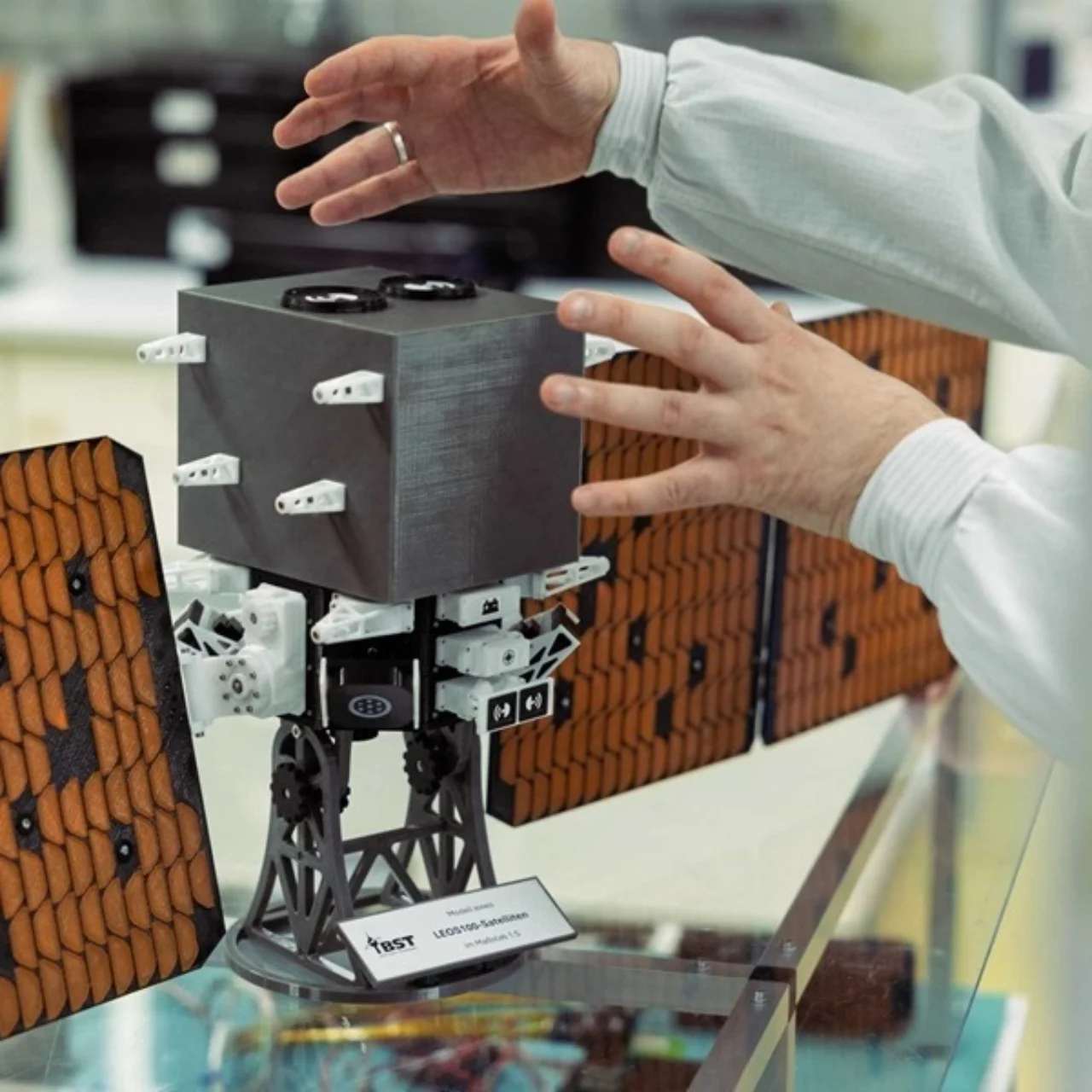
With the rise of the “New Space Economy,” SMEs and start-ups such as MBS and BST are entering the stage – bringing a breath of fresh air into a multi-billion-dollar market.
End-to-end: space travel from a single source Satellites off the assembly line?
Digital Disruption | Insights
From space to stakeholders: protecting lives, powering profits From space to stakeholders: protecting lives, powering profits
Satellites spot greenhouse gas emissions, trigger life-saving alerts, and empower financial institutions to tackle climate risks – transforming space data into action.
From space to stakeholders: protecting lives, powering profits Uncover space data impact
Digital Disruption | Interview
Building Europe’s way into space – The Exploration Company’s sustainable approach Europe’s way into space – The Exploration Company’s sustainable approach
Founder Hélène Huby reveals how The Exploration Company’s reusable, launcher‑agnostic capsule and open approach could give Europe cleaner and cheaper access to space.
Building Europe’s way into space – The Exploration Company’s sustainable approach The end of space debris?