

“Europe is at a very promising point right now”
Europe is creating a new generation of innovative companies. But can they grow fast enough to compete globally? Marta Czekaj and Milos Spiridonovic explain how the EU could improve their chances
Europe’s decisive advantage stands on a farmer’s field. Slowly the light green Claas tractor rumbles to life. Founded in 1913, the German company Claas is not only one of the world’s leading manufacturers of agricultural machinery – it also provides the systems and the controls behind them. Using satellite images and drone data among others it helps farmers to decide where to fertilise.
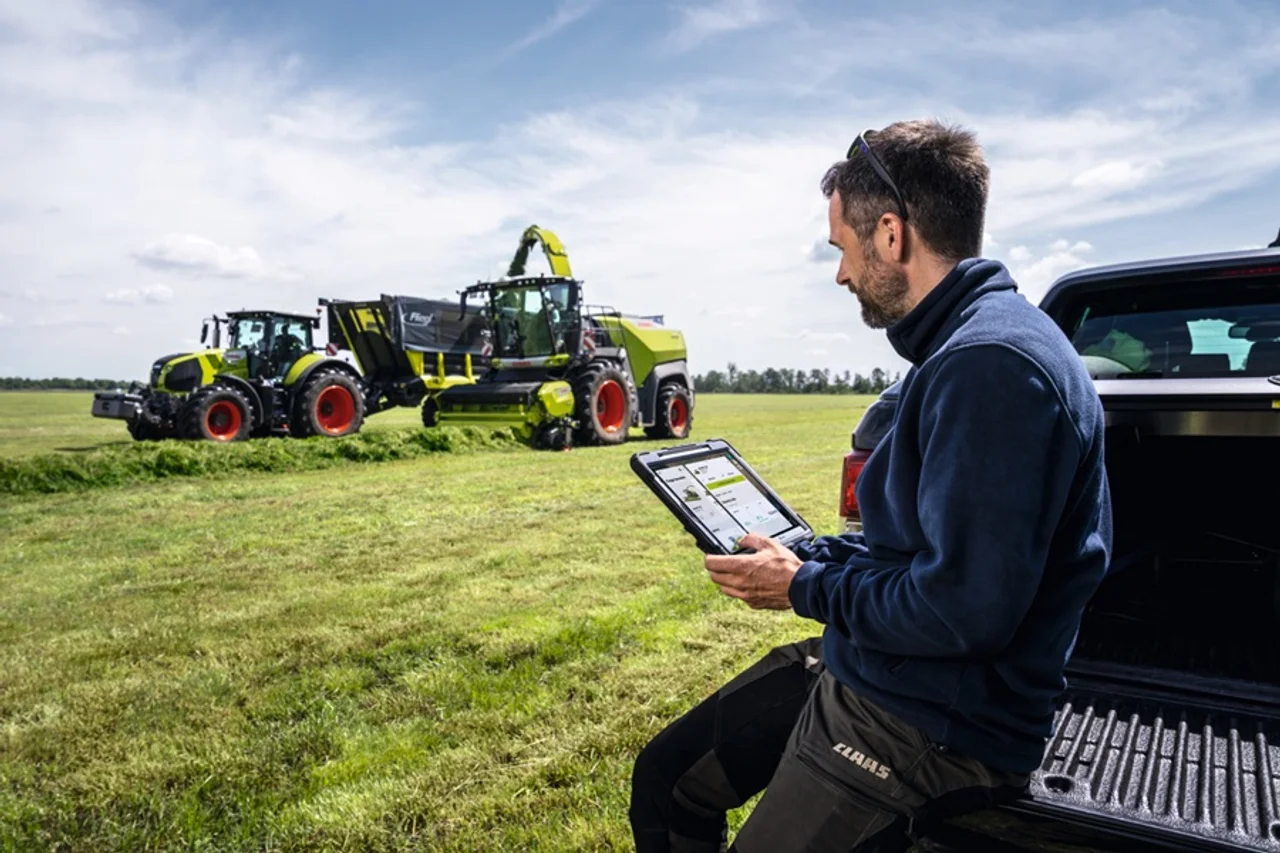
Claas tablet controls cutting at field edge
The example of weeds shows why artificial intelligence (AI) can be the next big thing for Claas. “Weeds can be removed either mechanically or with lasers,” says Wolf von Wendorff, who is responsible for Global Digital Solutions.
“This requires extremely precise work – sometimes also very slow work, which is hardly feasible without autonomy.” That’s why AI makes situational decisions; the machine implements them, he explains.
For Marta Czekaj, a financing expert at the asset manager DWS, this combination of AI and industrial base illustrates one of Europe’s most important advantages. “The next phase of technological development will increasingly be about bringing AI into traditional industries – and that is where Europe is structurally strong,” she says. “Europe is at a very promising point right now.”
That observation challenges the persistent prejudice of Europe being a technology laggard. Czekaj argues that this view overlooks some of Europe’s fundamental strengths. “Europe has tremendous capabilities in engineering, scientific research and industrial expertise, while continuing to produce highly innovative companies,” says Czekaj, who focuses on growth financing for European technology companies within DWS.
Two gamechangers for Europe’s main barriers to growth
Many of those companies are so-called scale-ups: former start-up-companies that are growing extremely rapidly. And it is precisely at this stage that the real challenge begins: when companies move beyond the start-up phase, their capital needs often rise sharply, and that is where Europe still has a significant gap.
What are scale-up-companies?
Scale-ups are high-growth companies that have moved beyond the start-up phase and are focused on rapidly expanding their business. They typically have demonstrated the viability of their technology or business model but require additional investments to accelerate growth, expand internationally or scale production.
One factor that would substantially help is deeper and more integrated European capital markets – and ultimately a capital markets union. “Today, tech investors still have to navigate different regulations across member states when investing across the EU,” says Czekaj. Experts agree that a European capital markets union would remove obstacles to cross-border investments and make it easier for companies to access the capital market.
Europe shouldn’t try to become Silicon Valley but instead scale what it does best.
However, differing regulation is not only an obstacle when it comes to capital markets. That is why Milos Spiridonovic, expert in Corporate Banking at Deutsche Bank, calls for decisively strengthening the European single-market. “A company expanding from Germany into France, Belgium or Italy faces different labour law, taxation and permitting procedures,” says Spiridonovic, who advises fast growing European technology-companies in sectors such as Software, Finance, Deeptech and AI.
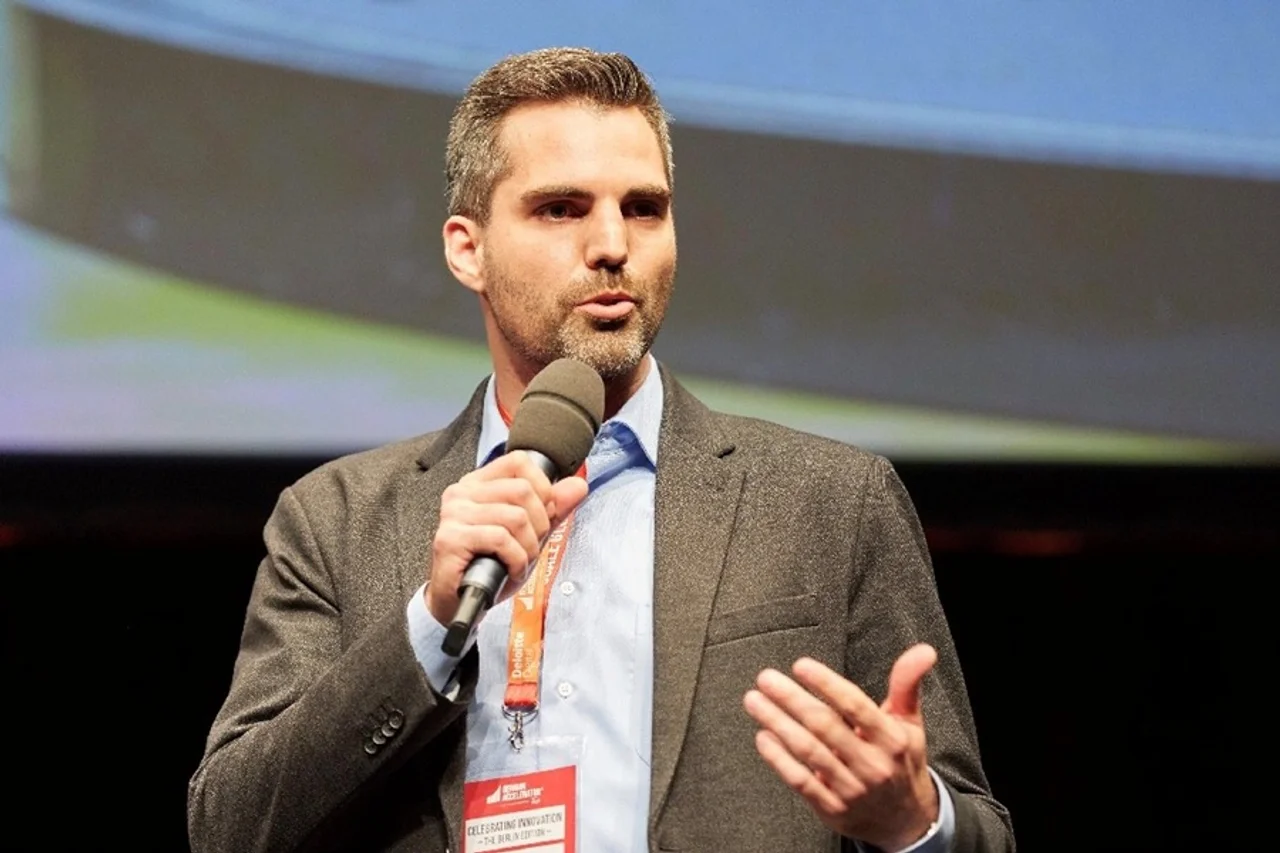
The differing rules between the European countries make it difficult for scale-up-companies to expand within the continent. And they can have consequences for whole economies. In 2024 experts of the International Monetary Fund (IMF) estimated that the EU’s internal barriers for selling goods are equivalent to a tariff of around 45 percent, while across U.S. states this number was roughly 15 percent.
One approach to improve this is the concept of EU Inc. “Such a harmonised corporate legal regime would lead to much more unified rules within Europe for companies,” says Spiridonovic. He and Czekaj agree that these kinds of reforms would increase the already strong interest of investors in Europe immediately.
What is EU Inc.?
EU Inc. is a European Commission initiative aimed at creating a standardised, pan-European corporate structure with common rules for incorporation, governance, fundraising and employee ownership. The goal is to make it easier for startups and scale-ups to raise capital, attract talent and expand across Europe without navigating multiple national company-law regimes. The final design remains under discussion, but the core objective is clear: to reduce fragmentation and help more European technology companies become global market leaders in their area.
Why Europe’s old strengths may be key to its future
A recently published Deutsche Bank-survey among 1200 senior decision-makers backs the perception of investor’s strong interest. For 81 percent of respondents, Europe is more important to investment decisions today than it was three years ago. A report of Deutsche Bank Research points in the same direction. It states that venture capital investment in Germany, Europe’s largest economy, rose by 44 percent year-on-year in the first half of 2026, driven in particular by several large funding rounds for scale-ups.
Looking at the potential that can be unlocked by the right structural reforms, Czekaj and Spiridonovic are optimistic for Europe’s future as a whole – and even more for its scale-ups. “Europe has everything it needs to drive innovation, “says Czekaj. “It shouldn’t try to become Silicon Valley but instead scale what it does best.”
These companies combine advanced technology and software with deep expertise in their niche.
Spiridonovic even sees a new generation of European companies having the potential to become world market leaders in their sector. “These companies focus deep on specific industrial problems”, he explains. “And they combine advanced technology and software with deep expertise in their niche.”
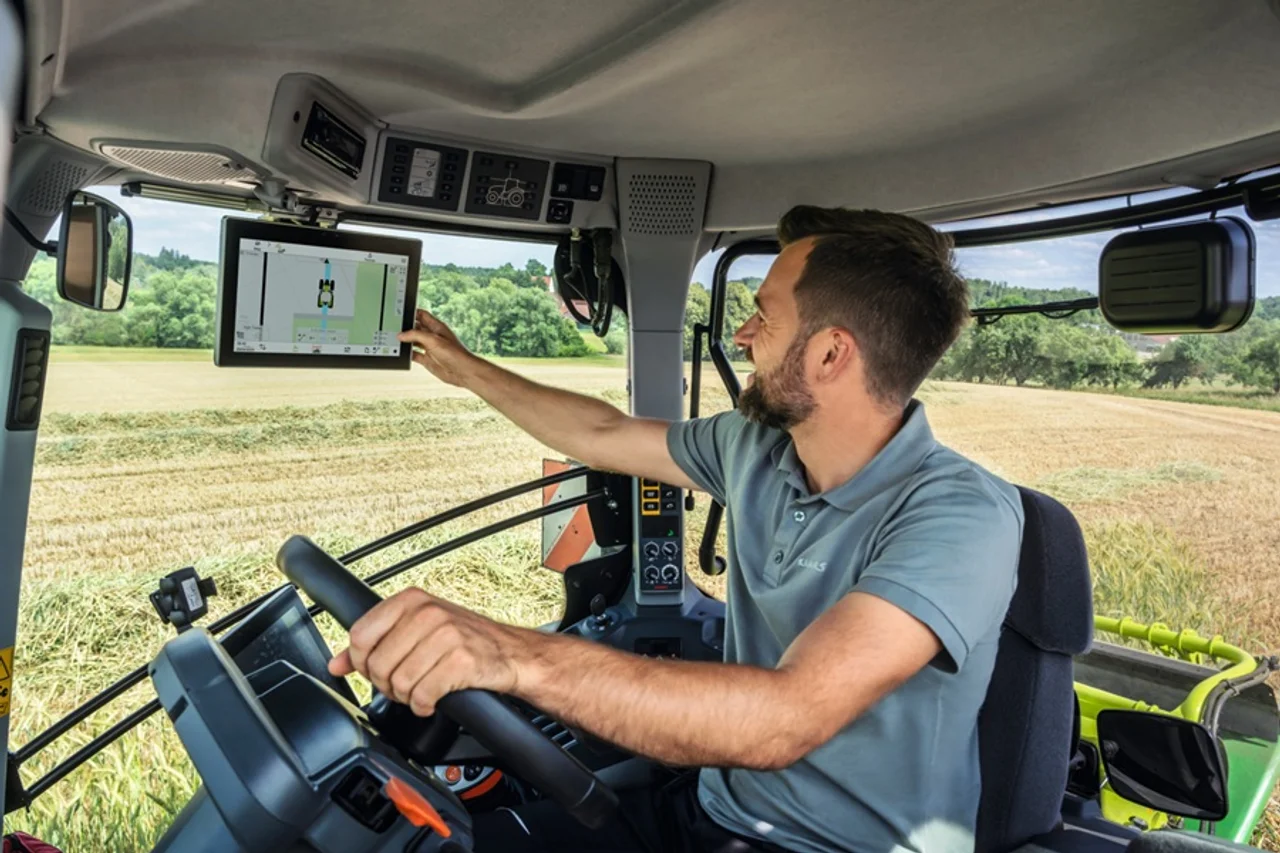
Connected terminals in cab
That is very much in line with the thinking of Wolf von Wendorff of the agricultural machinery manufacturer Claas. He believes that three forces will shape the future of farming: robotics, autonomy and AI. Plus, knowledge about the field. “Ultimately, what counts is experience in the form of data”, he says. “The farmers with the most hours out on the field and who can collect as many sets of clean data as possible today will be among the best in 2035.”
And so, Europe’s future may less be emulating the famous garage in California, but rather emerge in its fields, factories and laboratories – right where the continent has its strengths.
Deutsche Bank, DWS and scale-ups
Growing technology companies require more than capital to scale their business model successfully. Together, Deutsche Bank and DWS are collaborating to support scale-ups throughout their entire growth journey by combining banking expertise, financing solutions, and investment capabilities.
Deutsche Bank supports scale-ups with their day-to-day banking needs, international expansion, payments, liquidity, lending and access to global capital markets. DWS brings investment expertise and growth financing solutions through its private credit capabilities, offering tailored debt solutions for technology companies whose capital needs may extend beyond traditional bank lending or equity financing.
By bringing together a global network of banking experts, investors and corporate relationships, Deutsche Bank and DWS help European scale-ups access capital, accelerate growth, and expand internationally.
Key take aways
Europe needs these three structural reforms to unlock the potential of its scale-up and start-up-companies much more:
- Work towards deeper and more integrated European capital markets with the goal to…
- Create a European capital markets union.
- Decisively strengthening the European single-market for example by delivering on the EU Inc. – an initiative of the European Commission aimed at creating a standardised, pan-European corporate structure with common rules for incorporation, governance, fundraising and employee ownership.
About Milos Spiridonovic
Milos Spiridonovic is responsible for Deutsche Bank’s relationships with startups, scale-ups and technology companies across Europe. He works closely with founders and management teams to help innovative businesses expand internationally and get access to strategic financial services.
His focus spans high-growth technology companies in sectors such as software, finance, AI, deep tech, robotics, and defence. Milos advises companies from the start-up-phase on until the stage where they are ready to get financing via capital markets.
Milos combines a deep understanding of Europe’s fastest growing tech-companies with extensive corporate banking expertise. He is passionate about helping European entrepreneurs build globally competitive businesses and believes that a strong scale-up ecosystem is essential for Europe's long-term economic resilience, innovation, and technological sovereignty.

About Marta Czekaj
Marta Czekaj structures debt investments within DWS’s private credit business. Put simply, "private credit” invests capital from institutional investors directly in companies through privately structured loans, complementing traditional banking loans and the public bond markets
Her work spans European technology companies in capital-intensive sectors, including robotics, industrial automation, energy transition, and defence. She develops tailored debt solutions for critical stages of growth, providing additional capital alongside equity financing.
Before joining DWS, Marta worked with technology companies and investors at J.P. Morgan and Silicon Valley Bank, where she was part of the founding team in Germany. Her experience combines private credit, growth and venture financing, and corporate finance, giving her a broad perspective on how different forms of capital can support technology companies.
About Deutsche Bank and Europe
Europe is more than a market. It's a space for ideas, growth, and collaboration.
Deutsche Bank shows where European companies are already setting standards today – and how capital, expertise and networks help to seize opportunities across borders.
As a European bank with a global network, we connect companies and investors: from Europe to the world and from the world to Europe.
How do investors and business leaders outside Europe perceive the continent, its potential and the growth opportunities it offers for their businesses? Find out in our latest survey: Global Sentiment Survey on Europe 2026

Georg Berger
… works on international communications projects at Deutsche Bank. He is interested in how Europe’s next tech-champions might look like, what characteristics they have in common – and what they need to indeed become world market leaders in their sector.
This page was published in October 2026.
Recommended content
European Success Stories | Opinion
“Europe’s payments infrastructure is world-class” “Europe’s payments infrastructure is world-class”
Deutsche Bank’s Christof Hofmann explains why Europe’s payments infrastructure is stronger than many assume – and where the continent needs more control over digital payments.
European Success Stories | Opinion
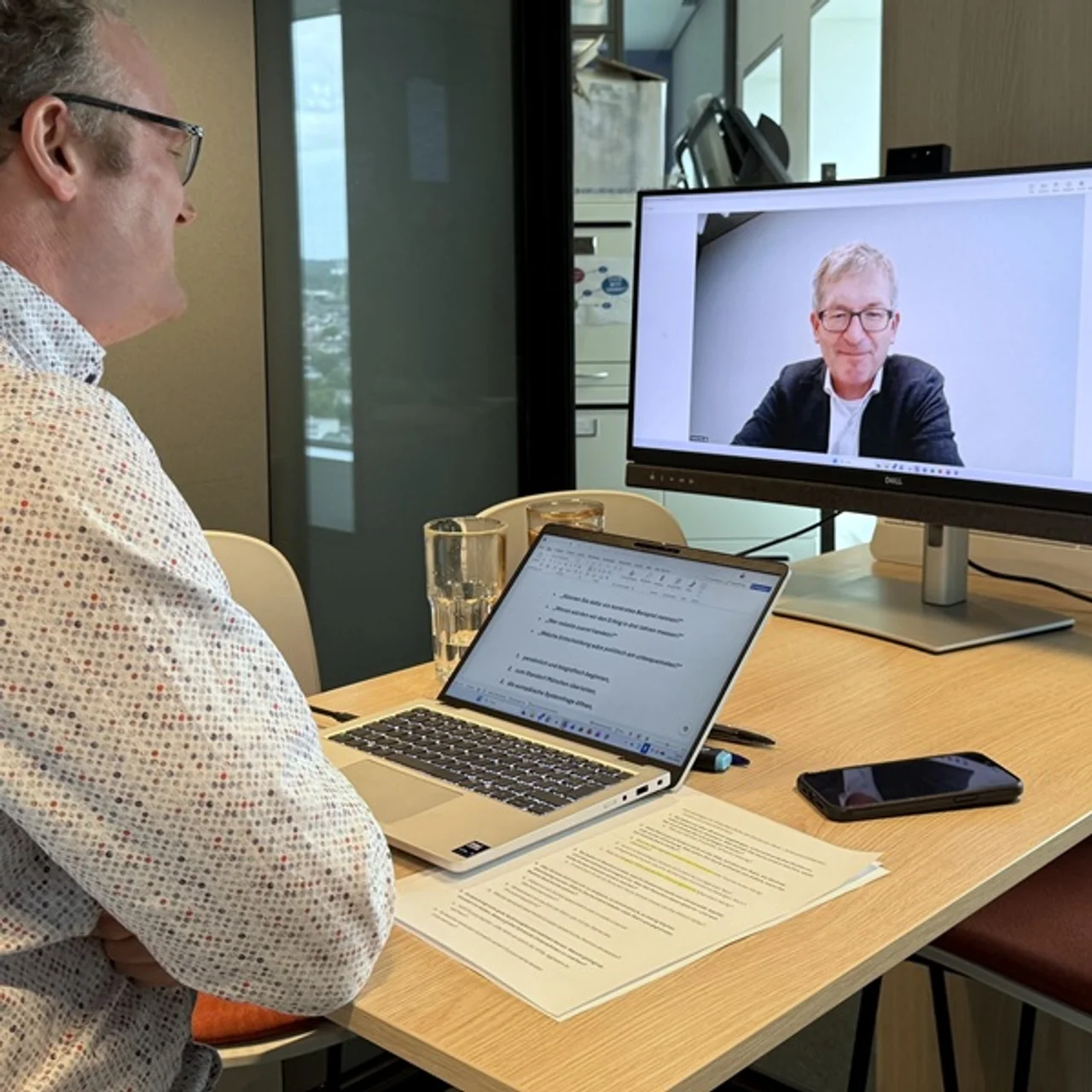
“This cross-border cooperation is a genuine advantage.” “This cross-border cooperation is a genuine advantage.”
UnternehmerTUM from Munich is one of Europe's leading start-up centres. CEO Helmut Schönenberger reveals the secret.
European Success Stories | Opinion
“The wave of modernisation has got off to a good start” “The wave of modernisation has got off to a good start”
Europe needs to invest massively. Hauke Burkhardt explains how the public sector and private capital can jointly drive modernisation forward.
“The wave of modernisation has got off to a good start” Invest five minutes