
International companies show growing interest in Europe
International companies are far more optimistic about Europe than the often-critical debate within Europe about the region’s competitiveness would suggest. This is the key finding of the Deutsche Bank Global Sentiment Survey on Europe 2026, for which 1,200 senior leaders and decision-makers from companies in 13 non-European markets were interviewed.
1,200
Interviews with senior decision-makers
13
European markets across three regions
100+
Employees (minimum company size)
Europe is the top investment region according to surveyed business leaders
More than one-third of respondents identify Europe as the world's most attractive region for their business. Europe ranks ahead of Asia (excluding China), North America, the Middle East and Africa, China, and Latin America. At the same time, a large majority of 81% of respondents say that Europe has become even more important to their investment decisions over the past three years.
The global economy has confidence in Europe. That is the key message of our survey, which confirms what we see every day in our business with clients around the world. Business leaders view Europe as an attractive investment destination, a growth market and a hub for innovation. At the same time, it shows that Europe still has ground to make up when it comes to competitiveness and business conditions. This is why decisive reforms are now needed to unlock stronger growth and encourage greater investment.
Key findings from the Global Sentiment Survey on Europe 2026
Show content of Europe is the most broadly favoured region
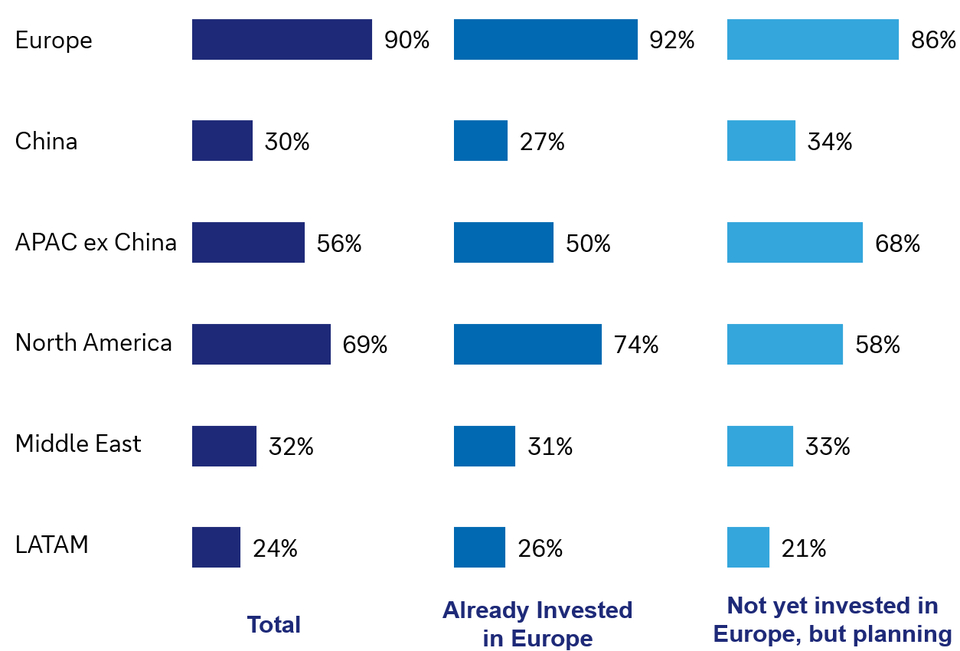
About nine in ten respondents place Europe among their three most attractive regions for investment, ahead of America at around 69 percent and APAC excluding China at around 56 percent. No other region is named this widely: China (30 percent), the Middle East (32 percent) and Latin America (24 percent) all sit well behind. Europe is the one region that almost everyone rates highly, which makes it a natural anchor for globally diversified investors.
Attractiveness of regions (Top 3)
Region named under Top 3 (all respondents and investment status)
Source: Global Sentiment Survey on Europe 2026, B2B online survey. Base: n = 1,200 (Already invested in Europe 807, Not yet invested in Europe but planning 393)
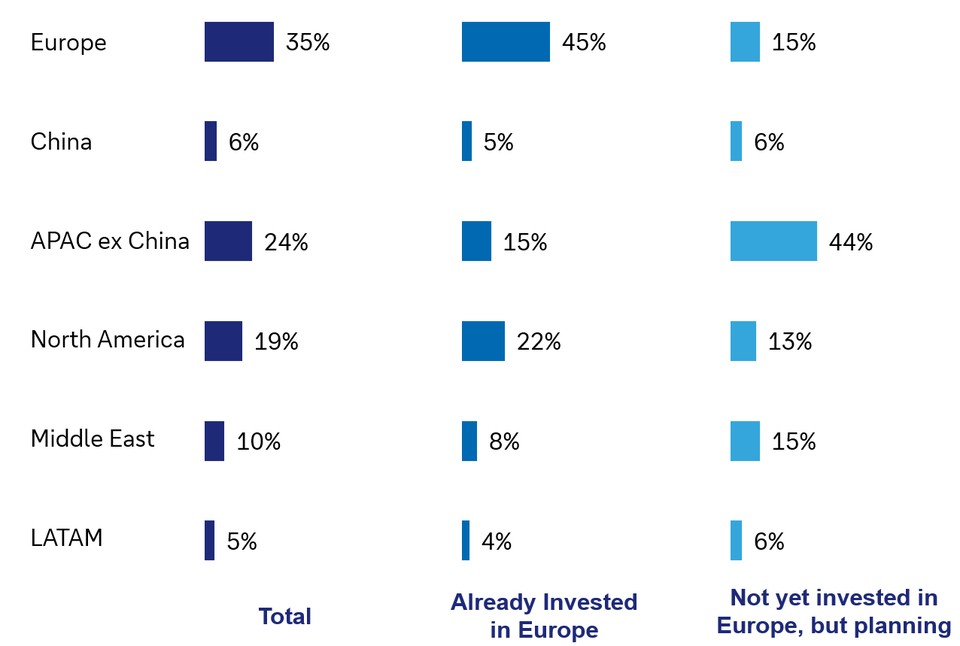
Europe tops the list of global investment destinations for more than a third of respondents. Thirty-five percent place it in first position, ahead of APAC excluding China (24 percent) and the Americas (19 percent).
Among companies already invested in Europe, the first-choice share rises to 45 percent; among those not yet invested it is 15 percent. This means companies with experience in Europe rank it higher. At the same time, there is clear room to win over those who rate the region highly overall but have not yet made it their first choice.
Attractiveness of regions (Top 1)
Region named as Top 1 (all respondents and investment status)
Source: Global Sentiment Survey on Europe 2026, B2B online survey. Base: n = 1,200 (Already invested in Europe 807, Not yet invested in Europe but planning 393)
Show content of Europe matters more than three years ago
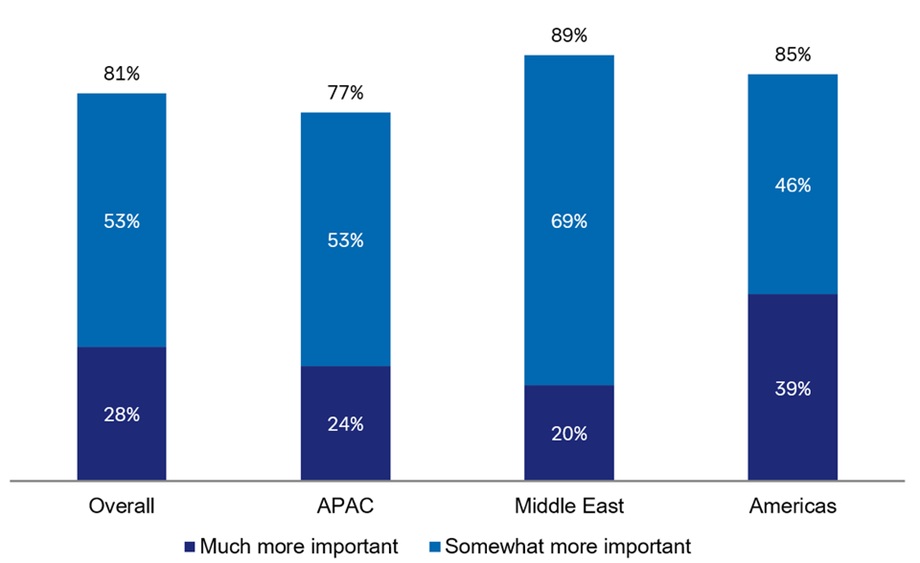
Europe's attractiveness is growing. 81 percent of respondents say the region has become more important in their investment decisions over the past three years – 28 percent much more important and 53 percent somewhat more important – while only 3 percent say it has become less important.
The rise is broad but not even. It is steepest among American investors, where 39 percent say Europe has become much more important, against 24 percent in APAC and 20 percent in the Middle East. Taken as a Top-2 share, the increase reaches 89 percent in the Middle East and 85 percent in the Americas, with APAC a little behind at 77 percent.
Importance of Europe versus 3 years ago
Top 2 Box of five-point scale (all respondents and regions)
Source: Global Sentiment Survey on Europe 2026, B2B online survey. Base: n = 1,200 (APAC 600, Middle East 200, Americas 400)
Show content of Why Europe? The region is seen as a stable base in uncertain times.
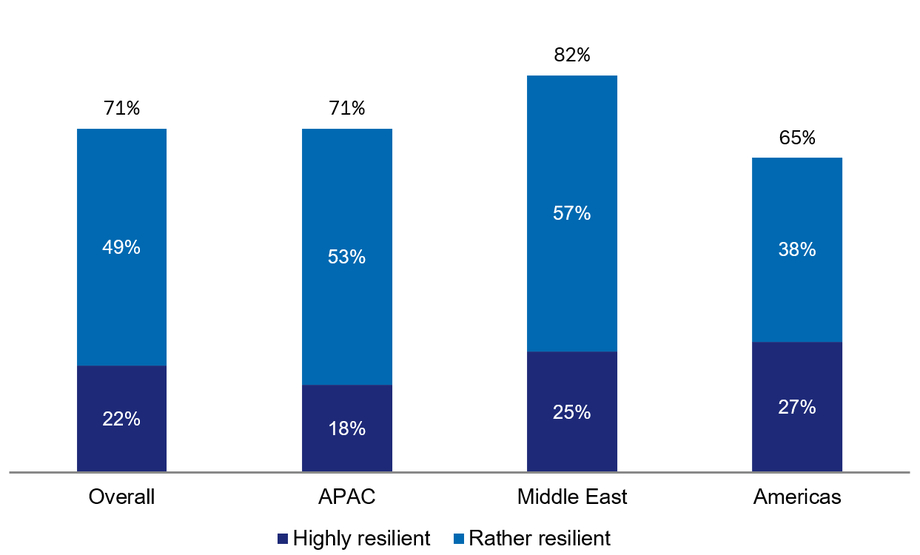
Resilience is a critical factor in today's environment, as geopolitical tensions and economic uncertainty increasingly influence investment decisions. Europe performs strongly on this dimension: around 71 percent of investors consider the region highly or rather resilient as a business location, while only about 10 percent view it as not resilient. This reinforces its attractiveness at a time when stability and predictability are especially important.
As how resilient is Europe being perceived?
Top 2 Box of five-point scale (all respondents and regions)
Source: Global Sentiment Survey on Europe 2026, B2B online survey. Base: n = 1,200 (APAC 600, Middle East 200, Americas 400)
Show content of How is confidence in Europe translating into investment?
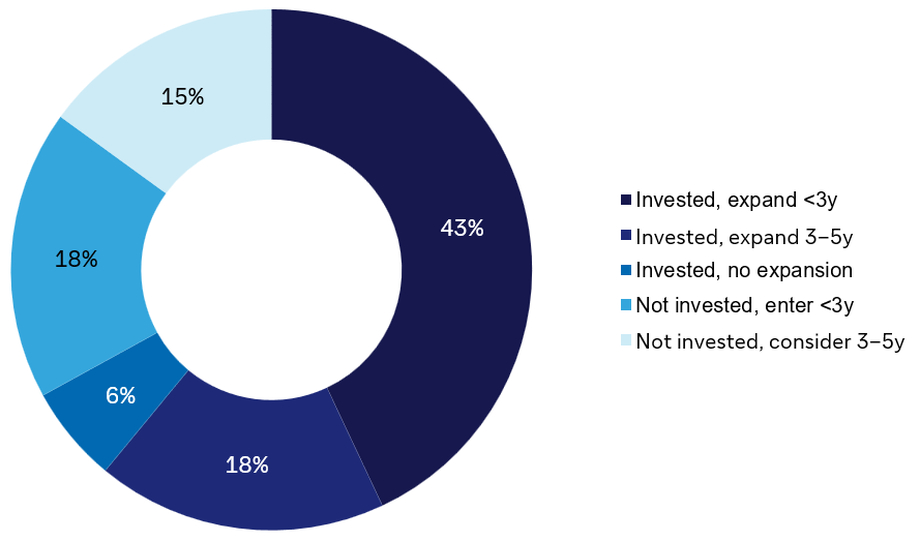
Among the surveyed companies, 61 percent are already invested in Europe and plan to expand within five years. Only 6 percent are invested with no plans to expand. A further 33 percent of all respondents are not invested in Europe but are planning or actively considering market entry. The large majority are therefore either deepening their presence in Europe or preparing to establish one.
Current and planned investment in Europe
All respondents
Source: Global Sentiment Survey on Europe 2026, B2B online survey. Base: all respondents, n = 1,200
Investment levels vary by region
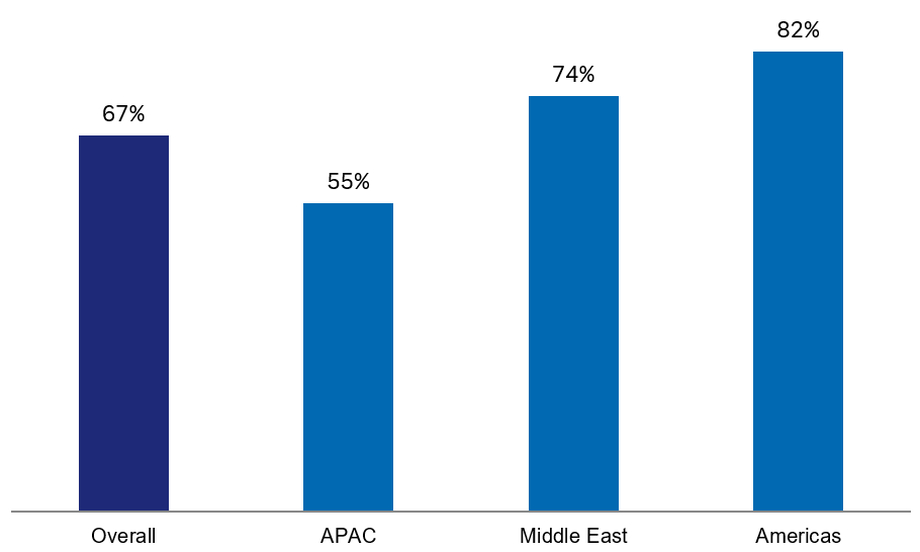
- Companies from the Americas have the largest existing presence in Europe: 82 percent are already invested, compared with 74 percent in the Middle East.
- With 55 percent already invested in Europe, APAC stands out for its future potential: the region has the largest share of companies planning to enter Europe.
Overall, the survey shows that companies already invested in Europe consistently rate the continent more favourably.
Currently invested in Europe
All respondents and regions
Source: Global Sentiment Survey on Europe 2026, B2B online survey. Base: n = 1,200 (APAC 600, Middle East 200, Americas 400)
Show content of How important is Europe as a consumer market and as a production location?
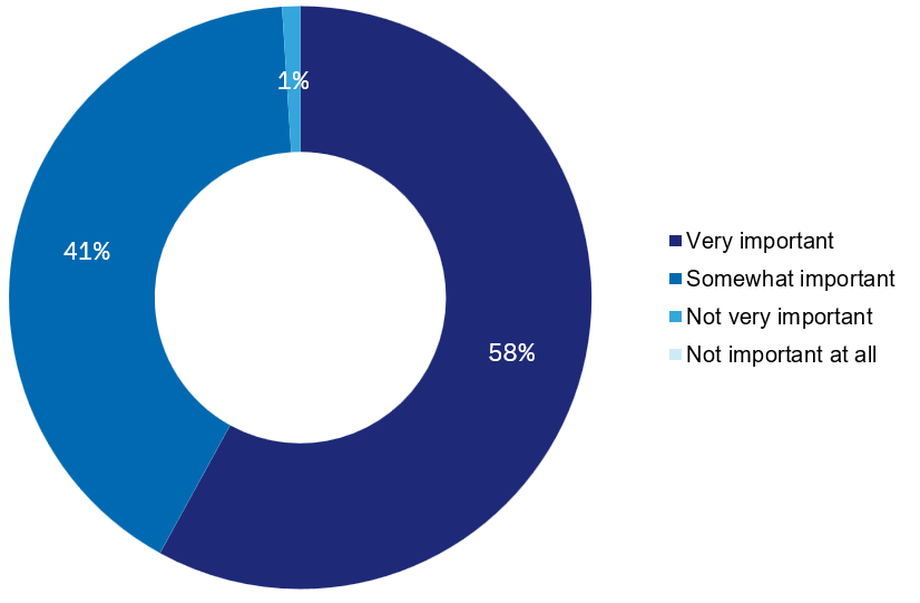
Europe is valued almost universally as a consumer market: 99 percent of respondents rate it important for their growth over the next three to five years, with 58 percent saying very important and a further 41 percent somewhat important. Europe's purchasing power – a large, wealthy and stable base of consumers – remains a first-order reason for international companies to be present..
Europe’s importance as a consumer market
Four-point importance scale (all respondents)
Source: Global Sentiment Survey on Europe 2026, B2B online survey. Base: all respondents, n = 1,200
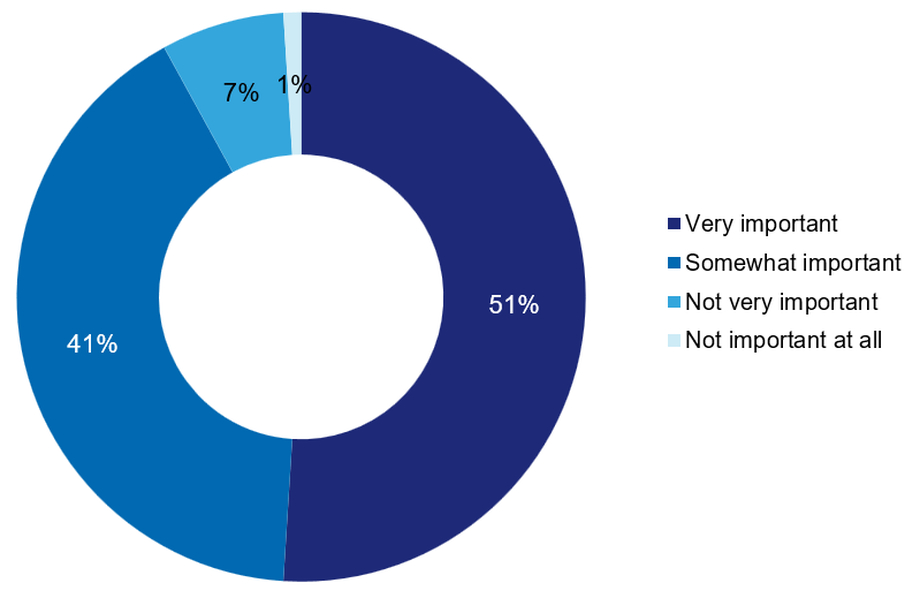
But Europe’s appeal is not limited to demand. Although current investment is focused on the consumer market, nine in ten respondents (92 percent) also rate it an important location for production – for making goods, for research and development, and for supply chains – with 51 percent saying very important and 41 percent somewhat important.
Europe’s importance as a production location
Four-point importance scale (all respondents)
Source: Global Sentiment Survey on Europe 2026, B2B online survey. Base: all respondents, n = 1,200
Show content of What do decision-makers see as Europe’s key advantages?
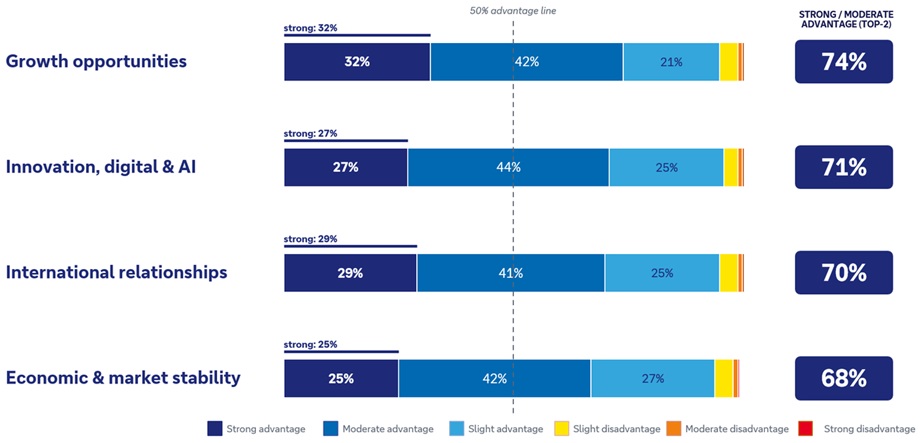
Europe scores highly on growth and innovation. Its main advantages over other regions are growth opportunities (74 percent) along with its capacity for innovation, particularly in combination with the potential of AI (71 percent), ahead of international relationships (70 percent) and economic and market stability (68 percent).
What are Europe's four leading advantages versus other regions?
Six-point advantage scale (all respondents)
Source: Global Sentiment Survey on Europe 2026, B2B online survey. Base: all respondents, n = 1,200
Show content of Which markets are perceived as most attractive in Europe?
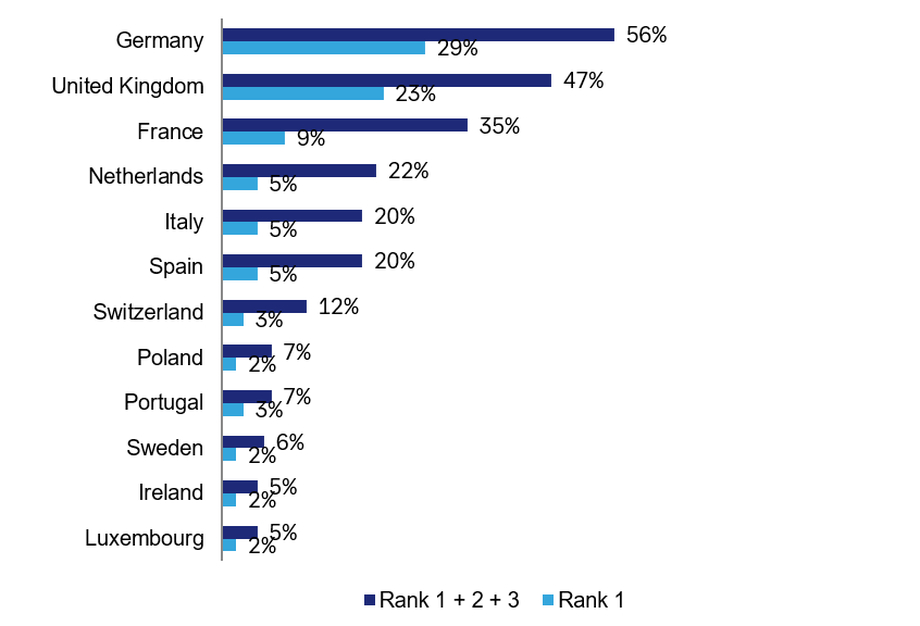
Europe's appeal is broad-based, but investment intentions are not evenly distributed across the region. Among potential destinations, Germany emerges as the focal point for future investment, ranking ahead of both the United Kingdom and France.
Below the leading three, a clear second tier forms. The Netherlands, Italy and Spain cluster at around 20 to 22 percent Top-3 consideration, with Switzerland, Poland and Portugal further back.
Planned investment countries in Europe
Country named in their Top 3 or as first choice (all respondents)
Source: Global Sentiment Survey on Europe 2026, B2B online survey. Base: all respondents, n = 1,200
What makes Germany stand out? Germany's advantage rests on breadth rather than on any single decisive strength. It stands, above all, for structural substance: it leads on infrastructure and logistics (59 percent), on innovation and AI (58 percent), and on both industrial capability and skilled workforce (56 percent each).
Strengths of top 3 investment destinations by factor
(Germany, the UK and France, all respondents)

Source: Global Sentiment Survey on Europe 2026, B2B online survey. Base: all respondents, n = 1,200
Show content of Which priorities should Europe tackle now?
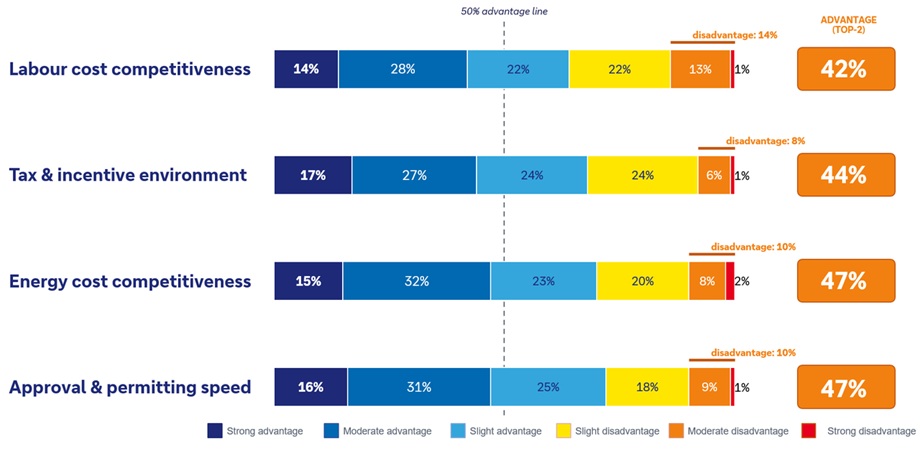
Four factors fall below the 50 percent line. These are Europe's clearest priorities for action: labour cost competitiveness (42 percent), the tax environment (44 percent), energy cost competitiveness (47 percent) as well as approval and permitting speed (47 percent).
The four priorities for action where Europe can lift its competitiveness
(all respondents)
Source: Global Sentiment Survey on Europe 2026, B2B online survey. Base: all respondents, n = 1,200
Show content of Is Europe already seen as a truly unified market?
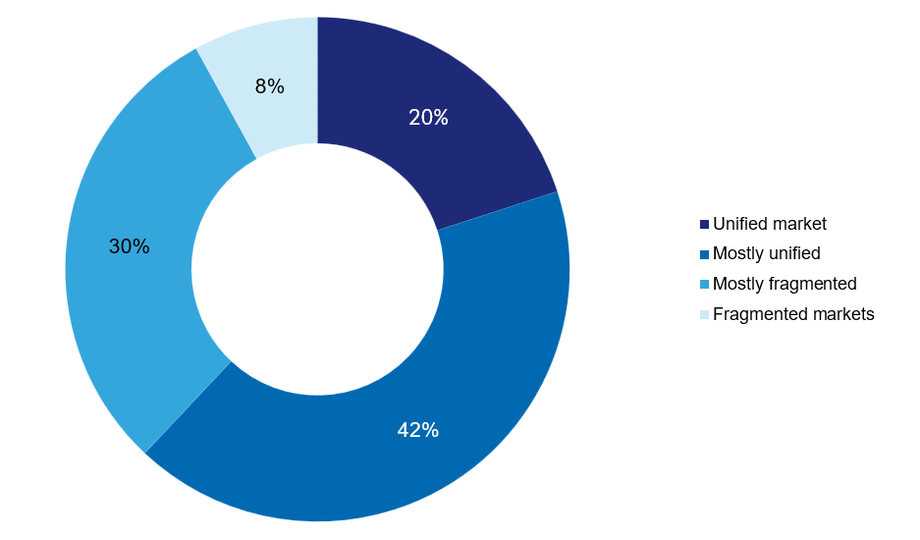
The verdict on integration is positive but qualified. On a four-point scale, 20 percent of respondents see Europe as fully unified and a further 42 percent as mostly unified, bringing the combined share of respondents who see Europe as fully or mostly unified to 62 percent. On the other side, 30 percent see Europe as mostly fragmented and 8 percent as fully fragmented.
Is Europe a unified or fragmented market?
Four-point scale (all respondents)
Source: Global Sentiment Survey on Europe 2026, B2B online survey. Base: all respondents, n = 1,200
The promise of the single market is clearly visible; seamless delivery is not. Perceptions of European unity are strongest in the Americas, where 69 percent view the region as fully or largely unified. This share falls to 58 percent in APAC, with the Middle East positioned between the two. No region sees Europe as fully seamless, and the pattern holds across company sizes and investment stages.
Which regions see Europe as a rather unified market?
Top 2 box of four-point scale (all respondents and regions)
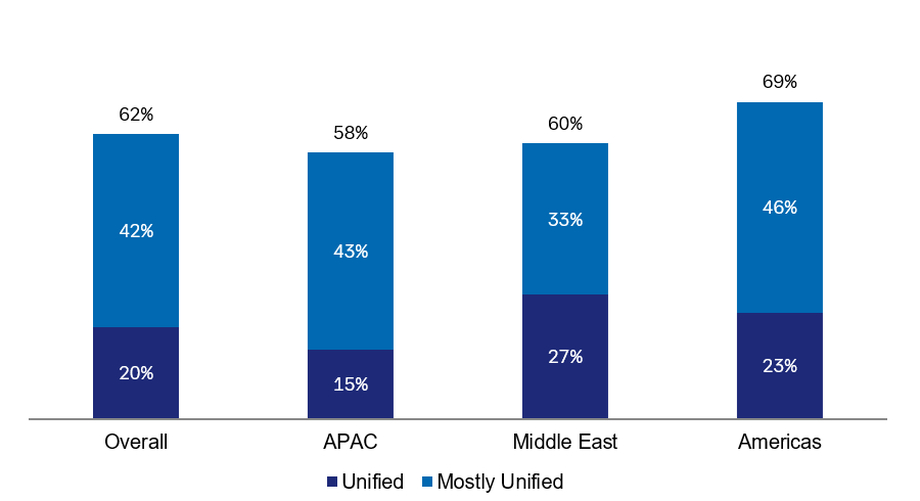
Source: Global Sentiment Survey on Europe 2026, B2B online survey. Base: n = 1,200 (APAC 600, Middle East 200, Americas 400)
Show content of How can Europe strengthen its AI competitiveness?
Asked how Europe could become more attractive for investment, innovation and the use of AI, investors put a single, trusted rulebook first.
Simplifying AI regulation and the related frameworks leads at 33 percent, followed by upgrading technological infrastructure (31 percent), strengthening digital skills and creating competitive technology incentives (both 29 percent) and improving access to AI growth capital (28 percent).
Measures to improve Europe's AI attractiveness in three themes
Select the three most important measures (all respondents)
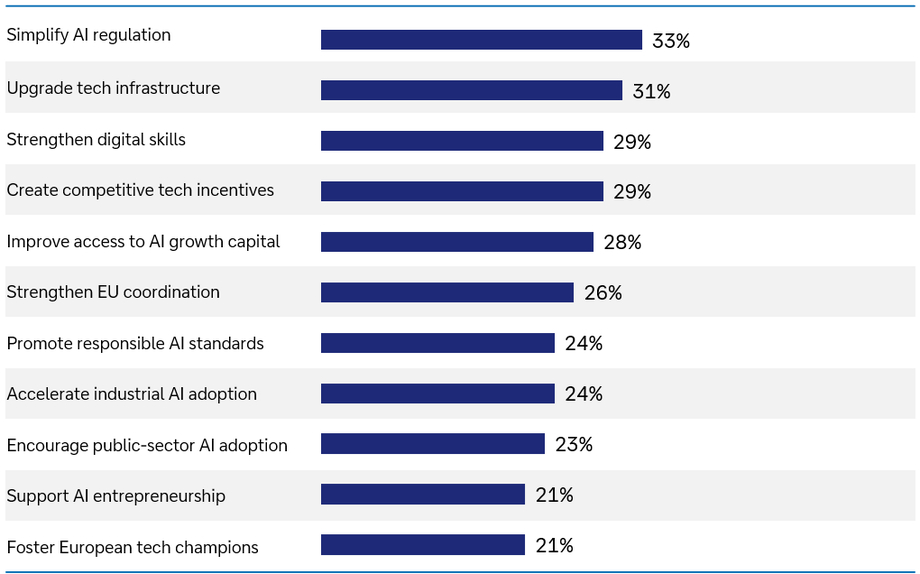
Source: Global Sentiment Survey on Europe 2026, B2B online survey. Base: all respondents, n = 1,200
Show content of Which are the preferred banks for investment and business activities in Europe?
As investors translate confidence in Europe into concrete investment decisions, the choice of financial partner becomes increasingly important. Here, international companies consistently hold European banks in high regard. Their decisions are guided less by cost considerations and more by the qualities that matter most when managing complex cross-border investments: financial stability, strong compliance capabilities and local market expertise. Together, these factors create a meaningful home-market advantage for European banks and help explain their prominent role in supporting international investment across the region.
Most important criteria when choosing a banking partner for Europe
Select the three most important (all respondents)
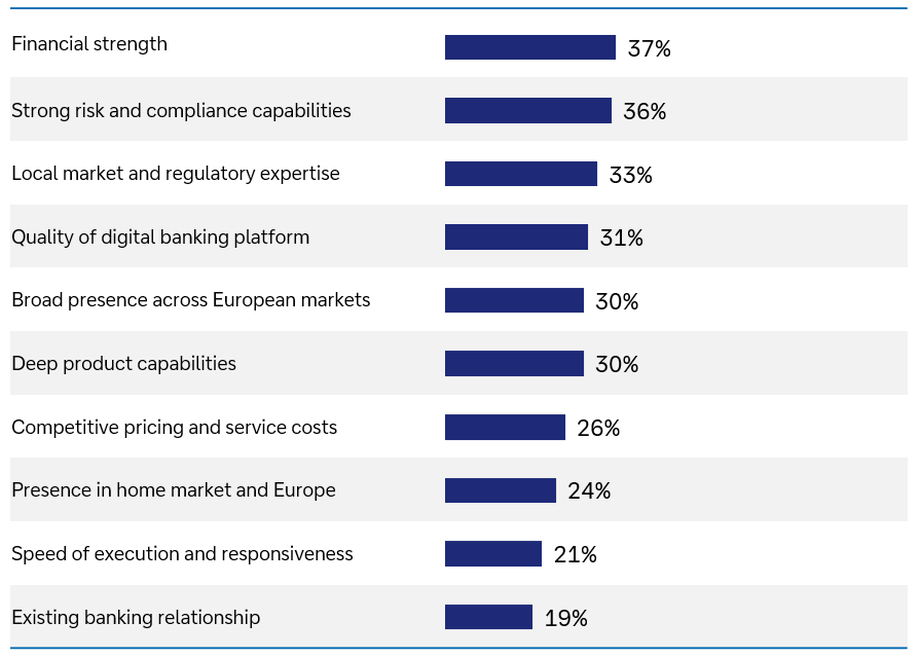
Source: Global Sentiment Survey on Europe 2026, B2B online survey. Base: all respondents, n = 1,200
About the Deutsche Bank Global Sentiment Survey on Europe: Questions and Answers
Who was interviewed for this survey?
The survey included 1,200 senior business leaders and decision-makers from companies in 13 non-European markets that already invest in Europe or are considering investing within the next five years.
What is the most important finding of the survey?
Europe is seen as the world's most attractive investment region by the surveyed decision-makers, ahead of Asia-Pacific, North America and other regions.
Why is Europe becoming more attractive to investors?
Respondents cite growth opportunities, innovation potential, and Europe's resilience in times of geopolitical and economic uncertainty.
What are the main barriers to investing in Europe?
Respondents point to cross-border regulatory barriers, slow approval processes, high labour and energy costs, and complex tax and incentive systems.
Is the survey representative of all companies worldwide?
No. The survey focuses on companies with a direct interest in Europe and is designed to capture the views of business leaders involved in investment decisions.
What could make Europe more attractive for investment and innovation?
Investors most frequently mention simpler AI regulation, better digital infrastructure, stronger digital skills and improved access to growth capital.
Why does Germany rank as the most attractive investment destination in Europe?
Investors highlight Germany's strengths in innovation, AI, industrial capabilities, skilled talent, infrastructure, logistics and access to capital.
Why did Deutsche Bank conduct this survey?
The survey provides insights into how international investors assess Europe's strengths, opportunities and challenges at a time of growing competition for global investment.
What are the key takeaways for Deutsche Bank from the survey
The findings underline that Europe remains an attractive location for international investment. They also highlight areas where Europe could strengthen its competitiveness. For Deutsche Bank, the results reinforce the importance of supporting clients as they invest, grow and navigate opportunities across Europe.
What do the findings mean for Europe?
The results suggest that Europe remains highly attractive to global investors, but further progress on competitiveness, market integration and innovation will be important to sustain that position.
Downloads: Deutsche Bank Global Sentiment Survey 2026
More on Deutsche Bank and Europe
Europe is more than a market. It's a space for ideas, growth, and collaboration.
Deutsche Bank shows where European companies are already setting standards today – and how capital, expertise and networks help to seize opportunities across borders.
As a European bank with a global network, we connect companies and investors: from Europe to the world and from the world to Europe.

European Success Stories | Opinion
“Europe’s payments infrastructure is world-class” “Europe’s payments infrastructure is world-class”
Deutsche Bank’s Christof Hofmann explains why Europe’s payments infrastructure is stronger than many assume – and where the continent needs more control over digital payments.
“Europe’s payments infrastructure is world-class” Hidden strength
European Success Stories | Opinion
“The wave of modernisation has got off to a good start” “The wave of modernisation has got off to a good start”
Europe needs to invest massively. Hauke Burkhardt explains how the public sector and private capital can jointly drive modernisation forward.
“The wave of modernisation has got off to a good start” Invest five minutes
European Success Stories | Opinion
“We install the largest wind turbines that exist today” “We install the largest wind turbines that exist today”
The North Sea has the potential to become a green power plant for Europe – despite huge challenges. About the benefits of Europe and wind energy.
“We install the largest wind turbines that exist today” Wind of change with Jan de Nul
European Champion | Global Hausbank
Strategy Strategy
Deutsche Bank’s Global Hausbank strategy combines global expertise, strong client focus and AI-driven growth to become Europe’s leading bank.