
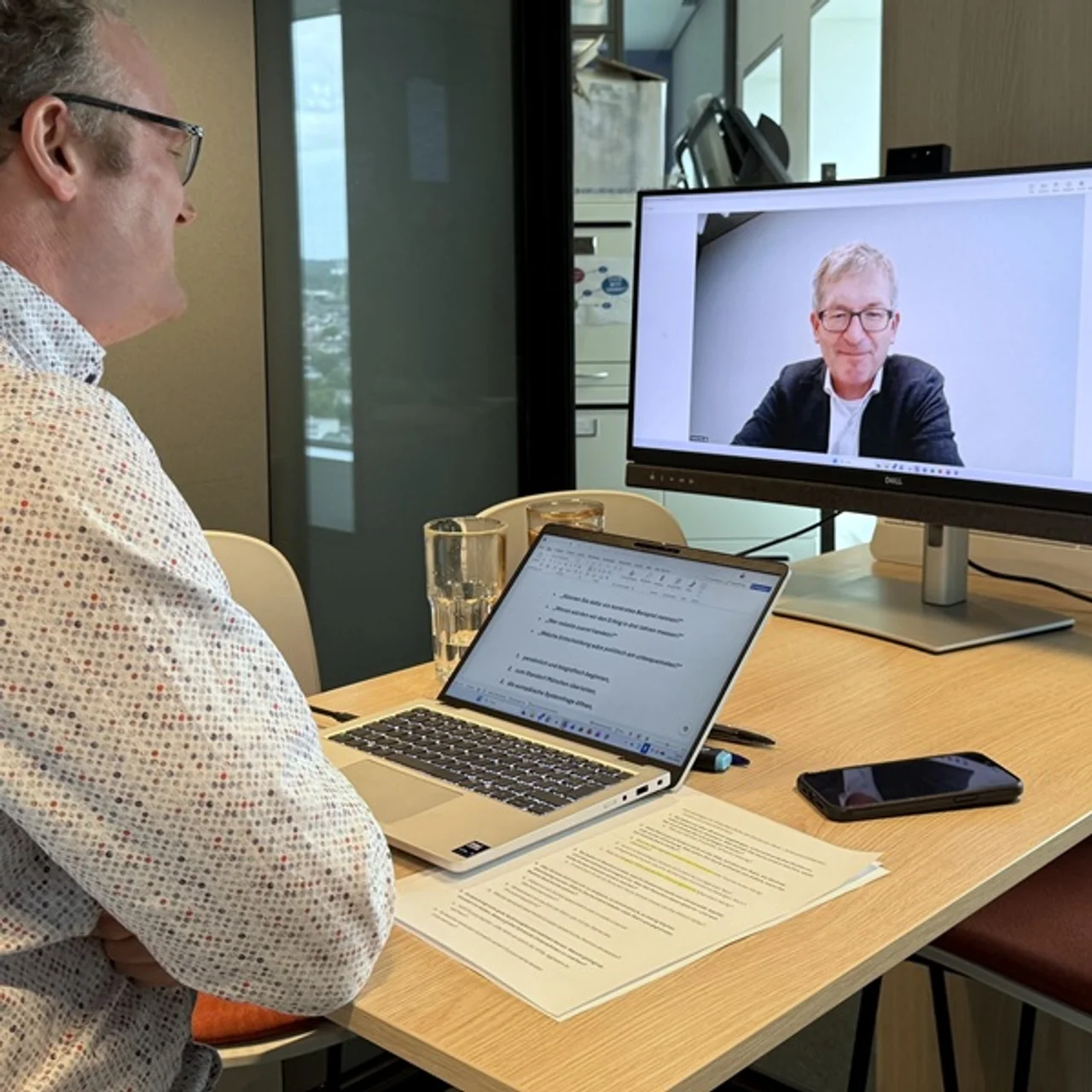
Releasing the brakes: Europe’s opportunity in the innovation race
Munich has overtaken Berlin in the number of start-ups per capita and is home to UnternehmerTUM, one of Europe’s leading start-up centres. That makes the city more than a German success story: it offers a compelling answer to a broader European question. What does it take to turn promising start-ups into global success stories?
Helmut, you've been involved in entrepreneurial thinking and innovation management for almost 25 years. What would you do differently today if you could start from scratch again?
I would have moved much faster. By today’s standards, we could have progressed twice as quickly in the first ten years. Back then, we approached everything primarily from within the university system. Today, we know that courage, ambition and scale are crucial. How many students and founders do we reach? How many teams do we enable? How many start-ups do we bring into programmes and onto the market? We could have accelerated that growth much earlier.
How does that work in practice?
A start-up centre is also a business: its role is to train and enable as many people as possible, bring founding teams together with customers and investors, and open up global markets for them. Today, around three companies are founded through UnternehmerTUM every week, and our start-ups attract about 40 million euros in venture capital each week. That pace would once have been unimaginable.
What do German founding teams lack most compared with their US counterparts?
A global mindset. At Stanford, many founders look to Google or Nvidia as role models. They set out to become world leaders in their markets. We need to raise Europe’s level of ambition. Our teams rarely fail: 85 percent succeed. But the real question is how quickly and how far they can scale internationally.
Why is Stanford so strong and what can Europe learn from it?
Stanford treats innovation and startups as a core priority alongside research and teaching, and that commitment is deeply embedded in its culture. It also has enormous resources. Europe has fewer resources, so it must use them more intelligently and efficiently. That is precisely what we are trying to do in Munich: build a structured startup factory under one roof that can still compete at the highest level.
Europe has fewer resources, so it must use them more intelligently and efficiently.
Is there anything that Munich can do better than Silicon Valley today?
Munich combines excellent research with a strong industrial base that includes Siemens, BMW, Airbus and many others. Deep-tech companies in particular depend on complex value chains, hardware expertise and customers who understand technologically sophisticated products. This breadth and depth give Munich an enormous competitive advantage.
It is often said that Europe is too slow, too bureaucratic and has too little capital. At the same time, more startups are being created again. Which story is true?
Both. The number of start-ups created in Germany rose by 50 percent in the first half of 2026. Yet the brakes remain on in many areas: there is too little growth capital, too much regulation and an overly bureaucratic labour market. Remove those barriers, and many more start-ups could emerge.
Why does Europe so rarely succeed in turning strong technologies into global market leaders?
Because the conditions are not right. Leadership teams often lack sufficient ambition, while US capital markets support much larger financing rounds, expansion and acquisitions. Europeans need to back their own entrepreneurs again. If we do not invest in them, American or Asian investors will – and we will later wonder why those companies are no longer European-owned. The potential is there: high-tech companies from Germany and across Europe can still succeed in global markets.
The potential is there: high-tech companies from Germany and across Europe can still succeed in global markets.
Who needs to act – politicians, investors, industry or founders?
All of us. Savers must consider where they invest their money. Young people must decide whether they want to take responsibility and build something significant. Policymakers must create a competitive framework. No single person can fix this; it requires action across society. If we fail, we will all bear the consequences: less value creation, lower prosperity and a decline in living standards.
What is the secret of Munich's start-up ecosystem?
It is the shared mindset. Executives, founders, business owners, experts and investors talk to one another, join forces and contribute where they can. Then there are success stories: Celonis, Flixbus, Isar Aerospace, Proxima Fusion and Quantum Systems. Successful founders reinvest their capital, expertise and networks in the next generation. This virtuous cycle allows the ecosystem to move quickly.
What does Europe mean to you? And why is it important to build innovative and sustainable companies here?
Europe is our home. Our families live here, talented people work here, and we want to enjoy prosperity and a good quality of life here – so we have to work hard to secure both. Europe has also become much more closely integrated. Our teams draw people from many countries; aerospace companies test in Sweden and launch in Norway; and founders come from Austria, Hungary and elsewhere. This cross-border cooperation is a genuine advantage.
If Europe had just three years to make a decisive improvement in its capacity for innovation, what three measures should it take immediately?
First, we must restructure our capital markets to support innovation as effectively as possible. Second, we need a labour market that enables and rewards high performance. People who want to give their all should not be held back. Third, Germany and Europe need a clear technology strategy: a high-tech agenda designed at European level and implemented consistently.
Germany and Europe need a clear technology strategy: a high-tech agenda designed at European level and implemented consistently.
What specifically needs to change in the labour market?
We should allow greater flexibility. I am not saying that everyone should work 80 hours a week. But why stop people who genuinely want to do so and achieve more? We also need tax incentives that make it worthwhile to create value. And when highly skilled people from all over the world want to drive innovation here, our response should be: great to have you here. Here is your work permit – get started.
What statement about European innovation can you no longer bear to hear?
It is less a statement than the moralising tone Europe often adopts towards China or the US. We should focus more on creating value ourselves, judge less and learn more. If we listen, we can learn an enormous amount from China and the US.
And what would you like to hear more often about European innovation?
That it has produced a global success story: a company such as BioNTech that solves major problems and changes the world. Europe has the talent to achieve extraordinary things – if we give people the freedom and support to do so.
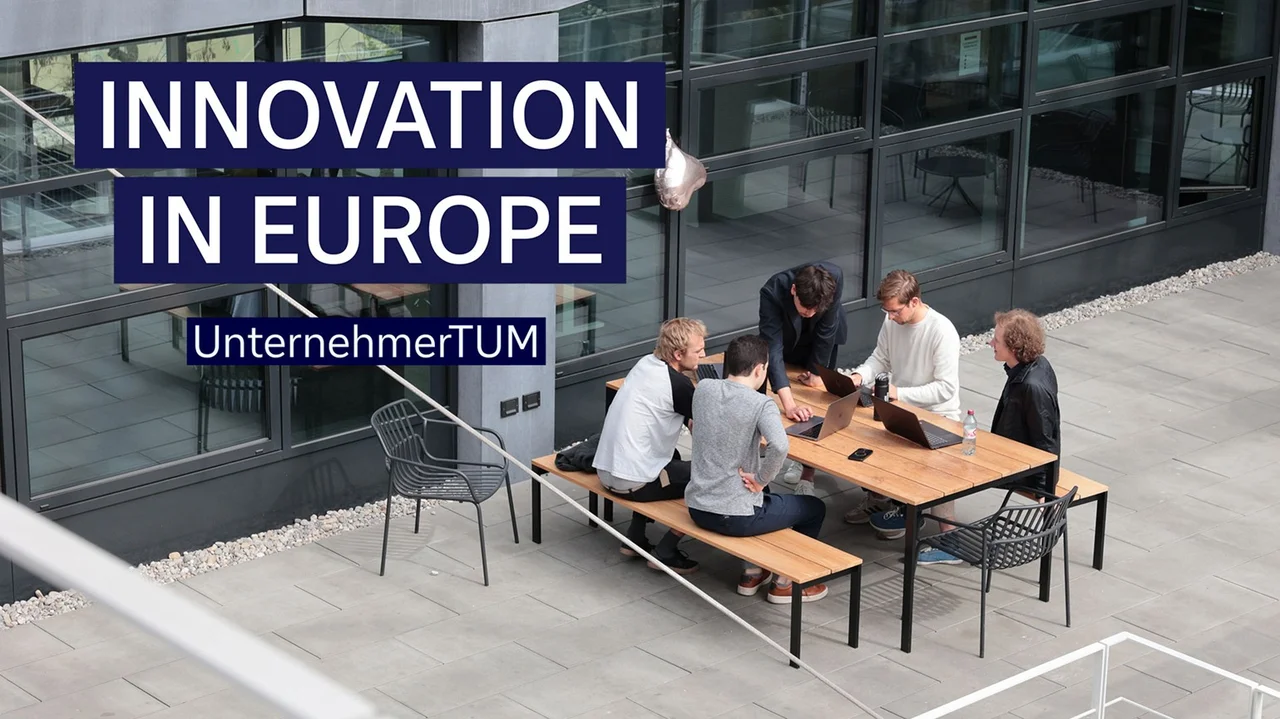
Video: At UnternehmerTUM in Munich, research, capital and an entrepreneurial mindset come together to build companies with global potential.
About Helmut Schönenberger
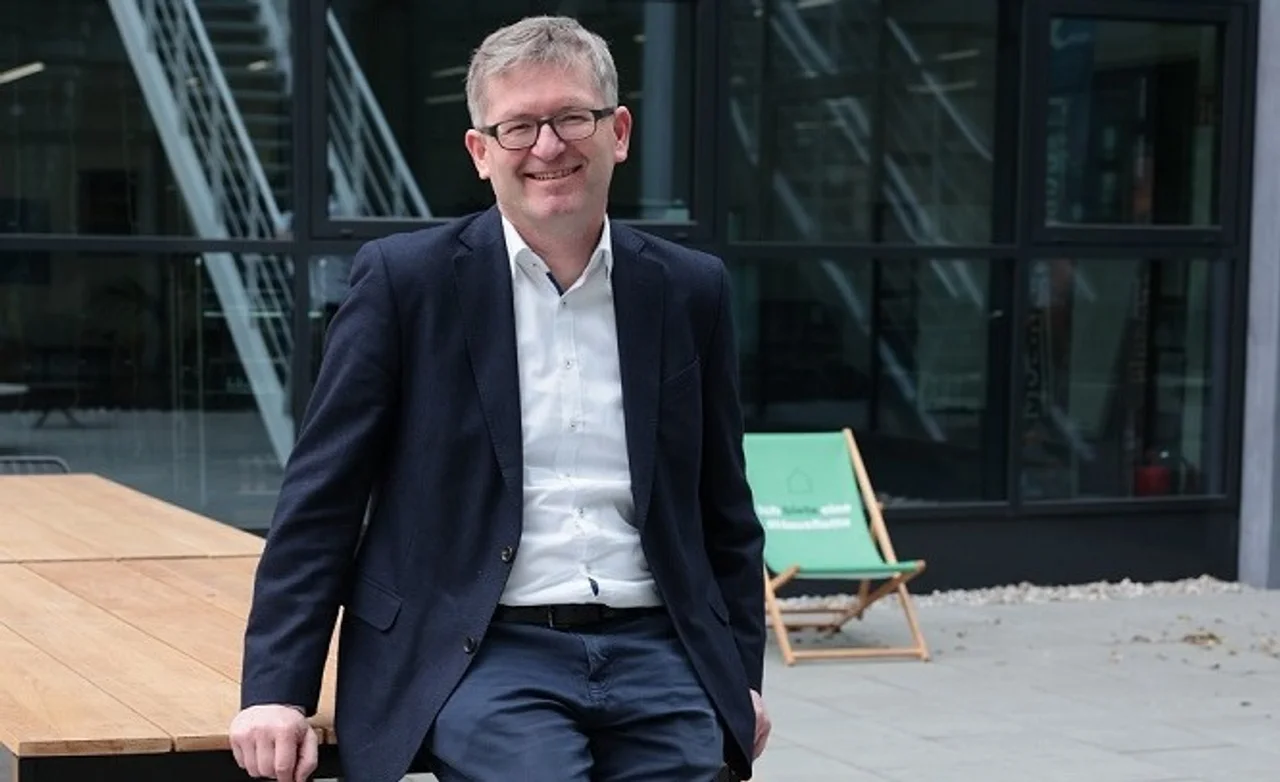
Helmut Schönenberger is co-founder and CEO of UnternehmerTUM, Europe's largest centre for innovation and business creation. He is also Vice President for Entrepreneurship at the Technical University of Munich (TUM). As an honorary professor for Entrepreneurship Practice, he combines science, entrepreneurship and venture capital. Schönenberger studied aerospace engineering in Stuttgart and earned his doctorate at the TUM. He is also on the board the German Startup Association, Startup-Verband.
Since the founding of UnternehmerTUM in 2002, he has helped shape Munich's innovation ecosystem materially. Under his leadership, UnternehmerTUM supports thousands of talents, founders and technology start-ups annually and is one of the leading start-up centres in Europe. Schönenberger is considered one of the most important advocates for entrepreneurship, technology transfer and growth financing in Germany and Europe.
Volker Klak
… believes we should spend less time promoting regional identities and rivalries and more time fostering a sense of shared global citizenship. In the meantime, he is encouraged by examples of people and nations working together respectfully, with Europe being one such example.
Recommended content
European Success Stories | Opinion
“The wave of modernisation has got off to a good start” “The wave of modernisation has got off to a good start”
Europe needs to invest massively. Hauke Burkhardt explains how the public sector and private capital can jointly drive modernisation forward.
“The wave of modernisation has got off to a good start” Invest five minutes
European Success Stories | Opinion
“We install the largest wind turbines that exist today” “We install the largest wind turbines that exist today”
The North Sea has the potential to become a green power plant for Europe – despite huge challenges. About the benefits of Europe and wind energy.
“We install the largest wind turbines that exist today” Wind of change with Jan de Nul
European Success Stories | Opinion
“Europe’s payments infrastructure is world-class” “Europe’s payments infrastructure is world-class”
Deutsche Bank’s Christof Hofmann explains why Europe’s payments infrastructure is stronger than many assume – and where the continent needs more control over digital payments.
“Europe’s payments infrastructure is world-class” Hidden strength