
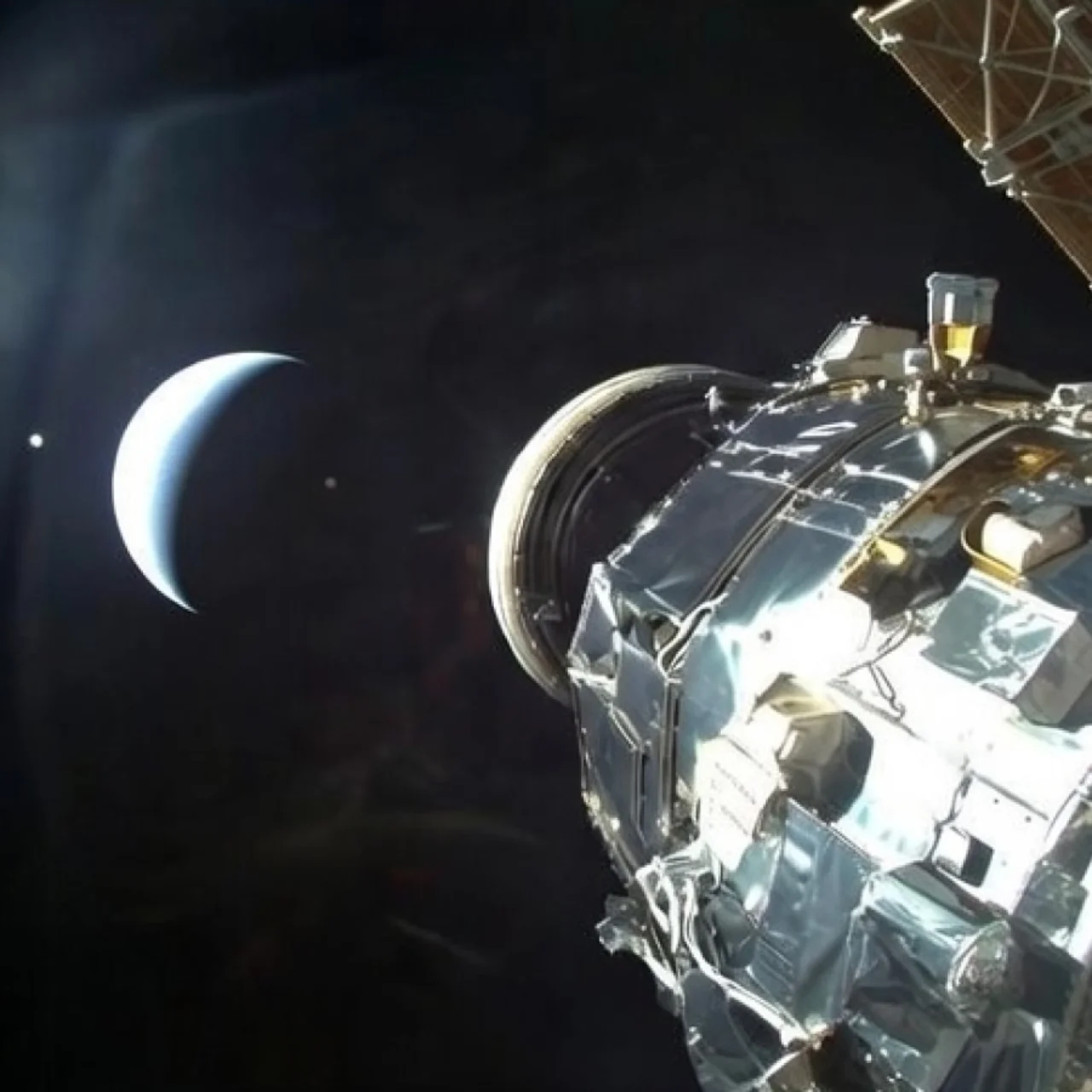
Orbit of opportunities
How the space economy is transforming traditional industries and opening up new markets.
Far above our heads, an infrastructure is at work that we barely perceive, yet upon which we constantly rely. Global satellite navigation systems guide tractors across fields with centimeter-level precision and steer ships safely into port. At the same time, precise signals from orbit facilitate seamless financial transactions and synchronize power grids and mobile networks. All of this pushes the boundaries of what we consider possible.
What was once a scientific outpost has become the economic foundation of a new industry and a strategic domain in a world that is reorganising itself.
And yet, our gaze into space is older than any rocket.
For centuries, seafarers used the stars for orientation. Around 1609, Galileo Galilei, with his telescope, made the heavens a subject of systematic observation. And legend has it that at least a century before him, the Chinese mandarin Wan Hu sought to approach the heavens in a chair powered by fireworks – a crater on the far side of the moon commemorates him to this day.
Whether fact or fiction, the essence is the same: curiosity, risk, and strategic thinking have always shaped our relationship with the cosmos.

And it is precisely this combination of curiosity, risk, and strategy that determines success in today’s space economy. Increasingly, it is not only governments but bold entrepreneurs and midsized companies that are shaping this global competition.
The pioneers of the new space economy
What this looks like in practice becomes clear between the old hangars of Berlin’s former Tempelhof Airport, where a factory is emerging that could reshape Europe’s role in space – built by the midsized company Berlin Space Technologies (BST).
Founder Tom Segert puts it succinctly: “We are building a factory that will have a production capacity of five satellites per week by the end of next year.”
We are building a factory that will have a production capacity of five satellites per week by the end of next year.
What is happening here is emblematic of the new momentum in orbit. Midsized companies and start‑ups are taking up activities once reserved for state agencies. BST is helping create the industrial foundation Europe has long lacked, according to Segert, while Media Broadcast Satellite (MBS) offers complete space missions as a service – from satellite manufacturing to launch, operations, and data transmission.
In short: “Responsive Space” means end‑to‑end space services with European value creation. “We launch satellites from Europe and operate them ourselves. This gives us a degree of sovereignty and direct access to space,” explains Markus Daiberl of MBS.
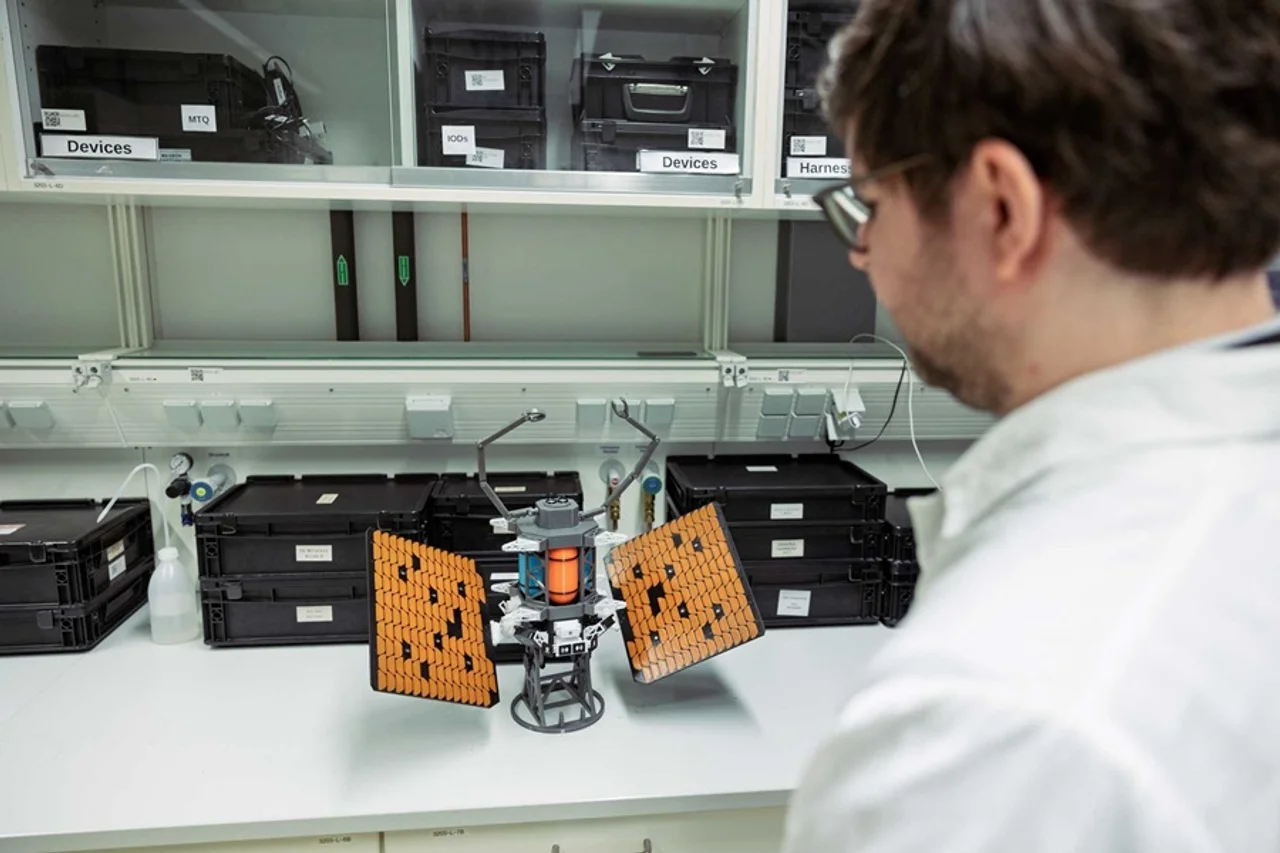
Tom Segert with a BST satellite model.
We launch satellites from Europe and operate them ourselves. This gives us a degree of sovereignty and direct access to space.
Under Hélène Huby, The Exploration Company is working to make Europe’s access to space more independent, faster, and more sustainable – with reusable space capsules that open new markets and help reduce space debris.
This new midsized agility exemplifies a global trend. The space economy is no longer a niche. Its value is currently estimated at around 570 billion US dollars and, according to forecasts by McKinsey and the World Economic Forum, is set to grow to 1.8 trillion by 2035 – twice as fast as the global economy.
The engine of this growth is the private sector. According to Simonetta Di Pippo, former director of the United Nations Office for Outer Space Affairs, the space market is clearly dominated by commercial concerns, who account for 82 percent of the business. Civil and military public clients each represent only 9 percent.
Data hunger and falling costs: the drivers of the revolution
Two forces make this disruption possible: radically lower costs and an insatiable hunger for data. Private providers such as SpaceX have reduced launch expenses by up to 80 percent, cutting the cost per kilogram of payload from over 10,000 to under 3,000 US dollars. The result: launch activity is bourgeoning. In 2025, the number of rocket launches rose by a quarter compared to the previous year. Globally, 324 launches took place, delivering thousands of new satellites into orbit.
The truth about the Earth will increasingly come from space.
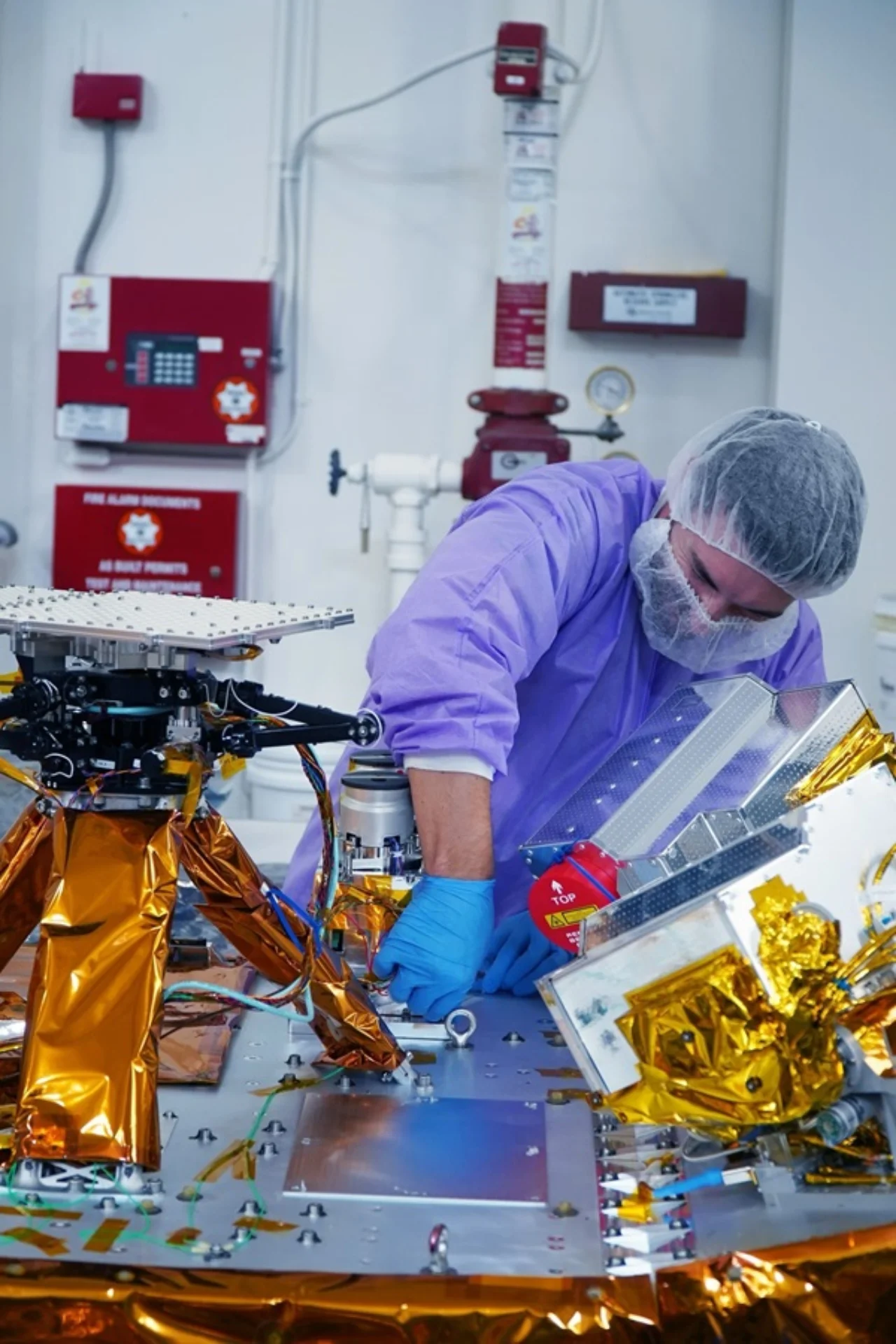
Preparing the launch of the Kepler satellite © OroraTech
But to what end? The answer comes from Thomas Grübler, Co‑Founder of the start‑up OroraTech. His company uses AI‑enhanced thermal imaging from space to detect wildfires early.
As he puts it: “The truth about the Earth will increasingly come from space.” OroraTech’s Wildfire Solution platform already monitors 350 million hectares of land and illustrates how space technology is moving from abstract vision to scalable reality.
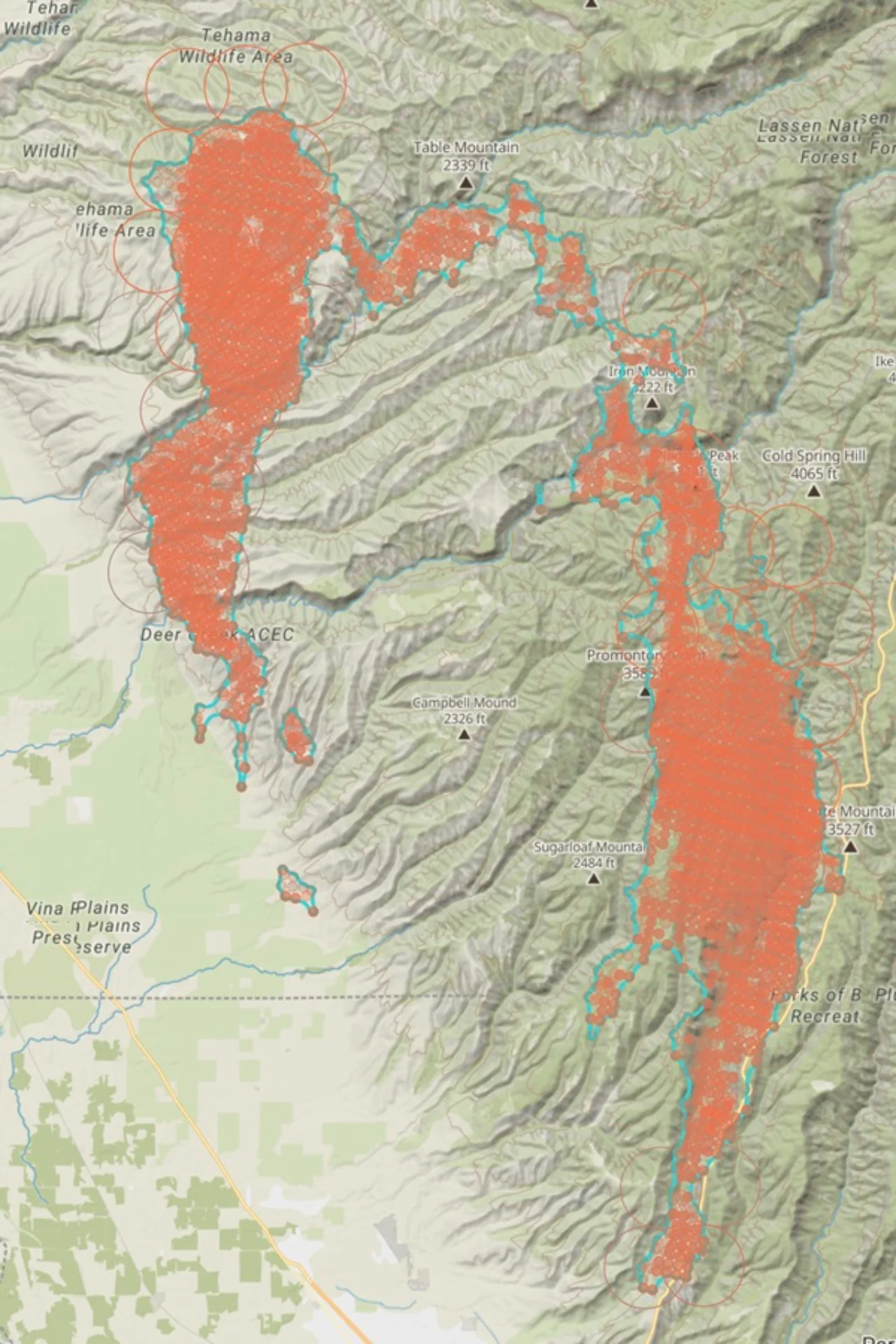
Detecting a wildfire in a national park in California. © OroraTech
These “Earth insights” are at the heart of countless new business models. They demonstrate how abstract satellite data becomes actionable decisions. Embedded in climate data from space, for instance, is an early‑warning system that can save lives: satellites observe greenhouse gases, temperature shifts, and atmospheric patterns – making extreme weather events predictable before they become visible on the ground.
In Côte d’Ivoire, such satellite readings prompted timely weather alerts when unusual rainfall patterns emerged. In Norway, similar models help detect dangerous polar storms early, protecting fishermen, coastal communities, and aviation.
In the United States, measurements of plant fluorescence taken by the NASA satellite OCO‑2 reveal when soils and vegetation dry out – weeks before the first cracks appear on the ground.
At the same time, entirely new business models are emerging from such insights, as demonstrated by the Thai satellite operator Thaicom. There, Earth observation is used not just for research or government planning, but for a very practical need: agriculture.
When droughts or floods hit rice fields, insurers traditionally review photos, inspect fields on site, and process piles of paperwork – a process that can take months. Thaicom replaces this with satellite analysis that precisely identifies which plots are truly affected.
Farmers receive their payments faster and more reliably, and the sector is shifting from analogue claims to data‑driven models.
To further strengthen this data‑based infrastructure and extend its regional impact, Thaicom is developing the new Thaicom‑10 satellite, which is set to provide additional capacity from 2027 onward – supported financially in part by Deutsche Bank.

Disaster recovery support using Thaicom satellite terminals in flood-affected areas of Songkhla province, Southern Thailand
Between strength and catching up: Europe’s role
Where does Europe stand in this new race? The answer is mixed. On the one hand, momentum is strong. Private investment in European space start‑ups has multiplied, reaching a record 1.5 billion euros in 2024, according to ESA.
Christine Klein, Head of Industrial Policy at the European Space Agency, highlights Europe’s strengths: highly skilled engineers and world‑leading systems such as the Galileo navigation network and the Copernicus Earth observation program. ESA supports this shift by lowering barriers for SMEs and start‑ups through its investor network, which includes Deutsche Bank.
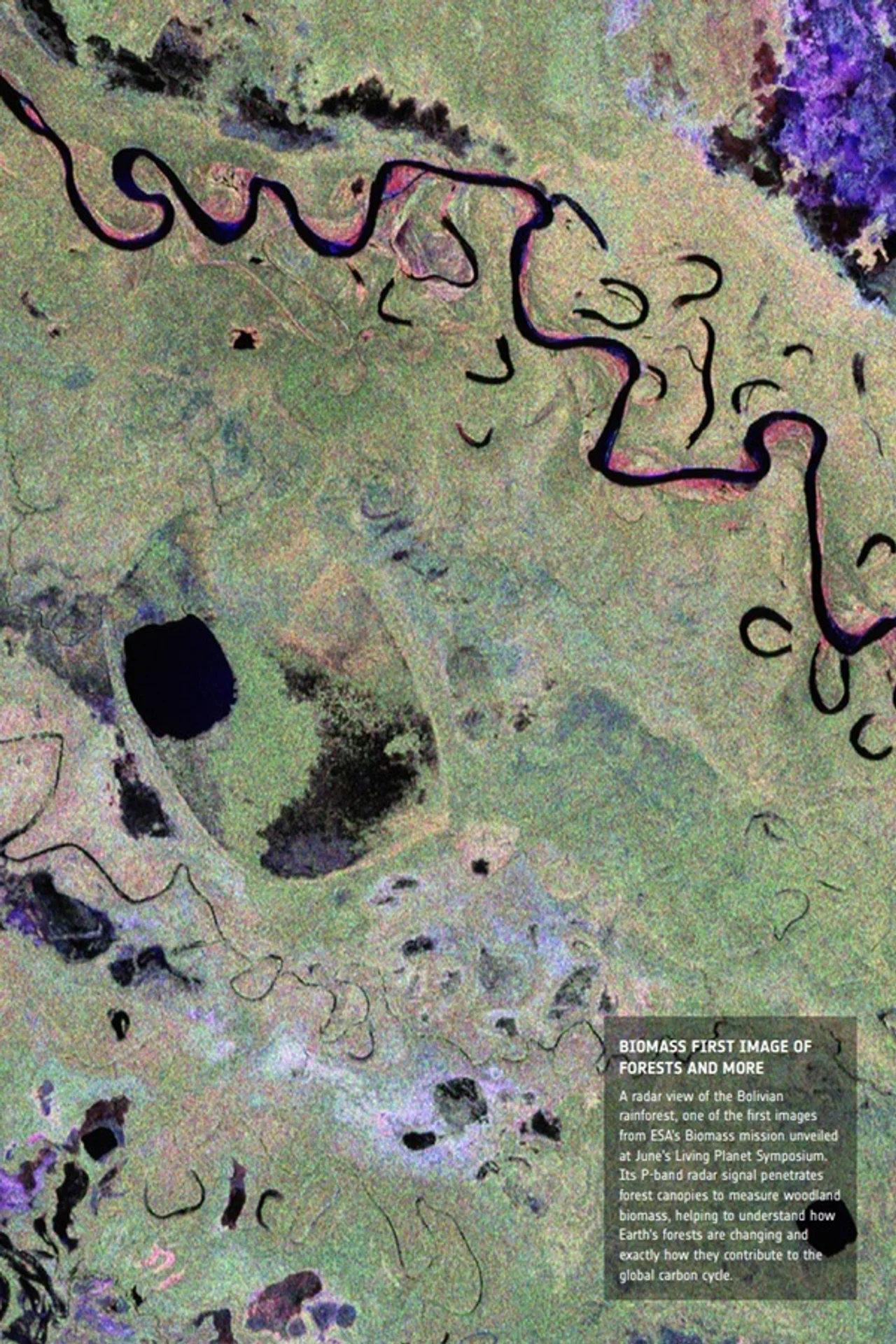
A radar view of the Bolivian rainforest, one of the first images from ESA’s Biomass mission © ESA
Avoiding space debris is also a declared ESA objective – something reflected in industry initiatives such as those at The Exploration Company, above.
We want space to remain a safe, accessible, and sustainable domain for generations to come.
On the other hand, Europe faces structural hurdles familiar from other sectors: fragmented governance, slower processes, and a much smaller public budget than the US – roughly six times smaller, depending on the year, according to the Brussels think tank Bruegel. The gap is most visible in the launch market: while SpaceX launches in rapid succession, Europe can reach highly demanding orbits, but it still lacks the industrial‑scale pace – the ability to produce, prepare, and launch vehicles in rapid, reliable succession – that underpins new commercial space models.
As the US and China lead the second space race driven by private enterprise, Europe risks falling behind. Germany’s recently published space security strategy, with planned investments of 35 billion euros, shows that the urgency has been recognised. And at EU level, a space strategy introduced in 2023 defines space as a strategic domain and sets common guidelines.
The future is already underway
Developments are accelerating rapidly – particularly in low Earth orbit, where private space stations are nearing deployment. These are expected to transform orbit in the coming years from a purely governmental research outpost into a commercial environment for research, production, and new services.
Other emerging developments are reinforcing this shift: direct‑to‑device connectivity that will allow mobile phones to connect directly to satellites, and new approaches that process data using artificial intelligence directly in orbit, making analysis faster and more targeted.
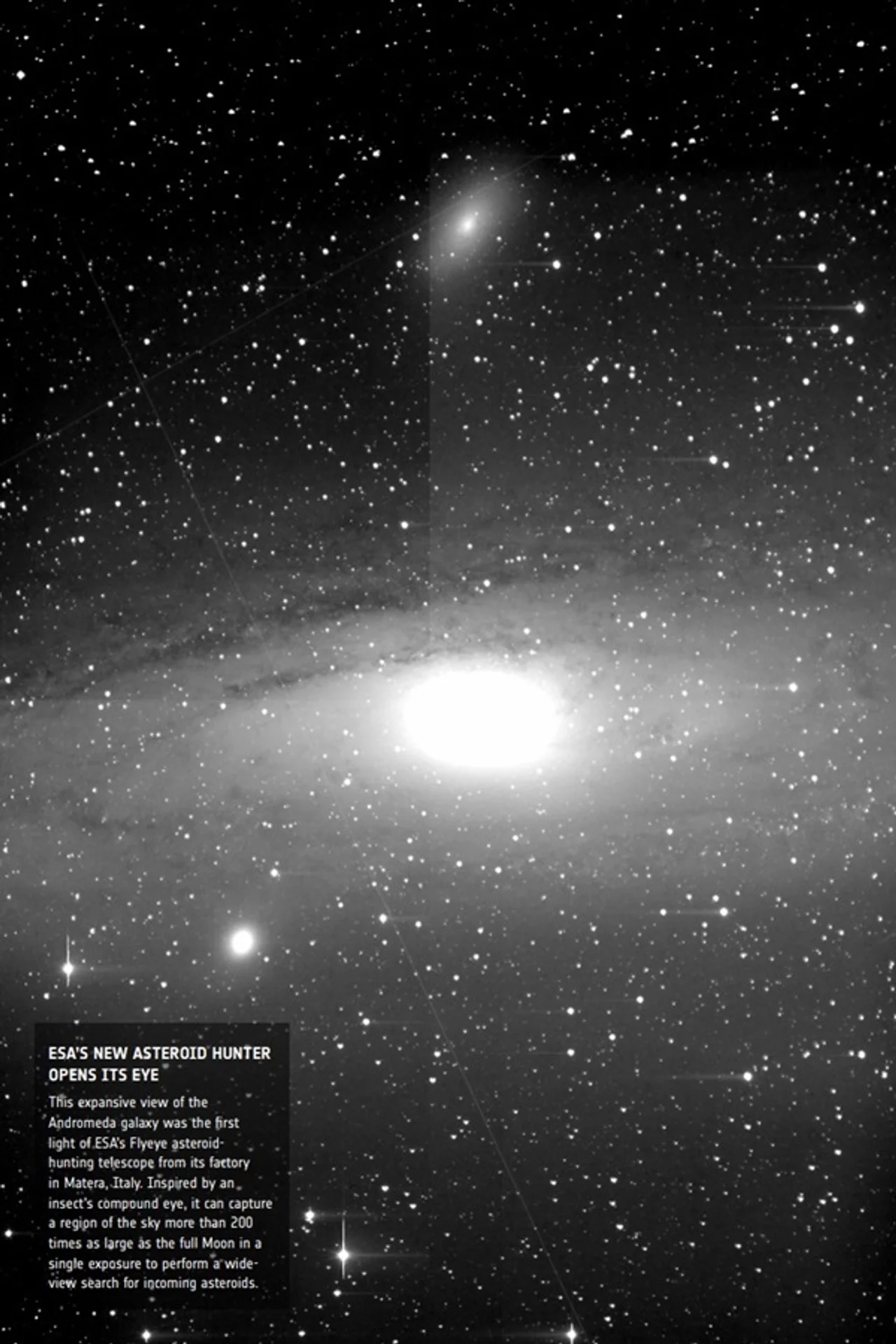
This view of the Andromeda Galaxy was the 'first light' of ESA's Flyeye asteroid-hunting telescope. © ESA
Such technological pioneering has a long tradition.
A look at Deutsche Bank’s role as a financier of such ventures underlines this – from the first transatlantic telegraph cable in the 19th century to electric high‑speed trains around 1900 and the “Solar Impulse” solar aircraft. Time and again, private investors and banks helped bring visionary projects to life.
Today, this is visible in the planned consolidation of the space divisions of Leonardo, Thales, and Airbus into a European “space champion” – a step toward greater strategic capability, with Deutsche Bank advising Leonardo on the initiative.
Whether space will truly become the next Silicon Valley remains uncertain. But the building blocks are being put in place – in Berlin, in Thailand, at ESA, and in the minds of thousands of entrepreneurs worldwide.
Join us as we explore the orbit of opportunity.
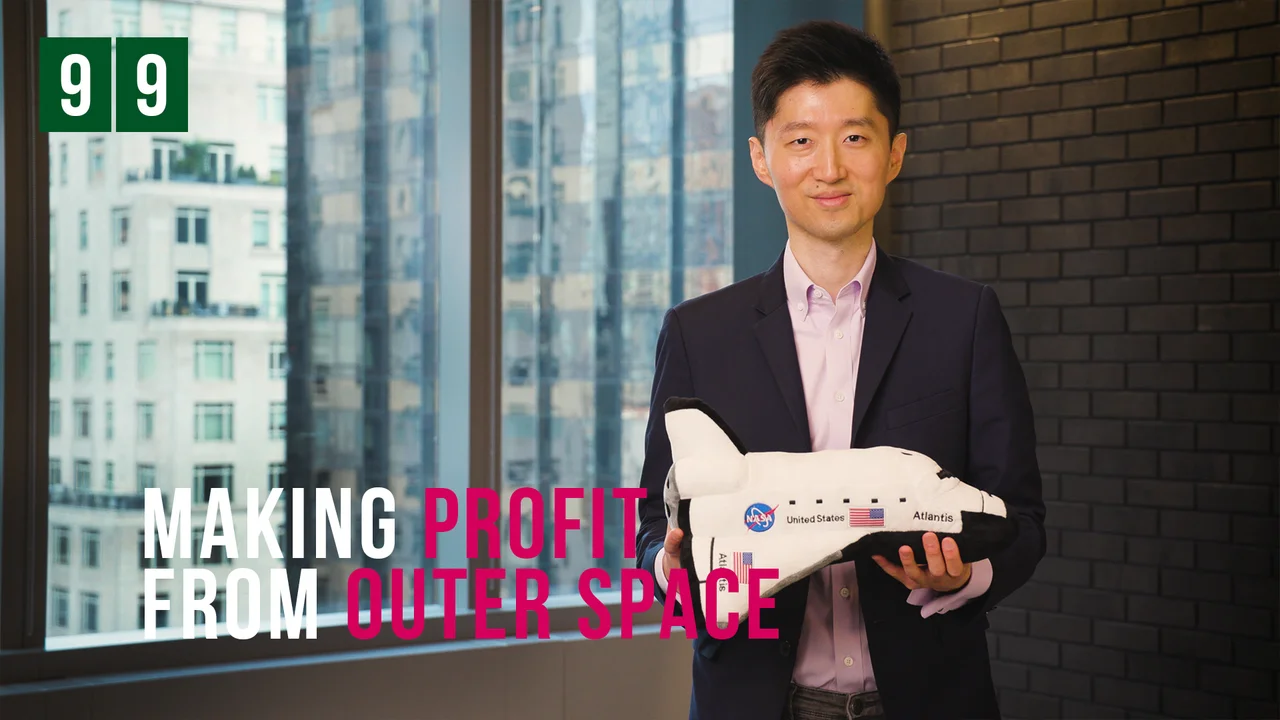
For a quick overview, our short video summarises the highlights in 99 seconds; the individual articles delve deeper.
This page was published in February 2026.

Falk Hartig
… Falk Hartig has learned that a single factor can upend entire industries – in space, it is the dramatic fall in launch costs. Since working on this dossier, he occasionally revisits an episode of Star Trek – but of course only the one true version: The Next Generation.
Recommended content

Digital Disruption | Interview
“The truth comes from space” “The truth comes from space”
Space technology as a mass market, a Europe‑wide ecosystem for innovation – and minute‑by‑minute thermal images of the Earth: Thomas Grübler from OroraTech shares insights on the satellite and space data industry’s growth.
“The truth comes from space” Why orbit data is becoming a game changer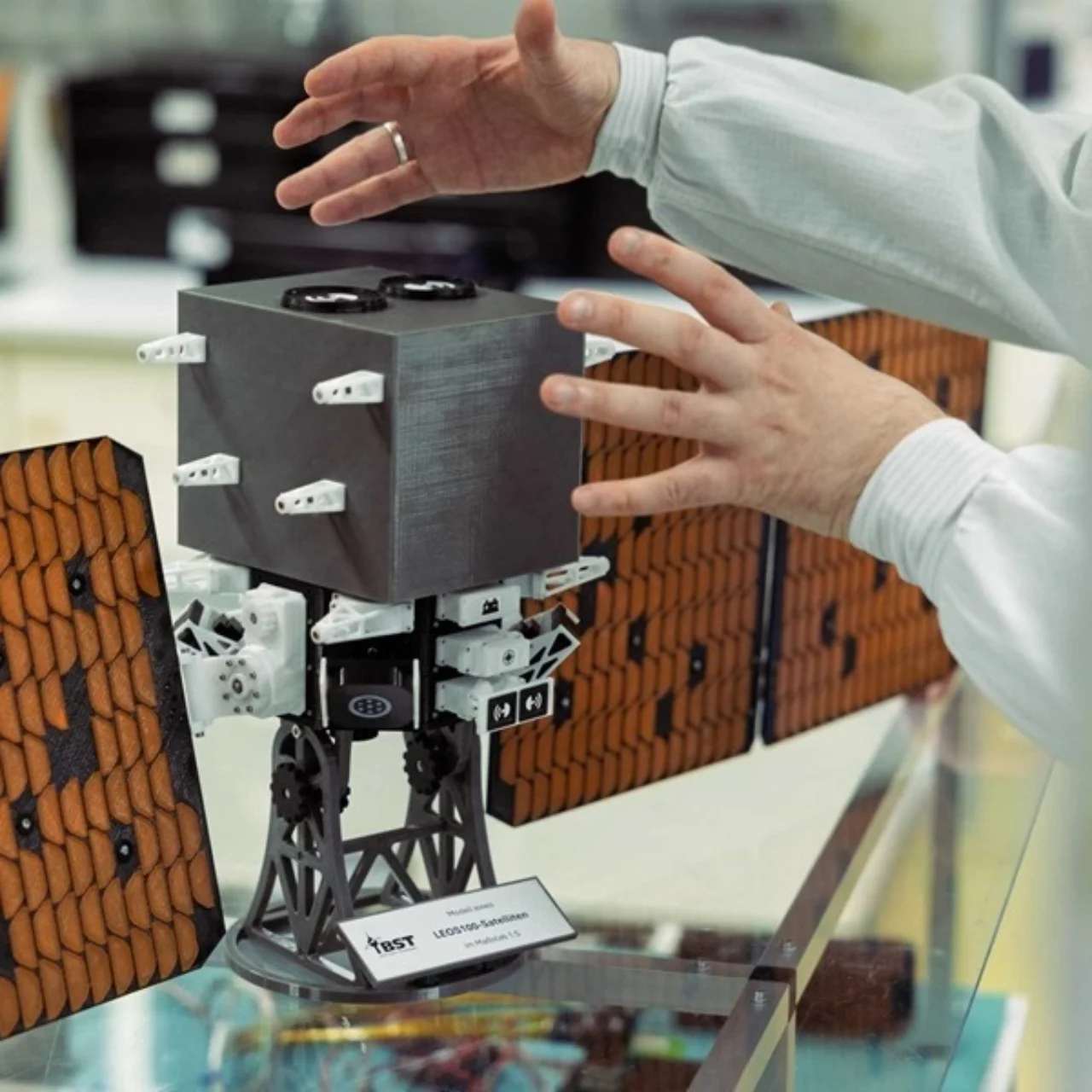
Digital Disruption | Video Story
End-to-end: space travel from a single source End-to-end: space travel from a single source
With the rise of the “New Space Economy,” SMEs and start-ups such as MBS and BST are entering the stage – bringing a breath of fresh air into a multi-billion-dollar market.
End-to-end: space travel from a single source Satellites off the assembly line?
Digital Disruption | Interview
Building Europe’s way into space – The Exploration Company’s sustainable approach Europe’s way into space – The Exploration Company’s sustainable approach
Founder Hélène Huby reveals how The Exploration Company’s reusable, launcher‑agnostic capsule and open approach could give Europe cleaner and cheaper access to space.
Building Europe’s way into space – The Exploration Company’s sustainable approach The end of space debris?